Motorized Bicycle Laws in Florida change fast depending on whether your ride is a true electric bicycle, a pedal-equipped moped, or a stand-up motorized scooter. Florida is relatively friendly to e-bikes, but pedal mopeds still bring registration and driver-license rules, and local governments can still tighten where some powered bikes can go.
Note: This Florida guide is based on current Florida Statutes, including the state definitions, bicycle and electric-bicycle rules, moped rules, helmet rules, and Florida Highway Safety and Motor Vehicles guidance. It is informational only, not legal advice.
Last reviewed / source-checked: 2026-03-15
Florida-specific caution: Florida statewide law is friendly to e-bikes, but cities, counties, and agencies can still restrict electric bicycles on particular streets, sidewalks, beaches, dunes, trails, and path systems.
Yes, but the legal lane depends on the machine. In Florida, a true electric bicycle is treated much like a bicycle and does not need a driver license, title, registration, or financial-responsibility paperwork. A true pedal-equipped moped is more regulated: Florida treats it as a separate low-speed vehicle category that requires registration and official driving credentials, and it cannot be ridden on a sidewalk while the motor is running.
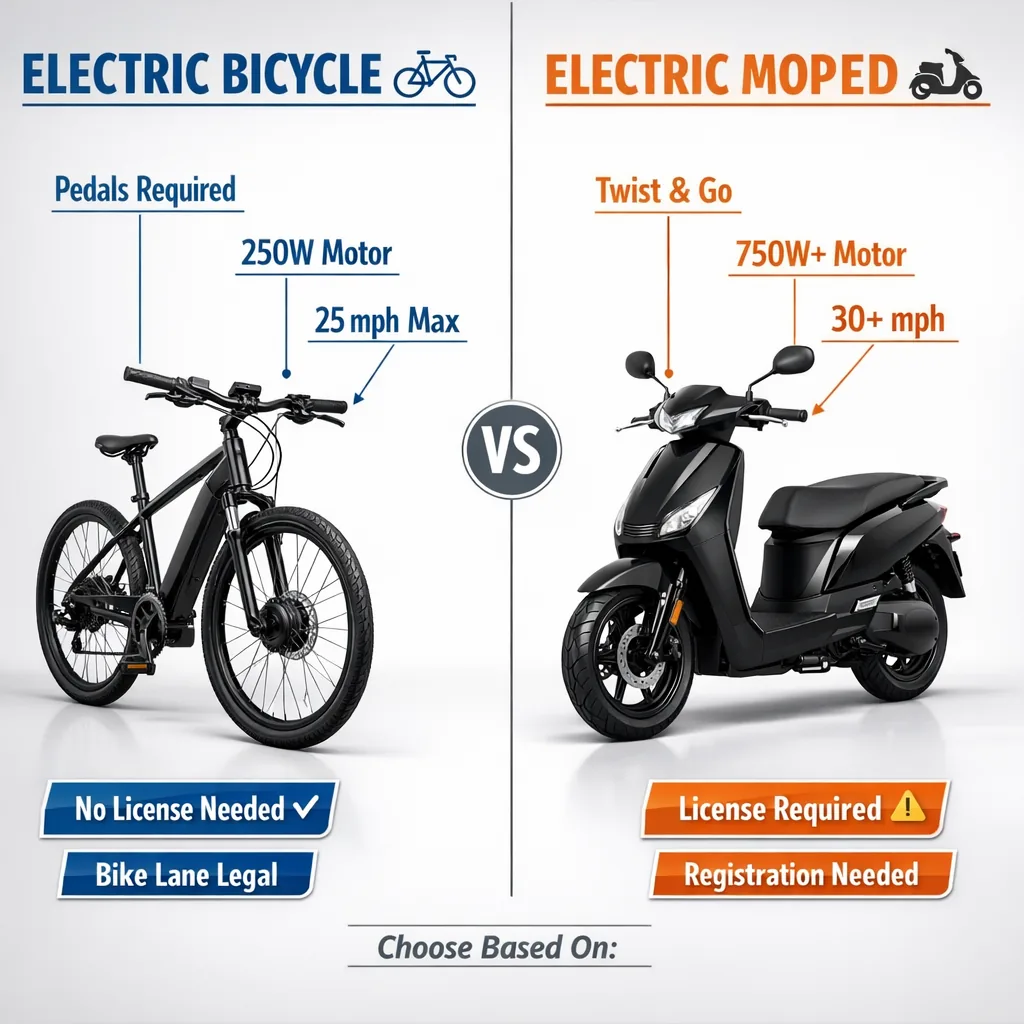
Florida’s definitions matter because the state does not throw every low-speed powered bike into one bucket.
That split is the heart of Motorized Bicycle Laws in Florida. If the machine is a true e-bike, Florida gives it bicycle-style treatment. If it is a pedal moped, you move into a more regulated lane. If it is a stand-up or no-pedal scooter, different rules apply again.
Florida’s electric-bicycle statute is broad and reader-friendly compared with many states.
Florida says an electric bicycle and its rider are not subject to the laws covering driver licenses, motor-vehicle licenses, vehicle registration, title certificates, or financial responsibility. That is one of the clearest e-bike-friendly rules in the state.
State law says an electric bicycle may be ridden where bicycles are allowed, including streets, highways, shoulders, bicycle lanes, and bicycle or multiuse paths. For many riders, that is the simplest way to tell that a true e-bike sits in the bicycle lane rather than the moped lane.
Florida’s statewide baseline is permissive, but it is not absolute. Cities, counties, and state or local agencies with jurisdiction can restrict or prohibit electric bicycles on particular sidewalks, beaches, dunes, trails, bicycle paths, and multiuse path systems. A local government may also add minimum-age or photo-ID rules for e-bike operators.
Because Florida gives e-bikes the rights and duties of bicycles, the bicycle helmet rule still applies. Riders or passengers under 16 must wear a properly fitted bicycle helmet that meets the federal bicycle-helmet standard.
Mopeds look simple, but Florida treats them differently from electric bicycles.
Florida’s registration-fee statute assigns mopeds their own annual license tax, and FLHSMV’s moped guidance says a public-road moped must be registered. The current statute lists a $5 annual moped license tax plus a $2.50 motorcycle safety education fee.
Florida’s official highway-safety guidance says a moped rider on public roads needs a valid Class E driver license. In practical terms, that means a rider should not assume a pedal moped gets the same no-license treatment as an electric bicycle.
Florida’s registration statute ties proof-of-insurance duties to motor vehicles, and the chapter definition of motor vehicle excludes mopeds. FLHSMV likewise says insurance is not required to register a moped. For most ordinary mopeds, that means the e-bike and moped categories differ on registration, but not in the way many riders assume.
Florida’s moped statute says a rider traveling slower than normal traffic must stay as close as practicable to the right-hand curb or edge of the roadway, with the usual exceptions for passing, left turns, and safety hazards. The same statute also says you may not propel a moped along a sidewalk while the motor is operating.
Florida requires approved protective headgear for riders and passengers under 16 on a moped. Riders 16 and older on a true moped-spec machine are outside that under-16 moped helmet rule.

If it fits Florida’s class 2 electric-bicycle definition, it usually falls in the bicycle lane: no title, no registration, no driver license, and bicycle-style operating rights unless a local rule says otherwise.
If it stays within Florida’s class 3 electric-bicycle definition, it is still an electric bicycle rather than a moped. That keeps it in the e-bike lane, but you still need to watch local path and access rules.
That is where readers often leave the e-bike lane and enter the moped lane. If the machine fits Florida’s moped definition, state rules and FLHSMV guidance point toward registration, roadway operation, and official driving credentials.
Do not assume the moped rules apply. Florida has a separate motorized-scooter category, and FLHSMV says that class is not titled, registered, or licensed the same way as a pedal-equipped moped.
This is where statewide summaries break down. Florida law expressly leaves room for local governments and agencies to restrict or prohibit electric bicycles in particular places, so local rules matter before you ride.
This page is for general informational purposes only and is not legal advice. Florida statutes, local ordinances, and agency guidance can change. Verify the current category and local access rules before riding on public roads, paths, or sidewalks.