Motorized Bicycle Laws in Georgia depend first on whether your ride is a true electric assisted bicycle or a moped. Georgia gives electric assisted bicycles a lighter ruleset than mopeds, but mopeds still bring permit-or-license, helmet, and roadway restrictions that many riders miss.
Note: This Georgia guide is based on current Georgia state agency guidance from DDS, DPS, and the Governor's Office of Highway Safety, plus the 2019 Georgia General Assembly summary that enacted the electric assisted bicycle changes. It is informational only, not legal advice.
Last reviewed / source-checked: 2026-03-15
Georgia-specific caution: Georgia separates electric assisted bicycles from mopeds. If your bike is faster, more powerful, or no longer fits the pedal-equipped e-bike lane, do not assume the lighter electric-bicycle rules still apply.
Yes, but the category matters. In Georgia, a true electric assisted bicycle is treated much more like a bicycle. A moped is a separate low-speed motor-driven cycle category with age, permit-or-license, helmet, and roadway limits.
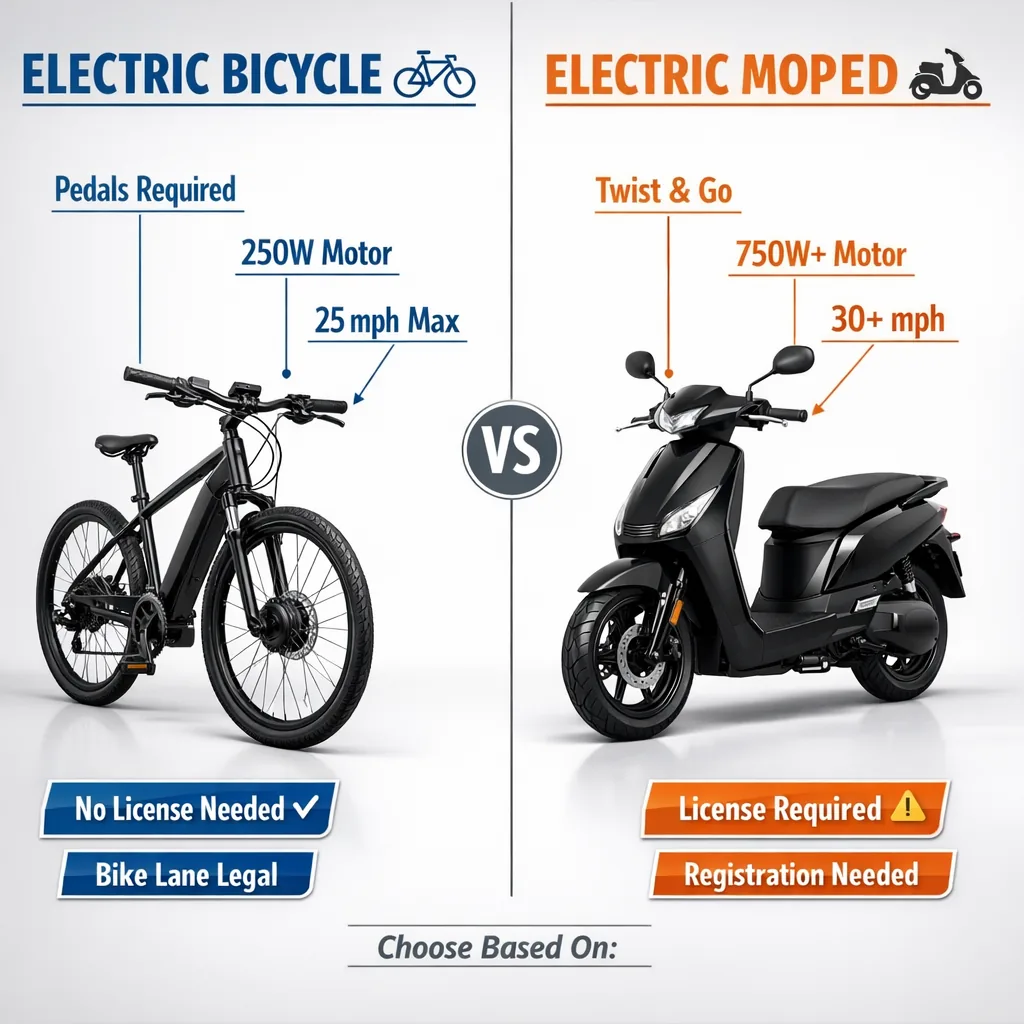
Georgia does not treat every low-speed powered bike the same way. That split is the core of Motorized Bicycle Laws in Georgia.
Georgia's electric assisted bicycle lane is friendlier than its moped lane, but it is not a free-for-all.
Georgia's moped and electric assisted bicycle rules distinguish these categories clearly. State guidance tied to Code Section 40-6-351 says no license or permit is required to operate an electric assisted bicycle.
Georgia Department of Public Safety guidance says the state uses Class I, Class II, and Class III electric assisted bicycle categories under Code Section 40-6-300. The same state guidance says there is no age or license requirement for a bicycle or a Class I or Class II electric assisted bicycle, while a Class III rider must be at least 15 years old even though no license is required.
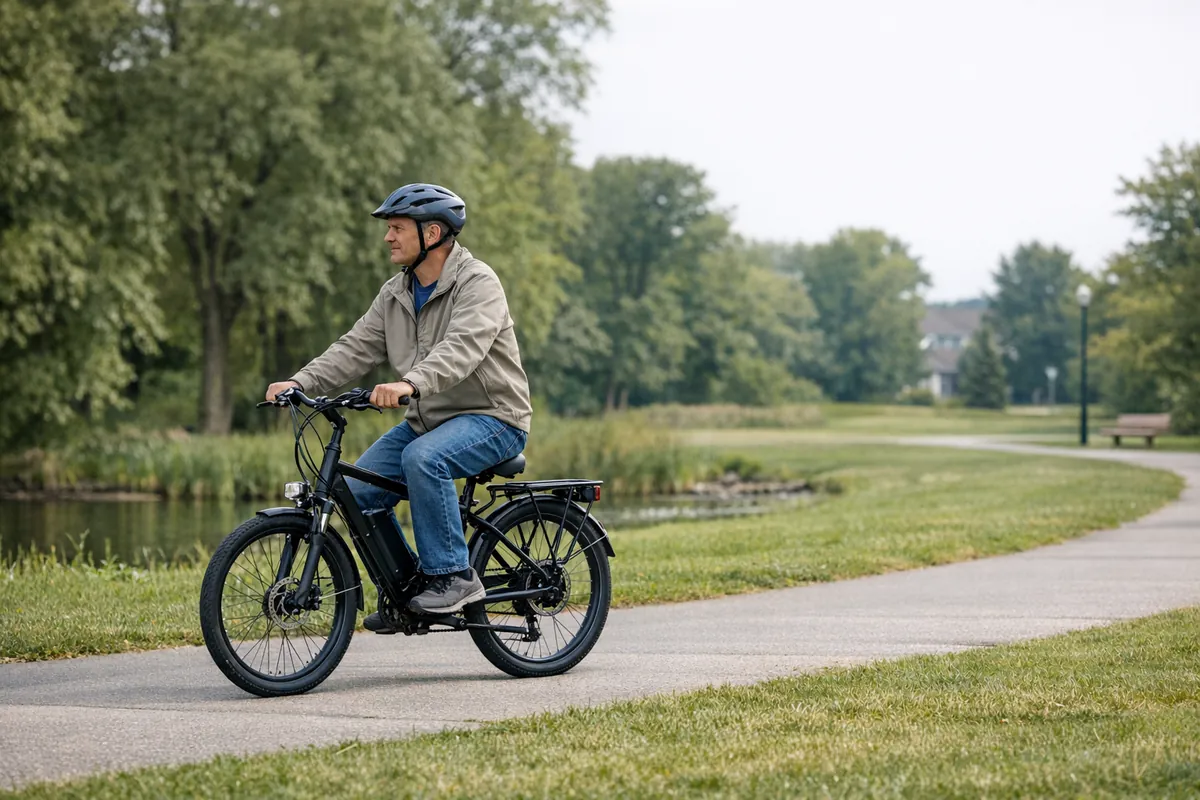
Georgia's bicycle-law guidance says electric assisted bicycles may be operated on bicycle paths under Code Section 40-6-294(e). That is a major practical difference from mopeds, which are treated more like roadway vehicles.
Georgia's bicycle-law guidance says no person under 16 may operate or ride as a passenger on a bicycle on a highway, bicycle path, bicycle lane, or sidewalk under state or local control without wearing a bicycle helmet. For younger riders on qualifying electric assisted bicycles, that under-16 bicycle helmet rule still matters.
Mopeds are legal in Georgia, but the rules are tighter and more vehicle-like.
Georgia DDS says a moped rider must be at least 15 years old and must have an unexpired driver's license, instructional permit, or limited permit in possession.
Georgia DDS says moped riders must wear a DOT-approved motorcycle helmet. Georgia's moped headgear statute also keeps mopeds in a more protective-gear-heavy lane than ordinary bicycles.
Georgia DDS says tags are not required for mopeds. That makes mopeds lighter than motorcycles in paperwork, even though they are still more regulated than electric assisted bicycles.
Georgia DDS says every person operating a moped on a roadway must obey the same traffic laws that govern drivers of motor vehicles. DDS also says mopeds may not use limited-access highways or any roadway where the minimum speed limit is above 35 mph.

If it still fits Georgia's electric assisted bicycle rules, you are generally in the lighter lane: no driver's license, bicycle-style treatment, and state guidance allowing use on bicycle paths.
Georgia's class-based guidance matters here. A Class III rider must be at least 15 years old, even though no driver's license is required under the state guidance used for this draft.
If it fits Georgia's moped definition, the rider must be at least 15, carry the right permit or license, wear a DOT-approved helmet, and stay off limited-access highways and other roads with minimum speeds above 35 mph.
That is where you should stop assuming the moped or electric assisted bicycle rules still apply. Georgia's lighter lanes are tied to narrow equipment and speed limits, so faster or differently configured machines need a closer category check.
Georgia's bicycle-law guidance allows electric assisted bicycles on bicycle paths, but trail systems and agencies can still apply their own on-site rules in some places. If the trail is locally managed or part of a special-use system, check the posted rules before riding.
This page is for general informational purposes only and is not legal advice. Georgia statutes, agency guidance, and local trail rules can change. If your bike does not clearly fit Georgia's electric assisted bicycle or moped definitions, verify the exact category before riding on public roads.