Motorized Bicycle Laws in District of Columbia turn first on a simple question: does your ride stay within the District’s pedal-equipped 20 mph motorized-bicycle lane, or does it cross into motor-driven-cycle or motorcycle territory? That one distinction changes the answer on licensing, registration, insurance, helmets, bike-lane use, sidewalk use, and parking.
Note: This District of Columbia guide is based on current D.C. Official Code definitions, D.C. DMV non-traditional vehicle guidance, DDOT bicycle-law guidance, and the District’s published non-traditional vehicle chart. It is informational only, not legal advice.
Last reviewed / source-checked: 2026-03-15
District-specific caution: In Washington, DC, a true motorized bicycle can use bike lanes, but it cannot ride on sidewalks. Once a vehicle can run faster than 20 mph under motor power, the District treats it more like a motor-driven cycle or motorcycle.
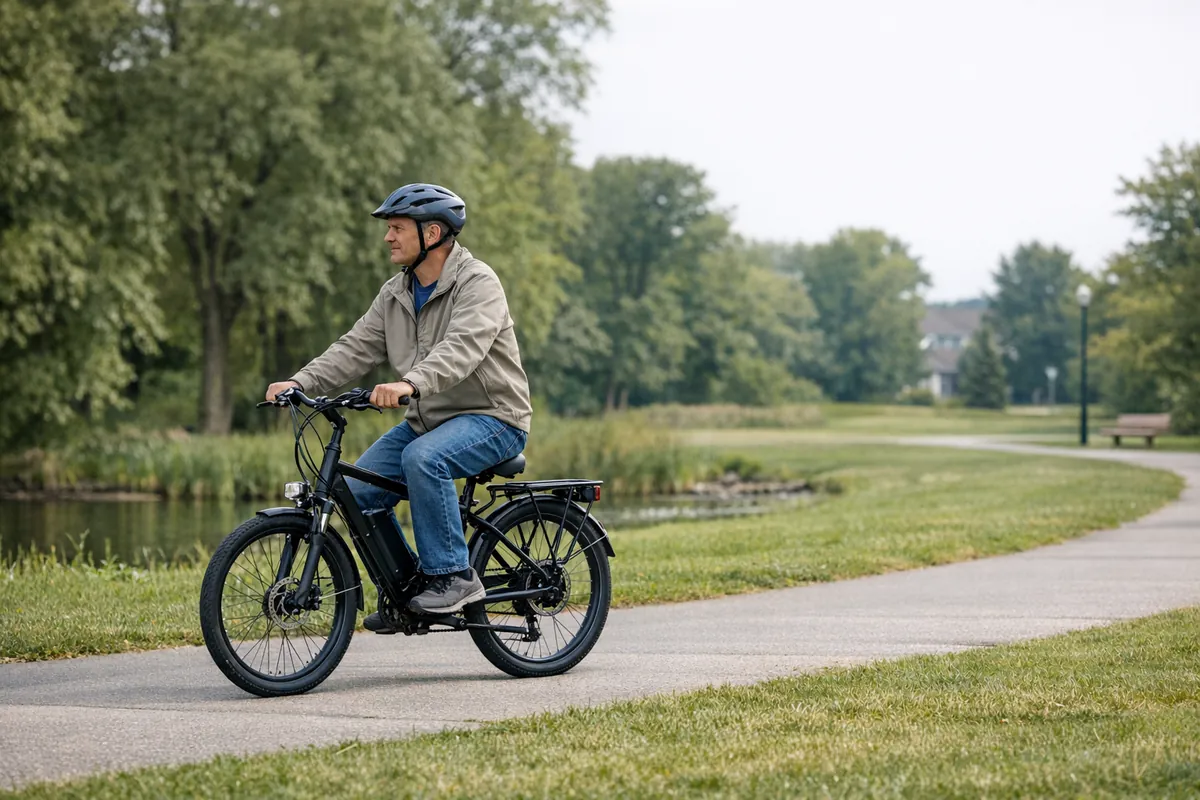
Yes. A legal DC motorized bicycle can be used on streets and in bike lanes if it has pedals, 16-inch-or-larger wheels, and a motor that cannot propel it faster than 20 mph on level ground. It does not need District registration, insurance, or a driver’s license, but the operator must be at least 16 years old and cannot ride on sidewalks.
The District’s core traffic definition for a motorized bicycle appears in D.C. Official Code § 50-2201.02(11A). D.C. says a motorized bicycle must have a post-mounted seat or saddle, 2 or 3 wheels touching the ground that are at least 16 inches in diameter, fully operative pedals, and a motor that cannot propel the device faster than 20 mph on level ground.
The District’s electric-bicycle incentive law in § 50-921.27 uses nearly the same core definition for an electric bicycle: pedals, 16-inch-or-larger wheels, and a motor capped at 20 mph on level ground. In practice, that means the District’s official sources are much more focused on the 20 mph pedal-equipped vehicle line than on the three-class e-bike framework many states use.
That is one of the biggest differences in Motorized Bicycle Laws in District of Columbia: once your vehicle no longer fits the District’s 20 mph pedal-equipped definition, the legal treatment changes fast.
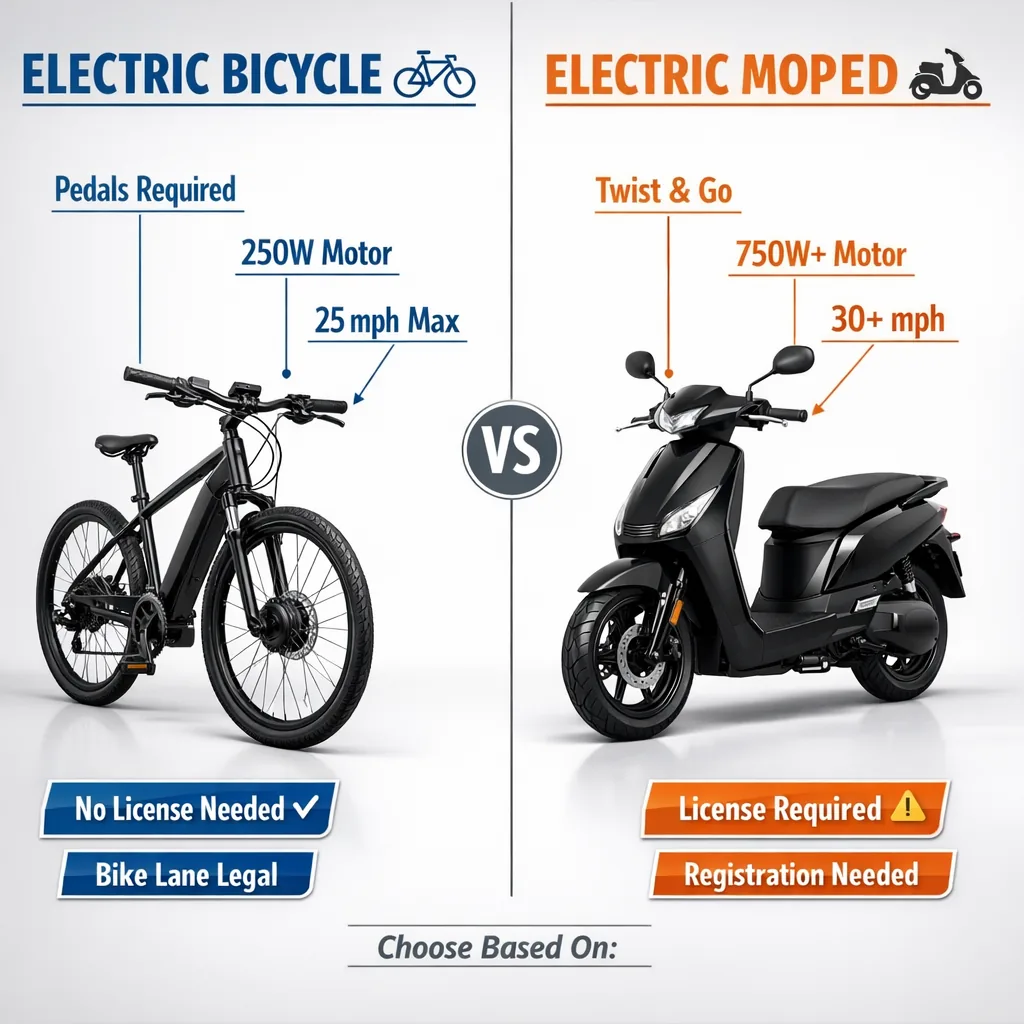
If your vehicle stays inside the District’s motorized-bicycle definition, the rules are lighter than they are for faster motor vehicles.
The DC DMV’s published non-traditional vehicle chart says a motorized bicycle does not require a driver’s license, insurance, or DMV registration. That is a major difference from a motor-driven cycle.
The same District chart cites D.C. Official Code § 50-1401.01(f) and 18 DCMR § 1200.10 for the age floor: the operator of a motorized bicycle must be at least 16 years old.
District guidance is consistent here. The DC DMV says motorized bicycles are not permitted on sidewalks, and the MPDC likewise says mopeds, motorized bicycles, and motorcycles are legal on DC streets, not on city sidewalks. The District’s chart also says motorized bicycles may use bike lanes.
The District’s chart says a motorized bicycle may be parked in a bike rack or on a curb so long as it does not impede pedestrian traffic. That is more bicycle-like treatment than the parking rules for larger motor vehicles.
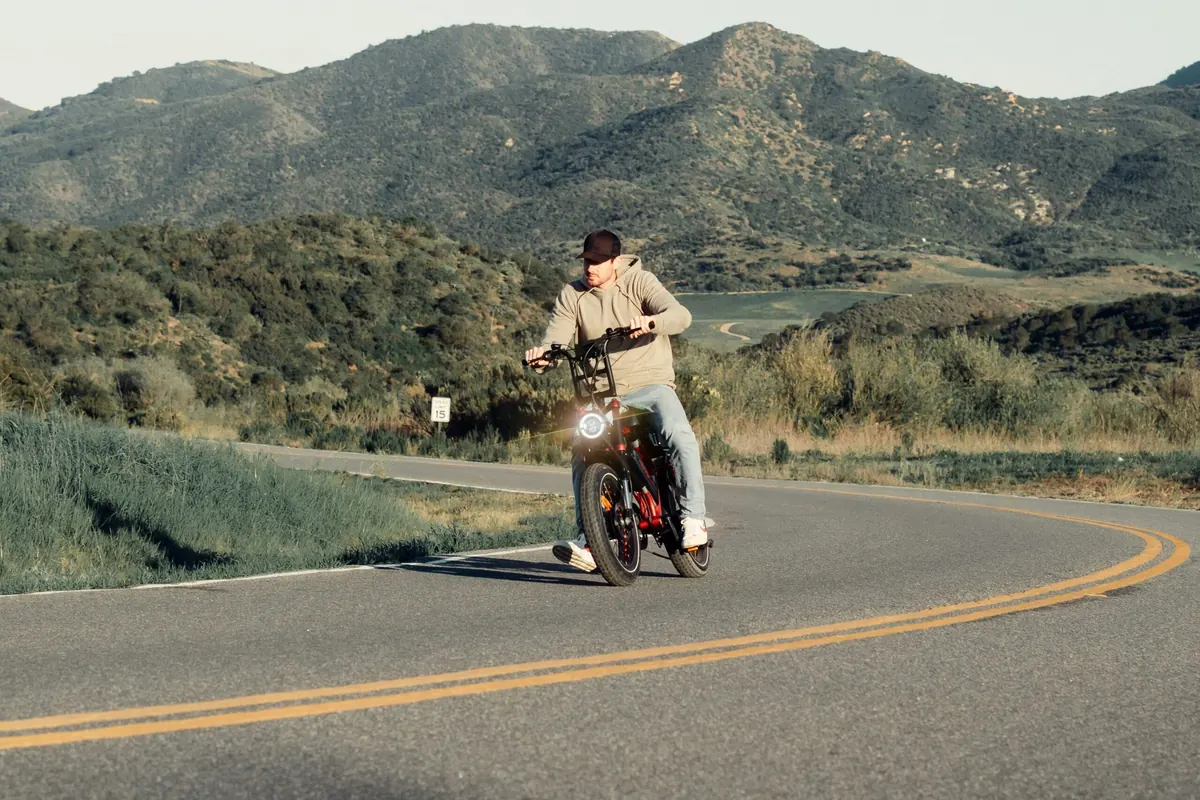
If the motor can propel the vehicle past 20 mph on level ground, DC no longer treats it as a plain motorized bicycle. The published DMV chart says that a vehicle operated by motor above 20 mph becomes a motor-driven cycle, and above 30 mph it becomes a motorcycle.
The DC DMV defines a motor-driven cycle as a 2- or 3-wheeled motor vehicle with a seat or saddle and a gas, electric, or hybrid motor that can propel it up to 30 mph. For that category, the District requires a driver’s license, registration, insurance, and a helmet.
The District’s non-traditional vehicle chart and DMV guidance say motor-driven cycles are not permitted on bike lanes or sidewalks, except that a sidewalk exception exists only to park in limited situations. DMV also says these vehicles should not be ridden in bus lanes or on highways such as I-395, I-295, or I-695.
If the vehicle goes beyond the motor-driven-cycle lane, DC motorcycle rules take over. That means registration, insurance, helmet use, and a motorcycle endorsement when required by District law and DMV rules.
If it still meets the District’s motorized-bicycle definition, you are in the lighter lane: no license, no registration, no insurance, bike-lane use allowed, and no sidewalk riding.
That is the point where you should stop assuming it is just a motorized bicycle. DC’s published chart says a motorized bicycle operated over 20 mph becomes a motor-driven cycle, which brings licensing, insurance, registration, and helmet obligations back into play.
That is not a safe assumption in the District. DC’s official public guidance says motorized bicycles, mopeds, and motorcycles belong on the street, not on city sidewalks.
A true motorized bicycle gets friendlier parking treatment than a full motor vehicle. The District’s chart says it may be parked in a bike rack or on a curb so long as pedestrian traffic is not blocked.
This page is for general informational purposes only and is not legal advice. District rules, code sections, and enforcement practices can change. If your vehicle does not cleanly fit the District’s 20 mph pedal-equipped motorized-bicycle definition, verify the exact classification with DC DMV before riding on public streets.