Motorized Bicycle Laws in Utah make the most sense when you separate three different lanes: electric-assisted bicycles, mopeds, and motor-assisted scooters. Utah gives electric-assisted bicycles their own class system and generally treats them like bicycles, while a Utah moped still has engine, speed, pedal, and driver-license rules of its own. That split is the core of Motorized Bicycle Laws in Utah, and it matters because the rules for path access, age limits, helmets, and licensing change depending on which machine you actually have.
Note: This Utah guide is based on current Utah Code definitions, Utah Driver License Division guidance, and Utah DMV registration/title guidance. It is informational only and not legal advice.
Last reviewed / source-checked: 2026-03-16
Utah-specific caution: Utah uses different legal definitions for an electric-assisted bicycle, a moped, and a motor-assisted scooter. A bike that looks similar on the street can fall into a different rule set if its speed, power, pedals, or frame design push it out of one category and into another.
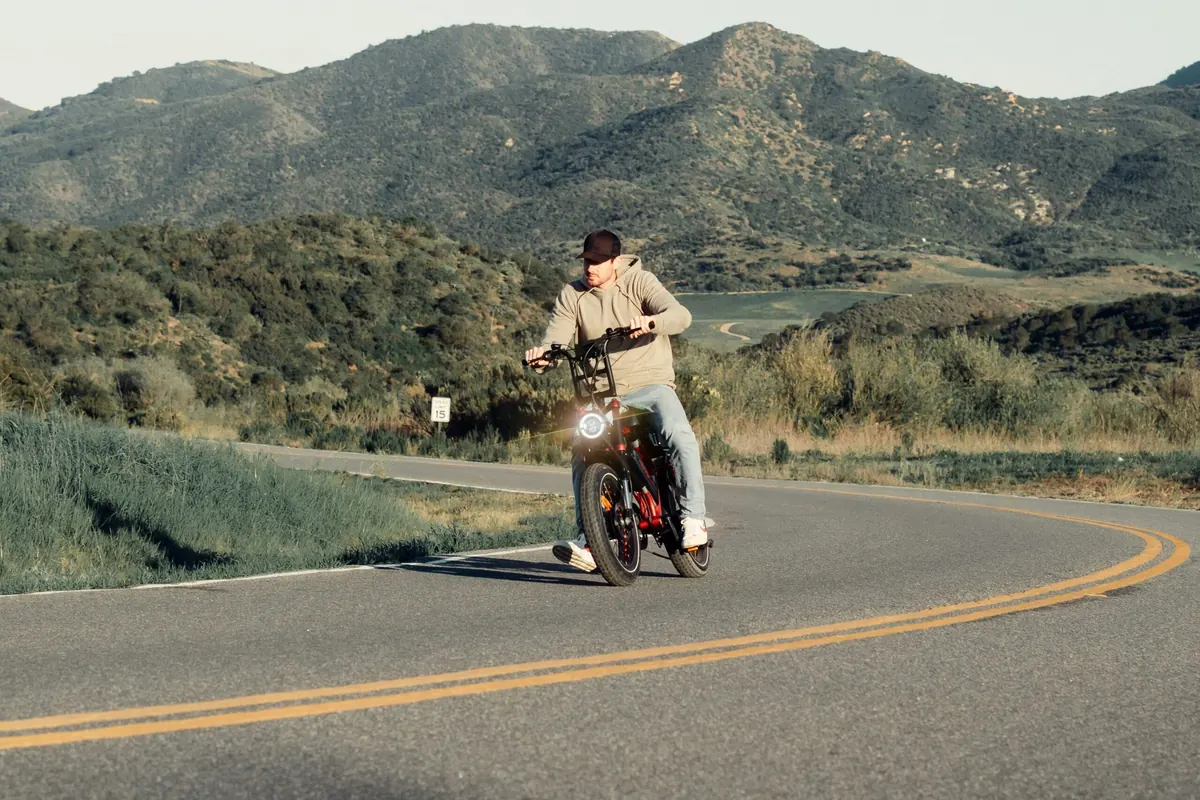
Utah is more precise than many states. It does not lump every small powered bike into one bucket.
That classification split drives nearly everything in Motorized Bicycle Laws in Utah. Utah's definitions expressly say an electric-assisted bicycle does not include a moped or a motor-assisted scooter, and a moped does not include an electric-assisted bicycle or a motor-assisted scooter.
Utah defines class 1 electric-assisted bicycles as pedal-assist only up to 20 mph, class 2 as throttle-capable up to 20 mph, and class 3 as pedal-assist up to 28 mph with a speedometer. That matters because Utah gives all three classes a lawful lane to exist, but not all three classes are treated exactly the same everywhere.
Utah Code section 41-6a-1115.5 says an electric-assisted bicycle is subject to bicycle rules unless that section provides otherwise. In plain English, Utah starts from a bicycle-first posture for e-bikes rather than a motorcycle-first posture.
Utah allows an electric-assisted bicycle on a path or trail designated for bicycle use. But the same statute also lets a local authority or state agency regulate or restrict electric-assisted bicycles, or a specific e-bike class, on a sidewalk, path, or trail within that authority's jurisdiction. That means state law opens the door, while local managers can still narrow access in specific places.
Utah says a rider under 16 may not operate a class 3 electric-assisted bicycle. A rider under 14 may not operate an electric-assisted bicycle with the motor engaged on public property, a highway, a path, or a sidewalk unless directly supervised by a parent or guardian. A rider under eight may not operate an electric-assisted bicycle with the motor engaged on public property, a highway, a path, or a sidewalk at all.
Utah requires Utah-based manufacturers and distributors to permanently affix a label describing the class, top assisted speed, and motor wattage. Utah also includes disclosure language for vehicles marketed as e-bikes when they actually fall outside the electric-assisted bicycle definition.
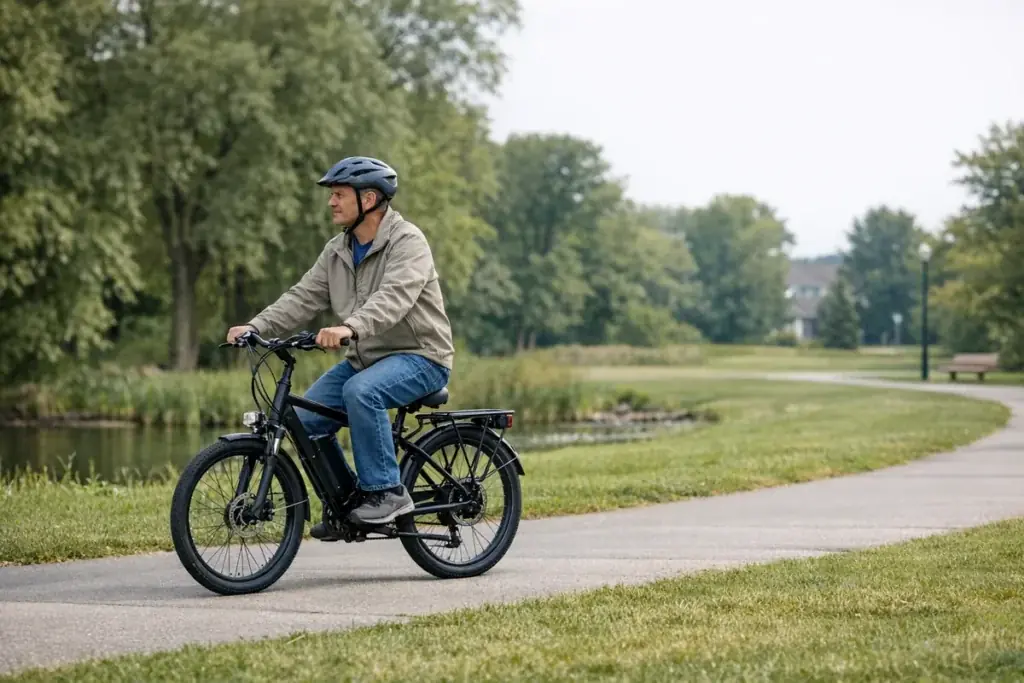
A Utah moped must have pedals, must stay at or below two brake horsepower, and must be unable to exceed 30 mph on level ground. If it uses an internal-combustion engine, that engine may not exceed 50 cubic centimeters. Utah also requires the power drive system to function directly or automatically without clutching or shifting by the rider after the drive system is engaged.
Utah Driver License Division guidance says you are required to have a driver license to operate a motor-driven cycle. The same official guidance says you can drive a motor-driven cycle without an endorsement, and its moped page places mopeds inside that motor-driven-cycle lane. That makes Utah different from states that require a motorcycle endorsement for every moped-like machine.
Utah Code section 41-6a-1505 says a person under 21 may not operate or ride a motorcycle or motor-driven cycle on a highway unless wearing protective headgear that meets the adopted standards. Because a moped is defined as a motor-driven cycle, that under-21 helmet rule matters for Utah moped riders on highways.
Utah's DMV and Tax Commission registration materials clearly cover motorcycles and related on-road powered vehicles, and Utah's registration law generally requires title before registration when a vehicle falls inside the registration system. But the official Utah sources reviewed for this draft do not provide a clean, moped-only DMV explainer that answers every moped registration or insurance question in one place. Because of that gap, this draft does not overstate a moped-specific title, registration, or insurance answer beyond what the reviewed sources clearly support.
Utah defines a motor-assisted scooter separately from both mopeds and electric-assisted bicycles. The device must have at least two wheels touching the ground, a braking system, an electric motor not exceeding 2,000 watts, and a design that lets the rider stand, sit, or straddle while still being capable of human-powered propulsion.
Utah Driver License Division guidance says a person may not operate a motor-assisted scooter faster than 15 mph, on a highway with a total of four or more lanes for regular traffic, in a public parking structure, or on public property posted as prohibiting bicycles. That is a very different operating environment from a moped or a normal e-bike.
Utah says a person under 15 may not operate a motor-assisted scooter using the motor unless directly supervised by a parent or guardian. A person under eight may not operate a motor-assisted scooter with the motor running on public property, a highway, a path, or a sidewalk.
Your first step is figuring out whether it is class 1, class 2, or class 3. If it fits Utah's electric-assisted bicycle definition, Utah generally treats it like a bicycle and not like a moped.
You are likely in Utah's moped lane, not the e-bike lane. That means the moped definition, driver-license rule, and under-21 highway helmet rule are the more relevant starting points.
Utah state law is generally friendly to electric-assisted bicycles on bicycle-designated paths and trails, but the local manager of that space can still add restrictions. Check the local rule instead of assuming every path is open.
A class 3 electric-assisted bicycle is not lawful for a rider under 16 in Utah. If the rider is under 14, supervision rules also matter whenever the electric motor is engaged in public places.
Do not assume the rules are interchangeable. Utah's motor-assisted scooter category has its own 15 mph cap and roadway restrictions, while a moped has different engine, speed, pedal, and licensing rules.
This page is for general informational purposes only and is not legal advice. Utah statutes, DMV procedures, local path rules, and local enforcement practices can change. Verify the current rules before riding on roads, sidewalks, paths, trails, or other public property.