Motorized Bicycle Laws in Connecticut depend on whether your ride is a true electric bicycle under Connecticut’s class 1, 2, and 3 e-bike rules or a motor-driven cycle such as a small moped, motor scooter, or bicycle with an attached motor. Connecticut gives those categories very different treatment for helmets, licensing, path access, and where you can ride.
Note: This Connecticut guide is based on current Connecticut General Statutes, the Connecticut General Assembly’s Office of Legislative Research, and Connecticut DMV motorcycle-permit guidance. It is informational only, not legal advice.
Last reviewed / source-checked: 2026-03-15
Local rule warning: Towns and cities can still add local restrictions, especially for sidewalks, trails, and path access.
Yes, but the answer changes fast once you know the vehicle type. Connecticut generally treats e-bikes like bicycles, but class 3 bikes face tighter trail rules and age limits. A motor-driven cycle can still be street legal, but the rider needs a valid operator’s license and must stay off sidewalks, turnpikes, and limited-access highways.
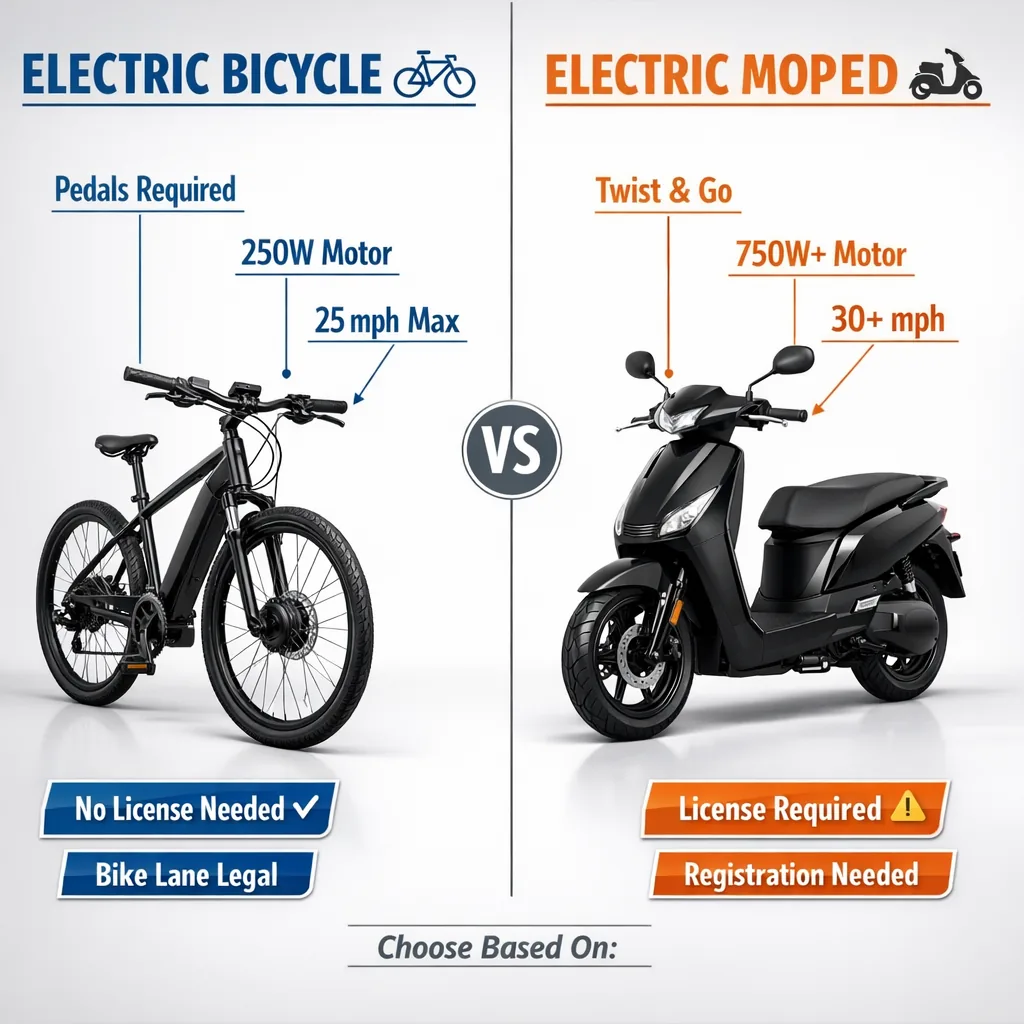
Connecticut’s statutes are more precise than many summary articles. The state does not lump every powered bike into one bucket.
That split is the core of Motorized Bicycle Laws in Connecticut. If your build is electric and still fits the e-bike rules, the bicycle lane is usually the better fit. If it is gas-powered or otherwise lands in the motor-driven-cycle category, different road rules apply.
Connecticut General Statutes section 14-289k gives e-bike riders the same basic rights and duties as bicycle riders, but then adds several important exceptions.
The statewide baseline is friendly: an electric bicycle may be ridden where bicycles are permitted to travel unless a local ordinance or a specific statutory exception says otherwise.
Connecticut says a class 3 electric bicycle cannot be ridden on a bicycle trail, bicycle path, or multiuse trail or path. That is stricter than the default rule for ordinary bicycle-style travel.
Even class 1 and class 2 riders should not assume every trail is open. Unless a local ordinance allows it, Connecticut bars class 1 and 2 e-bikes from bicycle or multiuse trails designated for nonmotorized traffic when the trail has a natural surface tread made by clearing and grading the soil and no surfacing materials were added.
No rider under 16 may operate a class 3 e-bike in Connecticut. A younger person may still ride as a passenger on a class 3 e-bike if the bike is equipped or designed to carry a passenger.
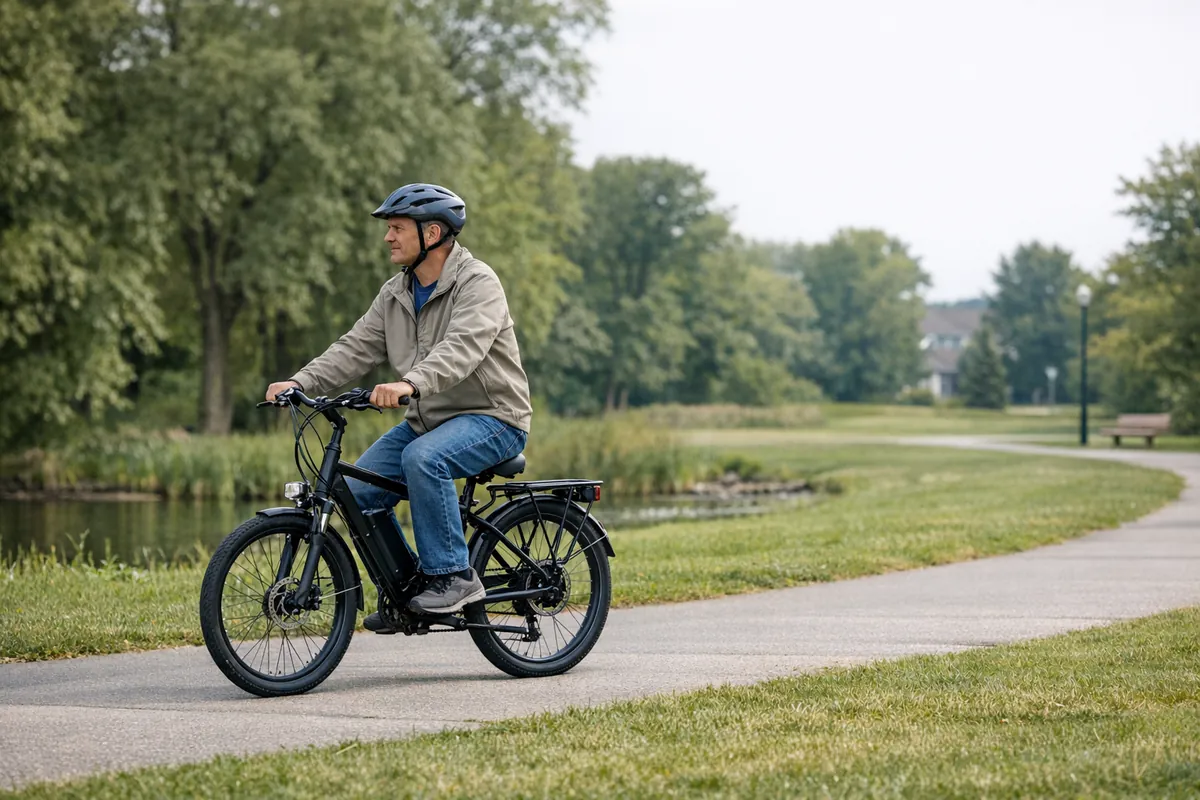
This is an easy place to get caught relying on outdated summaries. Connecticut now requires protective headgear for anyone riding or sitting as a passenger on an electric bicycle.
If your ride is a moped-style or gas-style build that falls into Connecticut’s motor-driven-cycle category, the rules get more like motor-vehicle law and less like bicycle law.
Under section 14-286, no person may ride a motor-driven cycle unless that person holds a valid motor vehicle operator’s license, unless a narrow special-permit exception applies for a physically disabled rider. For most readers, the practical takeaway is simple: do not assume bicycle rules cover a motor-driven cycle in Connecticut.
Connecticut expressly bans motor-driven cycles from sidewalks, turnpikes, and limited-access highways. That alone separates them from the normal bicycle conversation.
When the posted speed limit is greater than the cycle’s top speed, Connecticut says the rider must stay in the right-hand lane available for traffic or on a usable shoulder on the right side, except when preparing for a left turn into or out of an intersection, road, or driveway.
Connecticut’s helmet rule for motor-driven cycles is different from its e-bike rule. Riders and passengers on a motor-driven cycle must wear approved protective headgear if they are under 18.
The Connecticut General Assembly’s Office of Legislative Research says motor-driven cycles do not need to be registered with DMV, because state registration law excludes them from the motor-vehicle definition used for registration. That can be helpful, but it also means riders need to classify the machine correctly. If your build crosses out of motor-driven-cycle territory and into full motorcycle treatment, the paperwork picture changes.
Based on the current OLR state-law summary, yes, if the vehicle is truly an electric bicycle under Connecticut law. The statute treats e-bikes in the bicycle lane, not the motor-driven-cycle lane.
No, not as the rider. Connecticut bars riders under 16 from operating a class 3 e-bike, though a younger passenger can ride if the bike is designed to carry one.
No. If it falls into the motor-driven-cycle category, Connecticut expressly bars it from sidewalks.
Absolutely. Connecticut’s e-bike statute leaves room for local ordinances, especially on trail and path access. State law is only your starting point.

This page is for general informational purposes only and is not legal advice. Connecticut statutes, local ordinances, and DMV guidance can change. Verify current rules before riding on public roads, paths, or trails.