Cargo ebike pros and cons come down to one big question: do you need a bike that can replace some car trips, or do you mostly want a simple ride for fun and errands? A cargo electric bike can be practical, powerful, and surprisingly freeing, but it is also heavier, longer, more expensive, and less effortless to store than a regular ebike.
Quick answer: A cargo ebike is worth it if you regularly carry kids, groceries, work gear, pet supplies, or bulky errands across short to medium distances. The main upsides are utility, lower car dependence, and strong hill support. The main downsides are price, weight, storage space, tire and brake wear, and a learning curve at low speeds.
If you are comparing one against a commuter ebike, think less about top speed and more about daily friction. Can you park it safely? Can you lift or roll it where you live? Will it fit through your gate, hallway, garage, or bike room? Those answers matter as much as motor power.
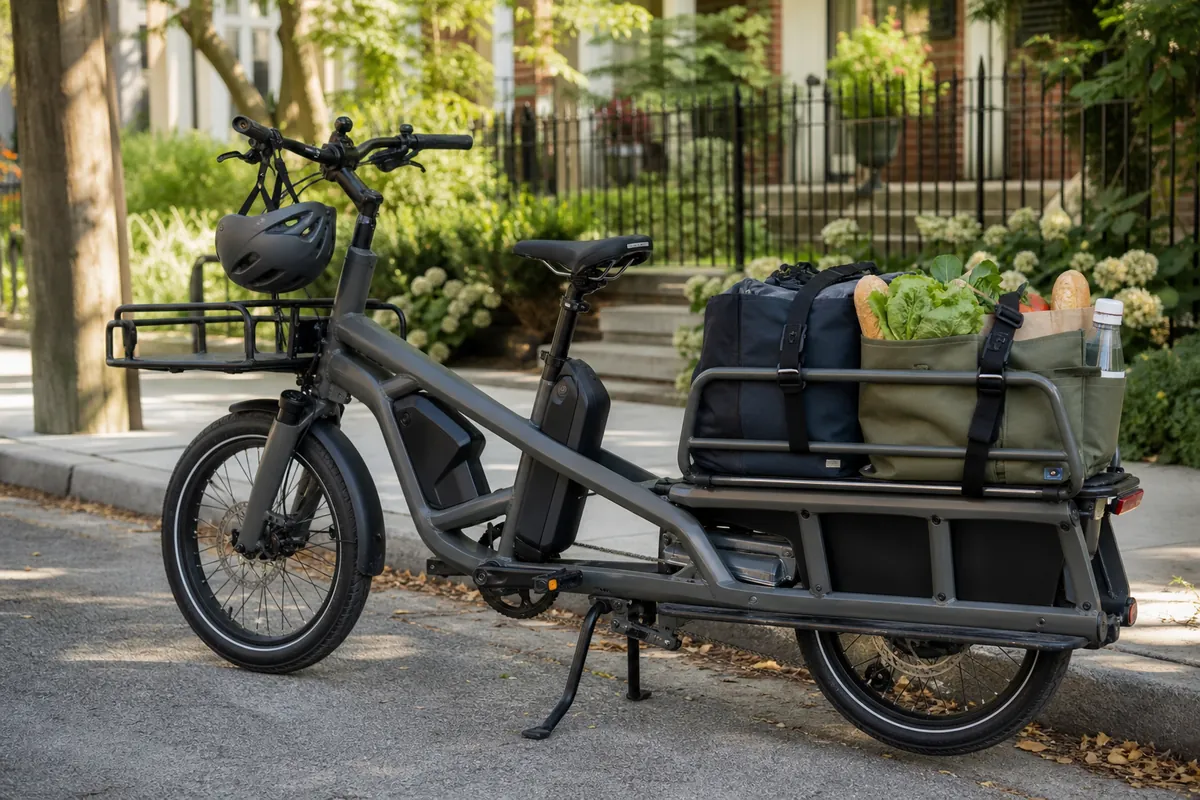
Cargo ebikes sit in a different category from most city ebikes. They are built around hauling capacity first, then comfort, then speed. That shift changes the buying decision.
| Factor | Pros | Cons |
|---|---|---|
| Daily utility | Great for groceries, school runs, errands, and work gear | Overkill if you usually ride empty |
| Cost | Can reduce short car trips, parking costs, and fuel use | Usually costs more than a basic commuter ebike |
| Handling | Stable once loaded and moving | Heavy at stops, tight turns, and low speeds |
| Storage | May replace a second vehicle for some households | Needs secure space and may not fit small apartments |
| Maintenance | Designed for harder use than many lightweight ebikes | Brakes, tires, chains, and batteries work harder |
The strongest case for a cargo ebike is simple: it carries useful stuff. A regular ebike can handle a backpack or small pannier setup. A cargo ebike can handle groceries, kid gear, tools, gym bags, packages, and awkward loads that would make a normal bike feel cramped.
That extra capacity changes how often you choose the bike. If the bike can handle the errand, you are less likely to grab the car by default. For many riders, that is the whole point.
Cargo bikes existed long before ebikes, but electric assist made them practical for more people. The motor helps with hills, headwinds, stop-and-go traffic, and the first few pedal strokes from a loaded stop.
Motor type and gearing matter more on a cargo bike than on a light cruiser. If you are still sorting through basic ebike specs, start with a plain-English look at how electric bike motors work before comparing models. A motor that feels fine on flat pavement may feel strained with a loaded rear rack and a steep driveway.
A cargo ebike is not a car replacement for everyone. Weather, distance, road safety, storage, and family needs all set limits. Still, it can replace a meaningful slice of short local driving for the right household.
Think school drop-offs, grocery runs, library trips, park visits, coffee runs, and quick errands within a few miles. Those are the trips where a cargo ebike can feel faster than expected, especially when parking is annoying.
On paper, a cargo ebike sounds like a practical tool. In real life, the good ones can feel relaxed and capable. You are outside, moving through town, and carrying what you need without turning every errand into a drive.
That is the quiet advantage. A cargo ebike can make useful trips feel less like chores.
Best fit: Cargo ebikes make the most sense for riders with repeat hauling needs. If you only carry extra weight once a month, a regular ebike with panniers may be the cleaner buy.
Cargo ebikes usually cost more than simple commuter ebikes because the frame, wheels, brakes, battery, racks, and accessories need to handle more weight. The base bike may only be part of the final price.
Seats, running boards, baskets, panniers, child accessories, rain covers, locks, mirrors, and upgraded lights can add up. Before buying, treat the full setup as the real price. For a broader checklist, use these e-bike buying tips to keep the decision grounded.
Weight is the tradeoff you feel every day. Cargo ebikes are often heavy before you load them. Add groceries or passengers, and the bike can become awkward in tight spaces.
This matters most when you are not riding. Stairs, narrow gates, crowded garages, wall hooks, small elevators, and apartment hallways can turn a great bike into a daily hassle. If you cannot store it easily, you may not use it often.
Cargo ebikes can feel steady once rolling, but slow-speed handling is different. Longer wheelbases need more room to turn. Heavy rear loads can change balance. Front-loader cargo bikes may feel strange until your hands and eyes adjust.
Before committing, test ride the bike with weight on it if possible. An empty test ride tells you something, but a loaded ride tells you much more.
A heavier bike carrying heavier loads asks more from its wear parts. Brakes, tires, spokes, chains, and drivetrains may need more attention than they would on a light city bike.
Brakes deserve special respect because cargo ebikes carry momentum. If you plan to haul regularly, understand how often e-bike brake pads may need replacement and check them sooner if stopping power starts to fade.
A cargo ebike is visible, useful, and expensive. That combination makes secure parking important. You may need a serious lock setup, a reliable anchor point, and a place where the bike is not exposed overnight.
Do not assume you can park it anywhere a normal bike fits. Long-tail racks, front boxes, wide bars, and accessories can make crowded racks frustrating.
A cargo ebike is a strong fit if your normal week includes repeat hauling. That could mean kids, groceries, work equipment, campus gear, deliveries, beach supplies, or local errands that are just slightly too annoying on a regular bike.
It also fits riders who want to reduce car dependence without pretending every trip can move to two wheels. The goal is not perfection. The goal is to make enough local trips easier that the bike earns its space.
You are more likely to be happy with a cargo ebike if:
Skip the cargo ebike if you mainly want a light recreational ride. You may also want to avoid one if you live upstairs with no elevator, have no secure parking, or need to carry the bike by hand.
A regular commuter ebike, folding ebike, or step-through model may be easier to live with. Cargo capacity is only a win when it solves a real problem. Otherwise, you are paying for weight and size you do not need.
Practical test: List your last 20 local car trips. If a cargo ebike could have handled at least five of them comfortably, it is worth serious consideration. If it only replaces one or two, a lighter ebike may be smarter.
Do not compare cargo ebikes only by motor wattage or battery size. Those specs matter, but they do not tell the whole story. The better question is how the complete bike handles your real load.
Pay close attention to:
Payload ratings can be confusing because brands may list rider weight, cargo weight, rear rack limits, and total system weight differently. If you are comparing models, this guide to e-bike cargo capacity can help you read those numbers more carefully.
If you are still early in the decision, start by comparing cargo ebike styles instead of jumping straight to one brand. Look at long-tail models, compact cargo ebikes, front-loaders, and utility ebikes with heavy-duty racks. The right category matters more than chasing the biggest battery on the page.
Use a broad marketplace search to get a feel for prices, frame styles, accessories, and real-world owner questions. Then narrow your list to models that fit your storage, payload, and service needs.
A cargo ebike is worth it when the extra carrying power solves a weekly problem. It can make errands easier, reduce short car trips, and turn practical transportation into something you actually enjoy. For families, commuters with gear, and utility-first riders, that can be a big win.
The drawbacks are just as real. Cargo ebikes are heavier, pricier, harder to store, and more demanding to maintain than smaller ebikes. The best cargo ebike is not the biggest one you can afford; it is the one that fits your home, routes, loads, and habits.
If your life has a cargo problem, this category can be excellent. If it does not, buy the simpler bike and enjoy having less to manage.
* We may earn a commission when you buy through our links.