Motorized bicycle laws explained simply: your bike is legal only if it fits the vehicle category, equipment rules, and road-use limits where you ride. A motorized bicycle may look like a regular bike with a small engine, but the law may treat it as an e-bike, moped, motor-driven cycle, or motorcycle.
Most motorized bicycle laws depend on pedals, motor type, engine size or wattage, top assisted speed, and whether the rider needs a license, registration, plate, helmet, or insurance. There is no one national rule for every rider. State law sets the main category, and local rules can still limit roads, bike lanes, trails, sidewalks, parks, and campuses.
The safest way to think about a motorized bicycle is to classify it before you ride it. Once you know whether your setup is legally a bicycle-style vehicle, e-bike, moped, or motorcycle, the rest of the checklist becomes much clearer.
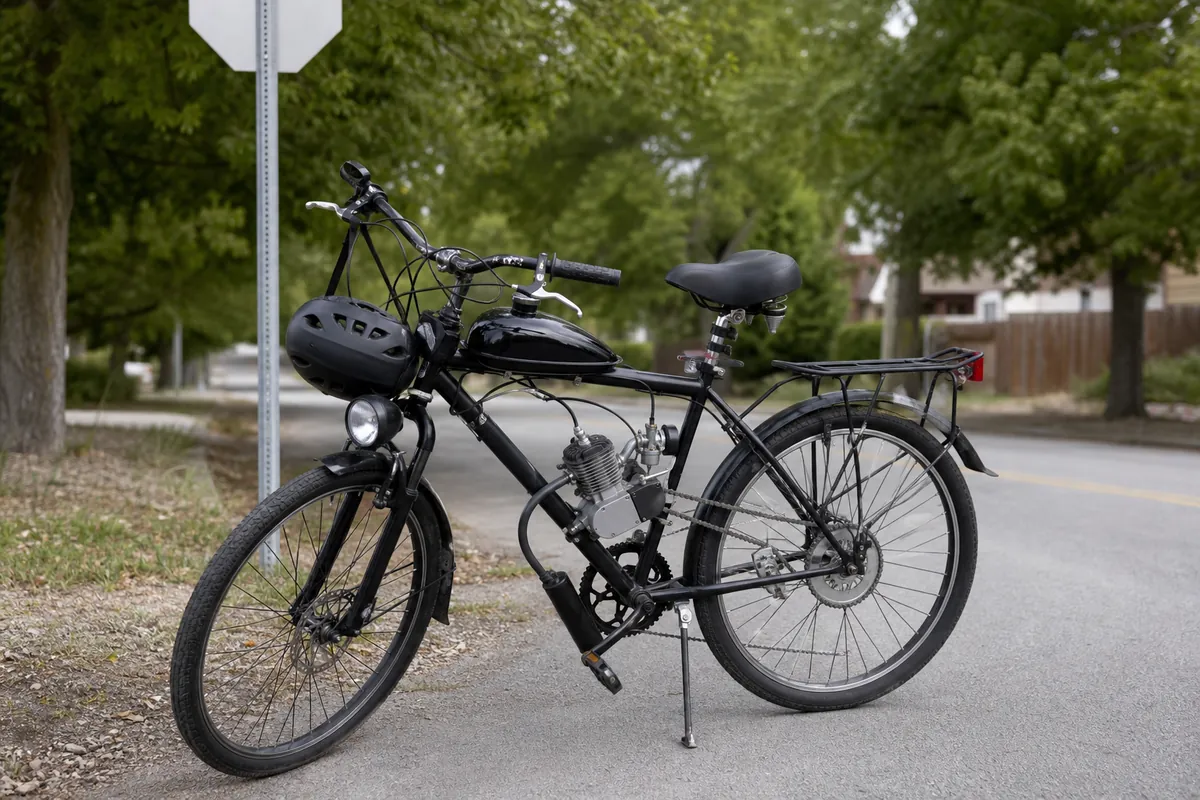
The confusing part is that “motorized bicycle” does not mean the same thing in every state. Some states use the term for low-powered mopeds. Others separate gas-powered bicycles from electric bicycles. Some look at engine displacement, brake horsepower, motor wattage, maximum speed, or whether the pedals still work.
That means the label on a kit or product page is not enough. A seller may call something a motorized bike, but your state may call it a moped. A park rule may treat it as a motor vehicle. The name on the box is not the law.
If your first question is whether the bike can be used on public streets, start with MBHQ’s guide to driving a motorized bike on the road. If your main concern is paperwork, the guide to riding a motorized bicycle without a license goes deeper on that issue.
This guide is general information, not legal advice. Laws change, and enforcement can vary by state, city, trail system, and road type. Before riding, check your state DMV, transportation department, or vehicle code, then confirm any local restrictions for paths, parks, schools, and private property.
Most motorized bicycle laws come down to a short list of facts about the actual bike. You do not need to memorize every legal term, but you do need to compare your setup against the rulebook.
Pedals often matter because they help separate bicycle-style vehicles from scooters, mopeds, and motorcycles. If a motor kit makes the pedals useless, ornamental, or unsafe to use, the bike may be harder to classify as a bicycle-like vehicle.
Gas and electric systems are often regulated differently. A gasoline kit may be judged by cubic centimeters, brake horsepower, transmission type, and top speed. An electric setup may be judged by wattage, assisted speed, throttle behavior, and e-bike class rules.
For riders comparing categories before buying or building, MBHQ’s e-bike vs moped guide is useful because it shows why two similar-looking vehicles can land in very different legal buckets.
Speed is one of the biggest dividing lines. A low-speed assisted bicycle may stay in a lighter category. A faster machine can trigger moped or motorcycle-style treatment, especially if it can keep accelerating under motor power alone.
Gas rules often refer to engine displacement, commonly written as “cc.” Electric rules usually use watts, e-bike class definitions, or assisted-speed limits. Do not assume a common kit size is legal everywhere. A setup that works in one state may cross the line in another.
Even when a motorized bicycle is allowed on the road, it may need specific equipment. Common requirements can include lights, reflectors, brakes, mirrors, a horn or bell, a plate, or a registration decal. Helmet rules may also depend on rider age, vehicle category, and location.
For safety planning, MBHQ’s e-bike helmet guide is a practical place to start. It is written for e-bike riders, but the safety logic carries over well to many motorized bicycle riders.
| Legal factor | Why it matters | What to check |
|---|---|---|
| Pedals | May help define the vehicle as bicycle-style | Whether pedals are required and must be usable |
| Motor type | Gas and electric systems may follow different rules | Engine size, wattage, throttle use, assist limits, and transmission type |
| Top speed | Higher speeds can move the bike into a stricter category | Maximum motor-assisted speed allowed by your state |
| License and registration | Some categories require paperwork before road use | License, permit, title, registration, plate, insurance, and inspection rules |
| Where you ride | Roads, bike lanes, trails, sidewalks, and parks may differ | State rules plus local ordinances and posted signs |
Maybe. This is where many riders get surprised. A motorized bicycle can feel small and casual, yet still require paperwork if the state classifies it as a moped, motor-driven cycle, or motorcycle.
Some states create a lighter category for low-powered motorized bicycles. Others require a standard driver’s license, moped permit, motorcycle endorsement, registration, plate, or insurance. Age limits and helmet rules may apply too.
Use this order when checking your setup:
If your motorized bicycle sits near a legal boundary, treat it as a paperwork problem first. Save the official state page, write down your motor size and top assisted speed, and confirm the category before spending money on upgrades.
Everyday language blends these terms together, but the legal differences matter. An e-bike usually means an electric bicycle that fits a state’s e-bike definition. A moped often has motor vehicle paperwork rules. A motorized bicycle can fall between those ideas, depending on the state.
The distinction matters because enforcement usually follows the legal category, not the rider’s intent. Saying “it is just a bike with a motor” may not help if the vehicle code says otherwise.
Public roads are usually the first concern, but they are not the only one. A motorized bicycle may be allowed on some streets but banned from sidewalks, shared-use paths, recreational trails, or protected bike lanes.
Posted signs matter. Many paths allow bicycles but prohibit motorized vehicles. Some places allow classed e-bikes but not gas-powered bicycles. Others restrict throttle use, trail access, or motorized riding during certain hours or seasons.
When the rule is unclear, use the conservative reading. Ride where your category is clearly allowed, keep speed modest around other people, and avoid assuming that ordinary bicycle access includes every motorized setup.
The biggest mistake is assuming that a small motor means small legal consequences. A bike can look harmless and still fall under a stricter vehicle category.
Other common mistakes include:
The boring check is the valuable check: definition first, paperwork second, road access third. That order prevents the most trouble.
Motorized bicycle laws are not one-size-fits-all. The right answer depends on your state, your motor, your speed, your equipment, and where you plan to ride.
If you remember one thing, make it this: classify the bike before you ride it. Once you know whether your setup is treated as a motorized bicycle, e-bike, moped, or motorcycle, the legal checklist becomes much easier to follow.