If you are comparing an ebike vs scooter for commuting, the better choice depends on distance, storage, road comfort, and how much you need to carry. For most longer daily commutes, an ebike is the more stable and flexible option. For short city trips where portability matters most, a compact electric scooter can be easier to store, carry, and combine with transit.
Quick answer: Choose an ebike if your commute is more than a few miles, includes rough pavement or hills, or requires carrying a backpack, groceries, work gear, or a child seat. Choose an electric scooter if your route is short, smooth, low-speed, and you need something light enough to carry into an office, apartment, train, or classroom.
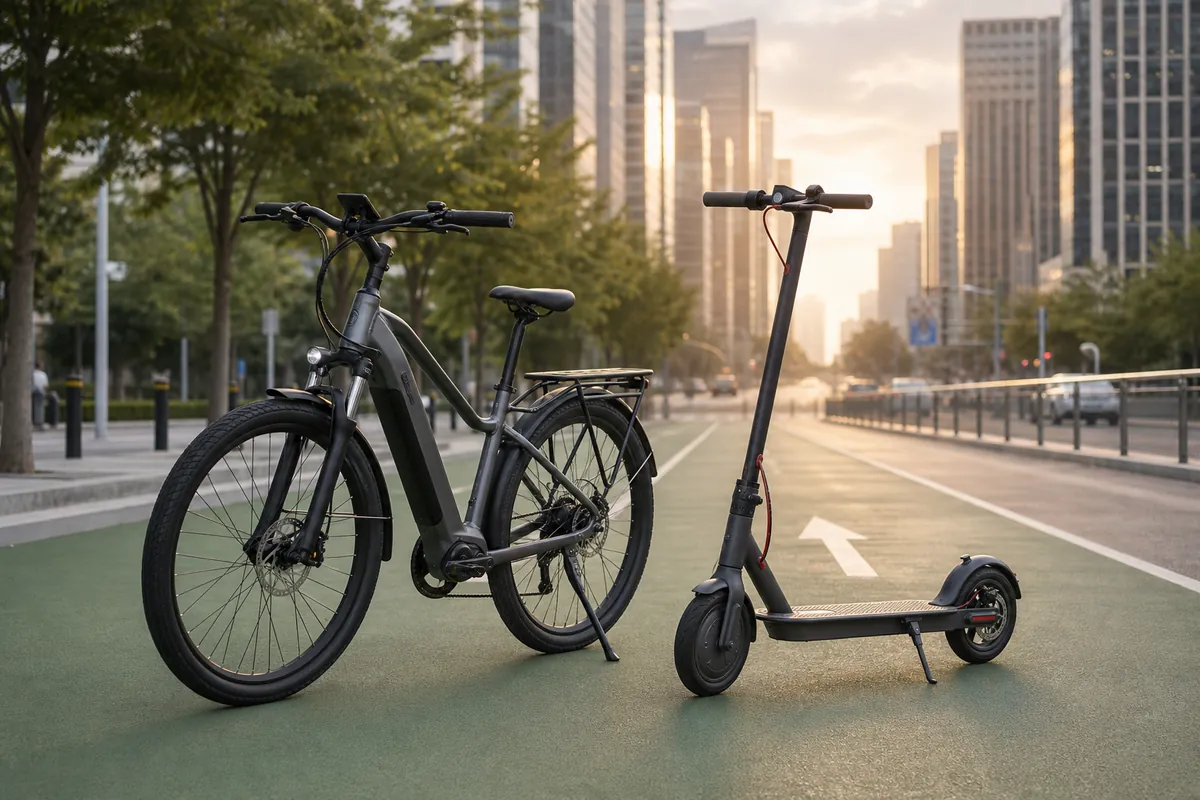
An ebike rides more like a bicycle with powered help. You sit down, use larger wheels, and usually get better stability over broken pavement, wet leaves, gravel patches, and longer stretches of road. That makes ebikes feel more comfortable when the commute starts to look like real transportation instead of a quick hop.
An electric scooter is more compact. You stand on a deck, steer with a narrow handlebar, and usually ride on smaller wheels. That makes it easy to store, but also more sensitive to potholes, curb cuts, cracks, and rough shoulder edges. For a short, smooth route, that tradeoff may be worth it.
The simplest way to think about it: an ebike is usually the better vehicle replacement; a scooter is usually the better last-mile tool.
Best fit at a glance: Ebikes favor comfort, range, cargo, and bad-pavement confidence. Scooters favor portability, simple storage, and short urban trips where carrying the vehicle is part of the routine.
Distance is the first filter. If your commute is one to three miles on calm streets or bike paths, a scooter can be enough. You may be able to fold it, carry it inside, and avoid the parking problem completely.
Once the trip gets longer, an ebike starts to pull ahead. Sitting down matters more than people expect, especially after a full workday. Larger wheels also make a commute feel less twitchy and less tiring. If your route includes hills, headwinds, or rough pavement, the ebike advantage grows quickly.
Battery range depends on rider weight, speed, tire pressure, terrain, wind, temperature, and assist level. For ebikes, battery care also matters over time; MBHQ has a deeper guide to e-bike battery maintenance if you want to protect range after the purchase.
Comfort is where ebikes usually win. A saddle, larger tires, and bicycle-style geometry make longer trips feel more natural. You can shift your weight, pedal lightly, coast, and settle into the ride.
Scooters can feel quick and convenient, but the standing position is less forgiving. Small wheels can catch more sharply on potholes, railroad gaps, uneven pavement, and debris. That does not make scooters bad; it means route quality matters more.
If your commute has rough shoulders, cracked pavement, rain grooves, hills, or mixed road surfaces, an ebike is usually the calmer choice. You also get better control when carrying a backpack or panniers, and the riding position gives you more time to react.
If you are new to ebikes, start with practical buying basics before chasing motor specs. This e-bike buying tips guide is a good next step for narrowing frame style, battery placement, brakes, and local support.
A scooter makes sense when the hardest part of commuting is not the ride itself, but where the vehicle goes afterward. If you live upstairs, work in a tight office, or need to bring your ride onto a train, a folding scooter can solve a problem an ebike cannot.
That said, do not buy only for folded size. Check real weight, handlebar shape, deck size, brake type, water-resistance claims, and replacement tire availability. A scooter that is technically portable but awkward to carry every day may not feel portable for long.
| Commuting factor | Ebike | Electric scooter |
|---|---|---|
| Best commute length | Medium to longer daily trips | Short city trips and last-mile rides |
| Comfort | Better for longer rides because you sit and use larger wheels | Fine for short rides, less forgiving on rough pavement |
| Storage | Needs a rack, garage, bike room, or secure indoor spot | Usually easier to fold and carry indoors |
| Cargo | Better with racks, panniers, baskets, and bags | Limited mostly to a backpack |
| Bad weather | More stable, but still needs cautious riding and proper maintenance | More sensitive to slick surfaces and small-wheel traction limits |
| Security | Needs a serious lock plan | Often brought indoors, reducing lockup time |
For carrying things, the ebike is the clear winner. A rear rack, panniers, front basket, or cargo setup can turn an ebike into a practical daily hauler. That matters if your commute includes a laptop, lunch, gym clothes, rain gear, groceries, or a stop on the way home.
Scooters are more limited. Most riders use a backpack, which is fine for light loads. But a heavy backpack can make standing balance less comfortable and may feel worse over bumps. If you regularly carry more than a small bag, an ebike will usually feel less compromised.
Before you buy an ebike for errands, check weight limits and rack ratings. MBHQ’s guide to e-bike cargo capacity explains why total payload is more than just rider weight.
Scooters often win storage. Many fold small enough to sit under a desk, beside a couch, or in a closet. If your workplace allows them indoors, that can remove the biggest daily headache: locking up outside.
Ebikes need more planning. They are heavier, bulkier, and more attractive to thieves. If you cannot bring one inside, you need a secure rack, a strong lock, and a realistic routine you will follow every day. A good lock plan is not optional; it is part of the purchase.
For that side of the decision, read MBHQ’s guide on how to securely lock your bike before choosing a commuter ebike you cannot store indoors.
Neither option makes bad weather disappear. Rain reduces traction, increases stopping distance, and makes visibility more important. Ebikes usually feel steadier because of their larger tires and seated position, but wet roads still demand slower riding and smoother braking.
Scooters need extra caution in rain. Small wheels, narrow contact patches, painted lines, metal plates, leaves, and uneven pavement can all become more noticeable. If your commute regularly happens before sunrise, after dark, or during wet months, prioritize lights, braking quality, tire condition, and visibility.
Practical callout: Do not choose based only on top speed. For commuting, the better question is whether the vehicle feels stable at normal speeds, stops predictably, stores safely, and fits your actual route. A slower ride that you trust is more useful than a faster ride you avoid using.
Scooters often cost less up front, especially for short-range commuter models. They can also be cheaper to store because you may not need a rack, lock, or garage space. The tradeoff is that small tires, deck space, brakes, and replacement parts vary a lot by model.
Ebikes usually cost more, but they are built around a more familiar bicycle platform. Tires, brake pads, chains, racks, and many fit items are easier to understand. Repairs may also be easier if you have a local bike shop willing to work on the mechanical parts, though some shops avoid certain direct-to-consumer electrical systems.
If you are budget shopping, look beyond sticker price. Include lock cost, helmet, lights, flat repair supplies, replacement tires, brake service, battery replacement risk, and whether local service is available. The cheapest commuter is the one you will actually keep riding.
Local rules matter. Ebike classes, scooter speed limits, sidewalk rules, helmet rules, path access, and age restrictions can vary by city and state. Before buying, check your local transportation department or city rules for where each vehicle can legally operate.
Do not assume scooters and ebikes are treated the same. Some places allow one on certain paths but restrict the other. Some rules also change based on motor power, speed capability, throttle use, or whether the vehicle has pedals.
Buy an ebike if you want a practical daily commuter that can handle longer distances, hills, cargo, imperfect pavement, and errands. It is the stronger choice when the trip itself matters more than carrying the vehicle indoors.
Buy an electric scooter if your commute is short, smooth, and storage-constrained. It is the better fit when you need to fold your ride, carry it upstairs, bring it into an office, or pair it with a bus or train.
If you are still split, map your route honestly. Count the miles, hills, rough sections, lockup points, stairs, elevators, and storage rules at both ends. The right answer usually appears once the commute is treated as a full routine, not just a ride.
If you are comparing models, start broad and filter by the commute you actually have: ride distance, storage limits, tire size, brakes, weight, and whether you need cargo capacity. A general marketplace search can help you compare real prices and available formats before narrowing to specific brands.
For most riders choosing between an ebike and a scooter for commuting, the ebike is the more capable all-around vehicle. It handles distance, comfort, cargo, and uneven roads better. The scooter wins when portability is the deciding factor and the route is short enough that standing on small wheels stays comfortable.
Choose the one that removes the biggest daily friction. If that friction is distance, hills, cargo, or road comfort, go ebike. If it is stairs, storage, transit, or office space, go scooter.
* We may earn a commission when you buy through our links.