The best GPS tracker for ebike theft protection is usually a hidden, battery-powered tracker with reliable location updates, motion alerts, weather resistance, and a mounting setup that does not advertise itself. For most riders, that means choosing a true GPS/LTE tracker over a simple Bluetooth finder if recovery is the main goal.
Quick answer: If you want the strongest theft-recovery setup, look for an ebike GPS tracker with cellular location reporting, a rechargeable battery, motion alerts, and a discreet mount inside the frame, under the saddle, in a bottle-cage position, or near the motor area. Bluetooth trackers can be useful as a cheap backup, but they are not the same thing as live GPS tracking.
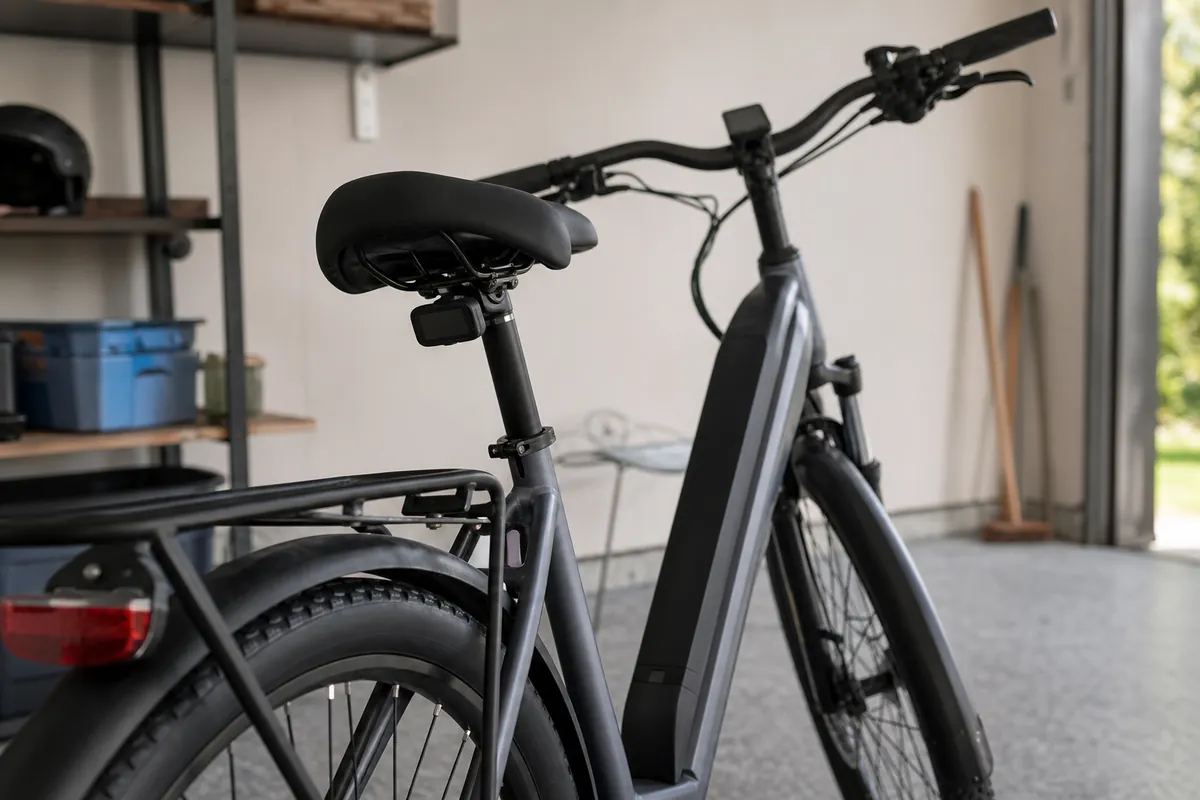
An ebike is harder to replace than a regular bike. It costs more, weighs more, and often has parts that are harder to match quickly, especially the battery, display, controller, and motor system. A tracker will not stop every theft, but it can improve your odds of locating the bike after it moves. The better strategy is layered: use a serious lock, park carefully, hide the tracker well, and make the bike easier to identify if you need to file a report.
If you are still building your security setup, start with the basics in our guide on how to securely lock your bike. A GPS tracker works best when it is the backup plan, not the whole plan.
The right tracker depends on how you ride, where you park, and how much maintenance you will tolerate. A commuter locking outside every day needs a stronger setup than someone who stores the bike indoors and only wants extra peace of mind at trailheads or coffee stops.
This is the first decision. A GPS tracker uses satellite positioning and usually a cellular connection to report where the bike is. A Bluetooth finder relies on nearby phones or devices in a crowd network to detect it. That can work well in dense areas, but it is less predictable in quiet neighborhoods, rural spots, industrial parks, or anywhere the bike may be hidden away from passing devices.
For theft recovery, GPS/LTE is the stronger category. For low-cost backup tracking, Bluetooth can still make sense, especially if you already use that ecosystem and understand its limits.
A tracker with great features is not much help if it is dead when the bike disappears. Some units are designed for frequent charging and active tracking. Others sip power and last longer between charges, especially when the bike is not moving. Think honestly about your routine. If charging one more device every few days sounds annoying, choose a tracker with longer standby life or a power strategy that fits your bike.
Hardwired trackers can reduce charging chores, but installation gets more complicated. On an ebike, you also need to be careful around the main battery system and wiring. If you are not comfortable with electrical work, a self-contained rechargeable tracker is usually the simpler choice.
Motion alerts are one of the most useful features for ebike owners. If the bike moves when it should be parked, you want to know quickly. Geofencing can also help by notifying you when the tracker leaves a saved area, such as your garage, workplace, or apartment building.
Do not expect notifications to be perfect every time. Signal strength, app settings, battery-saving modes, and cellular coverage can all affect timing. Still, a tracker that alerts you early is more useful than one that only helps after you remember to check the map.
Ebike accessories live a harder life than desk gadgets. Rain, road spray, cold mornings, heat, dust, and vibration all matter. Look for a tracker that is clearly designed for outdoor or vehicle use, and check whether the mount protects the charging port or seams from direct spray.
If you ride year-round, pair the tracker decision with sensible care habits. Our guides on riding an e-bike in the rain and e-bike battery maintenance can help you avoid preventable damage while you improve theft protection.
Best overall direction: Choose a hidden GPS/LTE tracker if your main concern is theft recovery. Choose a Bluetooth finder only if you want a lower-cost secondary layer and accept that location updates depend on nearby network devices.
| Tracker type | Best fit | Main tradeoff |
|---|---|---|
| GPS/LTE tracker | Daily commuters, expensive ebikes, outdoor parking, theft recovery | Usually needs a subscription and periodic charging |
| Bluetooth finder | Budget backup layer, short stops, dense urban areas | No true live GPS; depends on nearby network devices |
| Hardwired tracker | Riders who want fewer charging chores and are comfortable with installation | More setup complexity and possible compatibility concerns |
| Integrated alarm tracker | Parking in visible public areas where deterrence matters | May be easier to notice, remove, or silence if poorly mounted |
The best tracker is the one a thief does not immediately find. Obvious mounts are easier to remove, so avoid placing the device where it looks like a normal accessory clipped to the bars. Common hiding zones include under the saddle, inside a saddle bag, near a bottle-cage mount, under a rear rack, inside a frame bag, or tucked near the motor area where it does not interfere with heat, moving parts, or cables.
Be careful with anything that affects braking, steering, battery access, or wheel clearance. A tracker should be hidden, but it should not make the bike unsafe or harder to maintain. If you use a rack or carry the bike by car, check that the tracker will not be crushed by straps, clamps, or frame contact points. That same thinking applies to transport setup; see our guide on whether your car rack can carry an e-bike if you haul a heavier electric bike.
Use a mount that resists vibration. Ebikes are heavier than standard bicycles, and small accessories can loosen over time. After installation, ride a short loop, check the tracker position, and inspect again after a few commutes. A discreet mount is good; a discreet mount that falls off is not.
Also consider signal quality. A tracker buried too deeply inside metal or packed tightly beside dense components may perform worse. If the app gives you location history or signal feedback, test it before trusting it. Park the bike where you normally park, wait a bit, and make sure the tracker reports in a useful way.
Practical buying tip: Before buying, decide whether you care more about live recovery or low-maintenance peace of mind. If recovery is the priority, subscription-based GPS is usually worth considering. If you only want a cheap extra layer, a Bluetooth finder may be enough, but it should not be your whole theft plan.
Use this checklist before you pick a tracker. It will keep you focused on real ownership details instead of just app screenshots and marketing claims.
For a high-value ebike, using two trackers can be reasonable. One can be a more capable GPS/LTE unit hidden carefully, while the second can be a small Bluetooth finder placed somewhere else. The goal is not to make the bike impossible to steal. The goal is to create more chances for recovery and more friction for anyone trying to strip the bike quickly.
There is a point where the setup becomes overkill. Two trackers, a strong lock, documented serial numbers, good photos, and smart parking habits are usually more practical than filling the bike with gadgets. Layered security works best when every layer is simple enough that you actually use it.
Because fit, subscription terms, and mounting options vary by rider, the most useful next step is to compare current ebike GPS tracker listings and read the latest owner feedback before choosing a device. Prioritize trackers that clearly explain coverage, battery life, mounting method, weather resistance, and whether a paid plan is required.
If you want a broader search, compare electric-bike-specific tracker listings too. Look for outdoor-ready units, clear app requirements, and mounts that make sense for your frame instead of choosing only by the cheapest upfront price.
The best GPS tracker for an ebike is the one that matches your theft risk, parking routine, and willingness to maintain it. For serious recovery, start with a hidden GPS/LTE tracker that has motion alerts, dependable battery life, weather resistance, and a mount that will not be obvious at a glance. Add a Bluetooth finder only as a secondary layer, then back the whole setup with a strong lock and good parking habits.
A tracker is not a guarantee, but it can turn a stolen ebike from a total loss into a recoverable lead. For many riders, that peace of mind is worth the small amount of setup work.
* We may earn a commission when you buy through our links.