Searching for the best Class 3 eBike Reddit riders recommend can uncover useful owner feedback, but the loudest recommendation is not automatically the right purchase. The safest shortlist starts with your terrain, fit, battery needs, braking performance, local service options, and applicable riding rules—not whichever model received the most upvotes.
Quick answer: For most commuters, the best Class 3 eBike is a properly fitted model with pedal assistance up to 28 mph, hydraulic disc brakes, a verifiable safety certification, a battery you can replace, and support from a brand or dealer that stocks parts. Favor a hub-drive commuter for value and straightforward daily riding; consider a mid-drive bike if steep hills, balanced handling, or a more natural pedaling feel matter more than price.
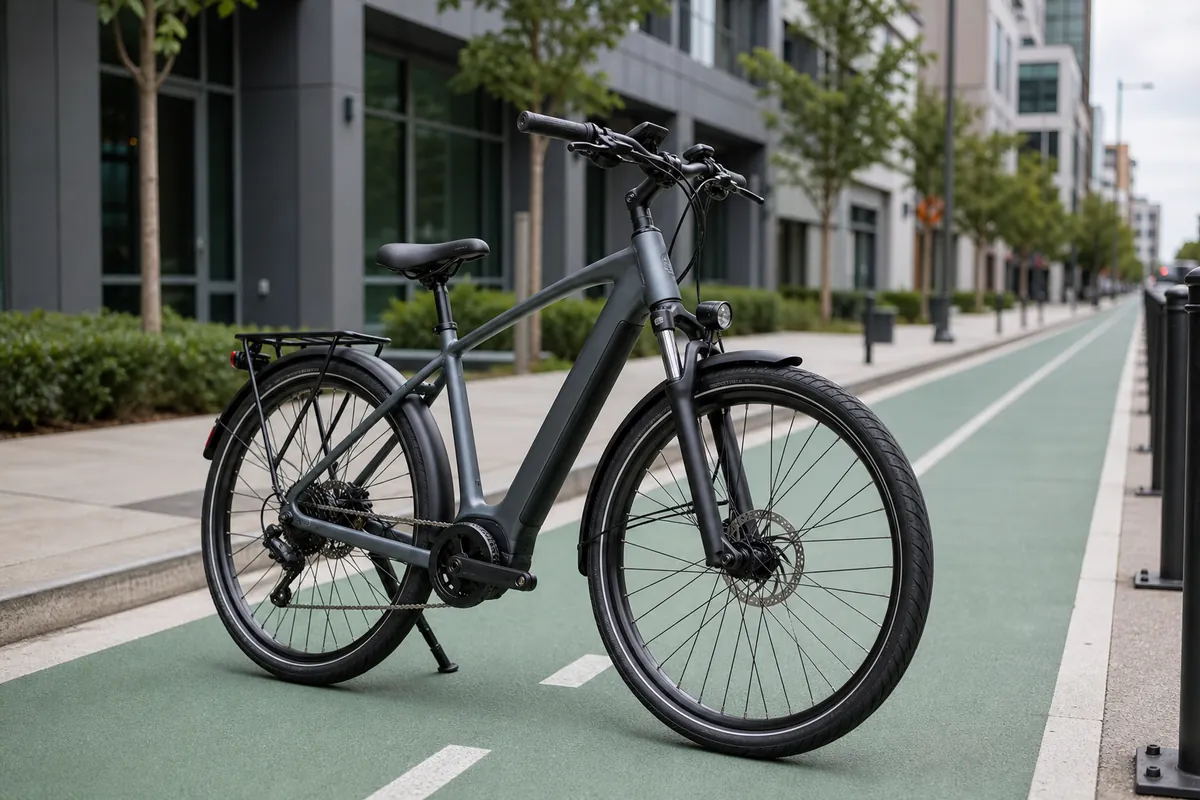
Reddit threads are most helpful when owners explain how and where they ride. A recommendation from someone covering flat, dry bike paths may tell you little about a hilly commute with rough pavement and winter weather. Before comparing model names, define the job your bike must perform.
The useful Reddit pattern: Give more weight to posts that include rider weight, terrain, mileage, maintenance history, and the exact model year. Treat one-line endorsements, referral-driven praise, and unsupported range claims as leads to investigate—not purchase proof.
In the common U.S. three-class framework, a Class 3 eBike provides pedal assistance up to 28 mph. State and local rules can vary, particularly around throttles, rider age, helmets, and path access, so verify the rules for every place you expect to ride. A bike capable of higher assisted speeds also deserves closer attention to fit, tires, brakes, and handling.
A rear-hub motor is a practical choice for many paved commutes. It can deliver brisk acceleration without routing all motor power through the bicycle’s chain and cassette. A mid-drive motor applies power through the bike’s gears, which can be valuable on sustained climbs and often produces more balanced handling. The tradeoff is greater drivetrain involvement and, potentially, more frequent chain and cassette maintenance.
Nominal wattage alone does not reveal how a bike will climb, feel at low speed, or manage heat. Controller tuning, torque delivery, gearing, wheel size, total load, and motor design all matter. Our guide to electric bike motors provides a more useful framework than comparing a single headline number.
Hydraulic disc brakes are a sensible preference for a Class 3 commuter because they generally provide strong, controllable braking with less hand effort than basic mechanical systems. Rotor size, pad condition, tire grip, bike weight, weather, and rider technique still affect stopping performance. No brake label eliminates the need for maintenance.
Choose tires for the surfaces you actually ride. Wider street tires can add comfort and stability on broken pavement, while very wide tires also add weight and rolling resistance. Look for replacement sizes that are readily available rather than an unusual format that may become a sourcing problem later.
Battery capacity is commonly stated in watt-hours, but advertised range is not a guaranteed result. Speed, hills, wind, temperature, tire pressure, assist level, stops, and payload can change real-world consumption substantially. At Class 3 speeds, aerodynamic drag becomes especially important, so a rider who regularly uses maximum assistance should plan conservatively.
A removable battery can simplify indoor charging, winter storage, and future replacement. It is not essential for every buyer, though: integrated batteries may suit riders who can bring the entire bike near an outlet. Consider the practical tradeoffs in our guide to removable eBike batteries.
Ask the seller for the specific safety certification covering the complete electrical system or battery, then verify it through the certifying organization’s database when possible. A logo in a product image is less persuasive than a traceable listing tied to the exact model.
| Buyer priority | Good starting point | What to verify |
|---|---|---|
| Flat daily commute | Rear-hub commuter | Fit, brake quality, battery replacement, and local service |
| Steep or sustained hills | Mid-drive with suitable gearing | Low-speed climbing behavior and drivetrain maintenance costs |
| Long round trips | Larger-capacity battery or charging access | Conservative range under your speed, weather, and payload |
| Apartment living | Lighter bike or removable battery | Carry weight, stairs, storage dimensions, and charging location |
| All-weather commuting | Commuter with fenders and integrated lights | Water-resistance guidance, tire grip, and parts availability |
| Heavy cargo | Frame and rack rated for the full load | Total payload, rack limit, braking, and kickstand stability |
Owner communities are excellent at exposing recurring annoyances: rattling fenders, proprietary connectors, slow warranty responses, premature brake wear, or apps that stop receiving updates. The challenge is separating a repeatable pattern from an isolated failure.
Practical test: Before buying, ask where you would obtain a compatible battery, display, controller, derailleur hanger, brake pads, and charger three years from now. If the seller cannot provide clear answers, a lower purchase price may conceal a higher ownership risk.
More power is not automatically more useful. A forceful motor can feel abrupt in traffic, consume energy quickly, exceed local definitions, or overwhelm an inexpensive drivetrain. Smooth control, appropriate gearing, heat management, and legal configuration matter more than winning a wattage contest.
Extra capacity can reduce range anxiety, but it also adds cost and weight. Estimate your demanding normal ride, include a sensible reserve, and account for battery aging and cold weather. Buying far more battery than you can comfortably carry upstairs is not an upgrade.
Online purchasing can work for someone comfortable inspecting assembly, adjusting components, and managing remote support. A local dealer is often worth the premium when you want a test ride, professional setup, warranty coordination, or routine service. The correct sales channel depends partly on how much mechanical and logistical work you are willing to own.
Range estimates are only comparable when test conditions are comparable. A low-speed test with a light rider on flat ground does not predict a fast commute into a headwind. Look for owner reports that resemble your route, then retain enough capacity for unfavorable conditions.
Do not spend the entire budget on the bike. Depending on your route and storage, the usable setup may also need a properly rated helmet, a high-quality lock, mirrors, a repair kit, a pump, weather gear, panniers, upgraded lights, or a rack capable of carrying a heavier eBike.
Before ordering, work through these broader eBike buying tips, then compare the full cost of two or three finalists. Include shipping, professional assembly, accessories, likely wear items, and the price and availability of a replacement battery.
Create a three-bike shortlist rather than researching indefinitely. Give each model a score from one to five in the categories below, using the same evidence standard for every candidate:
Eliminate any bike that fails a non-negotiable requirement, even if its average score is high. A bargain that cannot be serviced, carried, legally used, or comfortably fitted is not a bargain.
The best Class 3 eBike is not a universal Reddit favorite. For most buyers, it is a commuter-focused bike that fits properly, brakes confidently, has enough verified battery capacity for the real route, and comes with a credible path to replacement parts. Start with a rear-hub model for practical value on moderate terrain; move toward a mid-drive when demanding hills and refined power delivery justify the added cost.
Use Reddit to discover recurring ownership experiences, then confirm every decision-critical detail with current documentation, a test ride when possible, and a realistic total-cost comparison. That approach is slower than copying a popular recommendation, but it produces a shortlist built around your commute rather than someone else’s enthusiasm.
If you are ready to compare current listings, use the search below as a discovery tool. Confirm the class configuration, certification, warranty, seller, included equipment, and replacement-parts support before purchasing.
* We may earn a commission when you buy through our links.