Learning how to choose an ebike is mostly about matching the bike to your real rides: distance, hills, cargo, storage, comfort, and budget. Start with your use case first, then compare motor feel, battery setup, frame style, brakes, tires, warranty, and service support.
Quick answer: Choose an ebike by deciding where you will ride most, how far you need to go, how much weight you need to carry, and whether you can comfortably store and service the bike. For most new buyers, the best choice is not the most powerful ebike; it is the one that fits your body, route, parking situation, and maintenance comfort.
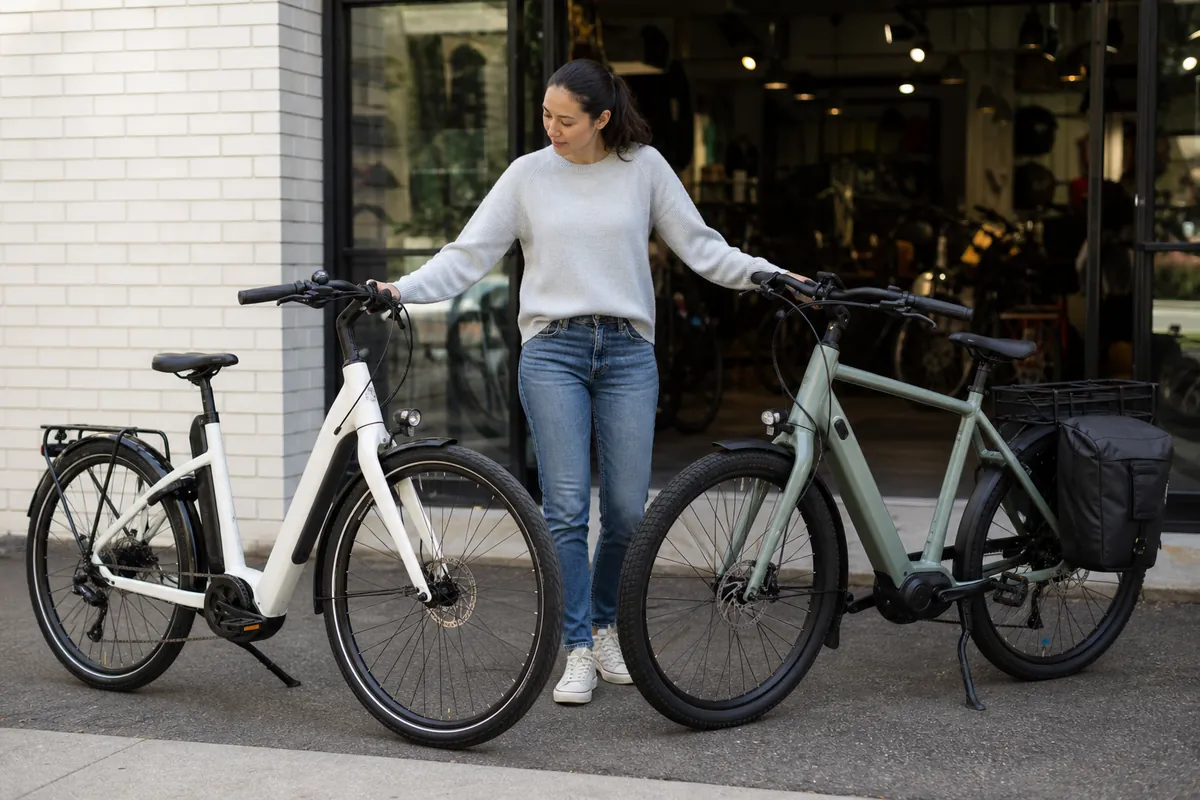
An ebike can replace short car trips, make hills less annoying, stretch your commute range, or turn weekend rides into something you actually look forward to. The tricky part is that many product pages lead with wattage, range claims, and glossy lifestyle photos before they answer the real buyer question: will this bike work for my day-to-day life?
Use this guide as a practical filter. You do not need to become a drivetrain engineer before buying, but you do need to know which specs matter, which ones are easy to overvalue, and which tradeoffs will show up after the first few weeks of ownership.
The cleanest way to choose an ebike is to name the job first. A commuter bike, a leisure cruiser, a cargo hauler, and a trail-capable fat tire ebike can all be good purchases, but they solve different problems.
| Primary use | Look for | Watch out for |
|---|---|---|
| Commuting | Fenders, lights, rear rack, predictable handling, serviceable brakes | Overly heavy frames if stairs or office storage are involved |
| Errands and cargo | Strong rack rating, stable frame, wide tires, hydraulic disc brakes | Assuming a rear rack can carry more than its stated limit |
| Casual neighborhood rides | Comfortable upright position, easy step-over height, simple controls | Buying more speed, weight, or battery than you actually need |
| Hills | Good low-speed assistance, appropriate gearing, torque-friendly motor setup | Relying on wattage alone to predict climbing feel |
| Apartment living | Manageable weight, removable battery, folding or compact frame if needed | Forgetting hallway, elevator, and charging logistics |
If you plan to carry groceries, a child seat, work gear, or camping supplies, read the rack and payload ratings carefully. Our guide to e-bike cargo capacity explained is useful here because total payload includes the rider, cargo, accessories, and sometimes the battery itself.
Motor specs matter, but they do not tell the whole story. A higher wattage number can sound impressive, yet the ride experience also depends on controller tuning, gearing, sensor type, wheel size, bike weight, and how the assistance comes on when you pedal.
For flat city riding, a smooth and moderate motor can feel better than an aggressive setup. For steep hills, heavier riders, or loaded cargo, you want stronger low-speed support and gearing that does not leave the motor struggling. If you are comparing hub motors, mid-drives, torque sensors, and cadence sensors, our primer on electric bike motors explained breaks down the basics without turning the decision into a spec sheet maze.
Buyer filter: Test ride at the lowest assist levels, not just the fastest one. A good ebike should feel controlled when starting, turning, slowing, and riding through crowded areas.
A cadence sensor usually adds power when it detects that you are pedaling. It can be affordable and easy to ride, but some bikes feel more like an on/off assist system. A torque sensor responds to how hard you press on the pedals, which often feels more natural and bike-like.
Neither option is automatically better for every rider. If you want simple cruising with less effort, a cadence-sensor bike may be fine. If you want a more intuitive feel for mixed speeds, hills, fitness riding, or crowded paths, a torque-sensor bike is often worth a closer look.
Range claims are usually best treated as optimistic estimates, not promises. Rider weight, hills, tire pressure, wind, temperature, assist level, cargo, and stop-and-go riding can all reduce real-world distance.
A practical rule: estimate your longest normal ride, then leave a comfort buffer. If your commute is 12 miles round trip, you probably do not need the largest battery on the market. If your routine is 25 to 35 miles with hills, errands, and winter riding, battery capacity becomes more important.
A removable battery can make daily ownership easier if you live in an apartment, park in a garage without an outlet, or want to charge indoors. It can also make the bike lighter to lift once the battery is removed. For the tradeoffs, see our guide on whether you should buy an e-bike with a removable battery.
An ebike that looks perfect online can still be wrong if the reach is too long, the frame is awkward to mount, or the riding position irritates your wrists, neck, or knees. This matters even more because ebikes encourage longer rides than many people expect.
Pay attention to standover height, handlebar position, saddle comfort, frame size, and whether the bike feels stable at low speeds. Step-through frames are popular for a reason: they make mounting easier, especially with cargo, work clothes, limited mobility, or a rear rack loaded with bags.
Do not ignore weight. A heavy ebike may ride beautifully once moving, but you still have to lift it onto a rack, roll it through doors, park it, store it, and sometimes deal with a flat tire on the side of the road.
Because ebikes are often heavier and faster than standard bicycles, braking and tire quality deserve real attention. Hydraulic disc brakes usually offer stronger, more consistent stopping with less hand effort than many mechanical systems, though they may require different service skills.
Tires should match your surface. Smooth commuter tires feel efficient on pavement. Wider tires can add comfort and grip on rough streets, gravel paths, or mixed terrain. Fat tires can be useful for sand, snow, or very rough surfaces, but they add weight and rolling resistance.
Practical callout: Before buying, confirm whether replacement tubes, tires, brake pads, battery packs, chargers, and displays are easy to source. A cheap ebike can become expensive if ordinary wear parts are hard to replace.
Buying online can open up better pricing and more model choices. Buying from a local shop can make assembly, fitting, warranty support, and future service easier. Neither route is automatically right; the better option depends on your mechanical comfort and the support behind the brand.
If you buy direct-to-consumer, check whether local shops near you are willing to work on that brand. Some shops will service brakes, tires, and drivetrains but avoid proprietary electronics. That does not make the bike bad, but it does mean you should know the support path before money changes hands.
The bike is not the whole purchase. Most riders also need a helmet, lock, lights if not included, basic flat kit, pump, phone mount, mirror, rack bag, panniers, or a vehicle rack rated for ebike weight. A slightly cheaper ebike can lose its advantage if it arrives without the hardware you need for daily use.
For broader purchase checks, our e-bike buying tips guide pairs well with this article, especially if you are comparing several models and trying to avoid common first-buyer mistakes.
Once you know your use case, compare current ebike options by frame style, battery placement, motor type, total weight, and included accessories. Use the checklist above while browsing so you are not pulled toward the biggest discount or flashiest spec first.
The best ebike is the one that makes your normal rides easier without creating new problems in storage, service, comfort, or cost. Start with your route and lifestyle, then narrow by fit, motor feel, battery setup, brakes, tires, and support. Specs help, but they should confirm the choice, not make it for you.
When in doubt, choose the ebike that feels predictable, serviceable, and easy to live with. A bike you enjoy riding twice a week beats a more impressive one that is too heavy, awkward, or unsupported to use.
* We may earn a commission when you buy through our links.