The best folding ebike for commuting is compact enough to store indoors, sturdy enough for daily riding, and practical enough to carry your work gear without making every trip feel like a packing puzzle. For most commuters, the right choice is a folding electric bike with a removable battery, full fenders, integrated lights, a rear rack or rack mounts, predictable brakes, and a folded shape you can actually lift or roll through your normal day.
Quick answer: Choose a folding commuter ebike that fits your storage space first, then check weight, battery access, rack support, tire size, and brake quality. A lighter bike is easier to carry upstairs or onto transit, while a heavier one may feel steadier and carry cargo better. If your commute includes rain, traffic, potholes, or office storage, prioritize a complete commuter setup over the biggest motor on the spec sheet.
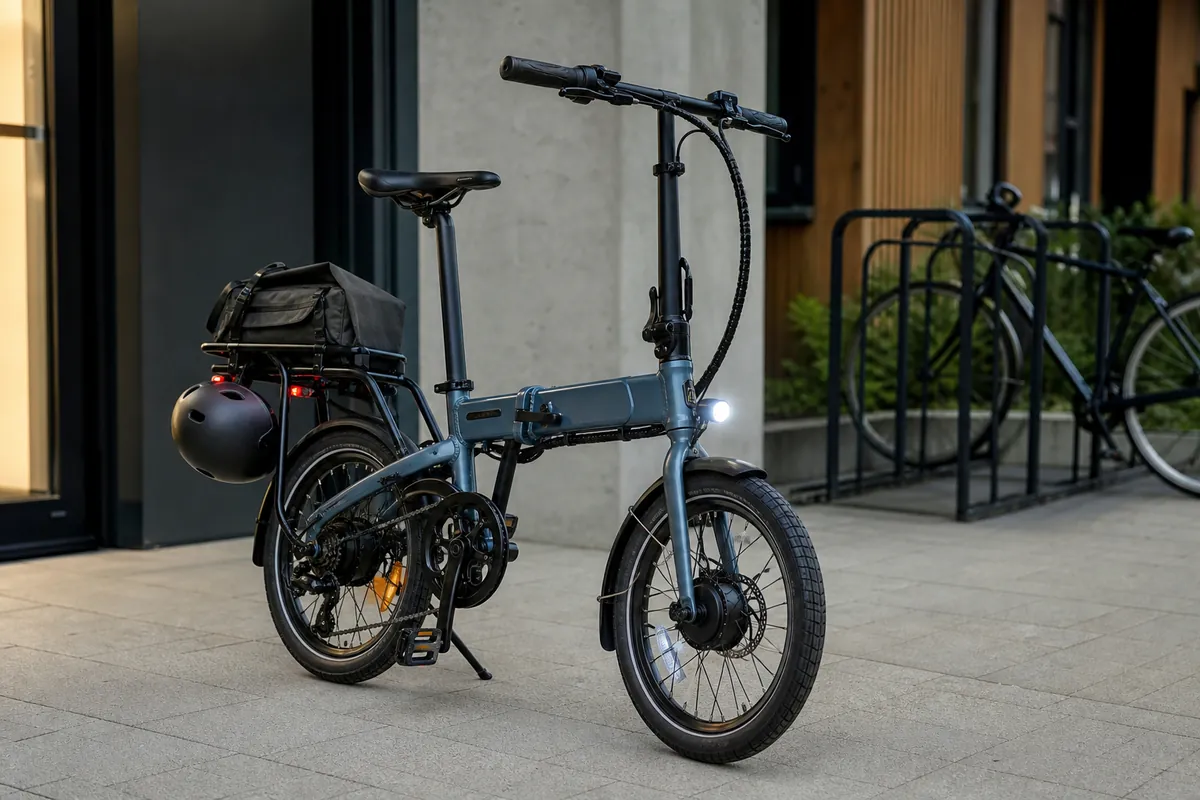
A folding ebike is not automatically the right commuter bike. It earns its place when you need one bike to handle riding, storage, elevators, apartments, car trunks, shared offices, or mixed transit. If you have a garage and never need to fold the bike, a standard commuter ebike may ride better for the same money. If space is the real constraint, folding starts to make sense fast.
Before comparing listings, read through basic e-bike buying tips so the big tradeoffs are clear. Folding bikes compress the frame, but they do not erase weight, battery care, cargo needs, or local riding rules.
A strong folding commuter ebike should solve your actual weekday problems. That means it should be easy to store, simple to charge, stable enough at speed, and equipped for real weather and errands.
| Feature | Why it matters for commuting | What to look for |
|---|---|---|
| Folded size | Determines whether the bike fits under a desk, in a closet, or in a car trunk. | Check folded dimensions, not just marketing photos. |
| Bike weight | A few extra pounds matter when lifting stairs, buses, or apartment thresholds. | Be honest about how often you will carry it. |
| Removable battery | Makes indoor charging easier and can reduce carry weight. | Look for a secure latch, easy access, and replacement availability. |
| Rack and fenders | Turns the bike from a fun ride into a practical commuter tool. | Prefer included equipment or solid mounting points. |
| Brakes | E-bikes are heavier and faster than regular bikes. | Hydraulic disc brakes are a strong plus; well-adjusted mechanical discs can still work. |
| Tire size | Affects comfort, folded size, and pothole confidence. | Wider tires help comfort, but very fat tires add weight and bulk. |
The mistake is shopping for the biggest motor first. For commuting, the better question is simpler: what makes the bike painless to use every weekday?
If your ride is short and flat, a moderate motor and efficient tires may be enough. If you climb hills, carry a laptop and groceries, or ride into wind, motor feel and battery capacity matter more. Still, a powerful bike that is too heavy to lift or too awkward to fold can become a garage ornament.
Think through your route in plain terms:
Range claims can be optimistic because rider weight, hills, speed, temperature, tire pressure, wind, and cargo all change battery use. If your commute is close to the advertised limit, look for a larger battery or plan on charging more often. Battery care also matters; this guide to e-bike battery maintenance is worth reading before you treat the charger like an afterthought.
Commuter fit matters more than spec-sheet drama: The best folding commuter ebike is the one you will use on tired mornings. A bike that folds cleanly, charges easily, carries your bag, and feels stable in traffic beats a flashier model that fights your routine.
There are two kinds of compact: folded small and easy to handle. You want both, but many bikes only deliver one.
A bike may fold tightly but still weigh enough that lifting it into a trunk feels annoying. Another may be heavier but roll smoothly when folded, which can be better if you mostly move it through hallways or train platforms. If you commute through public transit, folded stability matters too. A bike that tips over every time you let go gets old quickly.
For apartment living, measure the real storage spot before you shop. Include the hallway turn, elevator space, closet opening, and any stairs. Product photos rarely show the awkward part: getting the folded bike through your actual doorway while carrying a bag.
Indoor storage is usually better for security and battery health, but not every home makes that easy. If outdoor storage is unavoidable, treat it as a risk checklist: weather exposure, theft, battery temperature, and charging access all matter. A folding bike can reduce that problem because it is easier to bring inside.
A folding ebike can work well for commuters who drive partway, then ride the last stretch. It can also make weekend transport easier. Just do not assume “folding” means “fits every trunk.” Check folded dimensions, handlebar position, pedal fold, and whether the battery must be removed first.
If you plan to carry an ebike on a vehicle rack instead of inside the car, confirm weight limits and frame support. Folding frames can be awkward on some racks, and e-bikes are heavier than standard bicycles. This e-bike car rack guide can help you avoid an expensive mismatch.
For most commuters, a removable battery is the more practical choice. You can charge it indoors, reduce bike weight before lifting, and store the battery away from extreme temperatures. That flexibility matters if your bike lives in a hallway, office, shared storage room, or car trunk.
Built-in batteries can look cleaner and may make the frame feel simpler, but charging becomes less convenient if you cannot park near an outlet. Replacement access also matters. Before buying, check whether the manufacturer sells replacement batteries and whether the battery design is proprietary.
Practical commuter rule: If you cannot easily charge the bike where it will be stored, choose a removable battery. That one feature can decide whether the bike becomes part of your routine or a constant hassle.
A bare folding ebike can look cheaper until you add the parts that commuting requires. Lights, fenders, a rack, a bell, a lock, and a better saddle can close the price gap quickly.
For daily use, prioritize these features:
Do not overlook security. Folding bikes can come indoors more often, but you will still lock up sometimes. A practical lock setup is part of the purchase, not an optional afterthought. Start with how to securely lock your bike before relying on a lightweight cable lock.
Most commuters do not need a folding ebike that feels like a small motorcycle. They need predictable assist, steady handling, and brakes that match the bike’s weight. A smooth pedal-assist feel can matter more than peak power, especially in traffic or on crowded paths.
Check the bike’s class, throttle setup, assisted speed, and local rules before you buy. E-bike access can vary by state, city, trail, and path. If you ride to work through bike lanes, shared paths, or campus areas, legal fit is part of product fit.
A Class 1 or Class 2 style setup is often enough for urban commuting, while Class 3 speed can be useful for longer road-heavy routes. The right choice depends on where you ride and what your local rules allow.
A folding ebike is usually strongest when storage is the bottleneck. It can be a smart fit if you live in an apartment, park in a shared garage, work in an office with limited bike storage, or combine riding with driving or transit.
Look for a compact fold, removable battery, moderate weight, and tires that do not track too much mess indoors. A bike that stands upright when folded can be easier to store beside a desk or closet.
Focus on folded handling. Rolling while folded, quick latches, and a manageable folded width matter more than extra accessories. If you need to lift the bike often, weight becomes a deciding factor.
Choose a folding ebike with a rack, fenders, stable tires, and enough battery reserve for detours. A slightly heavier bike may be worth it if it carries cargo better and feels calmer under load.
Measure the trunk or cargo area before shopping. Remove the battery when lifting, and check whether the folded handlebar or pedals create awkward pressure points. Folding helps, but geometry still wins.
Once you know your must-haves, compare folding electric bikes by folded size, weight, battery access, commuter accessories, warranty support, and recent owner feedback. Search results are useful when you treat them as a comparison pool, not a final answer.
When comparing listings, skip any model that hides the folded dimensions, battery details, brake type, or warranty basics. A commuter bike should make ownership feel clearer before you buy, not more mysterious.
The easiest mistake is buying too much bike. Huge tires, oversized batteries, and high power numbers can be useful for some riders, but they also add weight and bulk. For commuters, that can make the bike harder to fold, carry, park, and store.
Another mistake is buying the cheapest folder without pricing the missing commuter gear. If the bike lacks fenders, lights, rack mounts, and a decent lock plan, the real cost may be higher than it looks.
Also be careful with vague range claims. If a listing does not clearly explain battery size, assist modes, charger details, or replacement support, treat that as a warning sign. A folding ebike is a daily-use machine; vague specs are not your friend.
Buy a folding commuter ebike if storage, mixed travel, or apartment living is the main thing stopping you from riding more often. The right one should fold without drama, charge where you actually live, carry your daily gear, and feel stable enough for real streets.
If you have plenty of storage and never need the fold, a standard commuter ebike may offer better ride quality and cargo capacity. But if your bike has to fit into a small life, a folding model can be the difference between “nice idea” and “I ride this every day.”
* We may earn a commission when you buy through our links.