If you are searching for class 2 ebike laws, the short answer is that Class 2 eBikes are legal in many places, but the exact rules still depend on state law and local access rules. In general, a Class 2 eBike is an electric bicycle that can use a throttle and is usually limited to 20 mph motor assistance, and that throttle feature is one reason lawmakers and trail systems sometimes treat it differently from other eBike classes.
Quick answer: Class 2 eBike laws usually focus on how the bike is defined, whether throttle use is allowed, and where the bike can be ridden. Roads and many bike facilities may allow Class 2 eBikes, but local trail rules, park rules, and state-specific requirements can still change the answer.
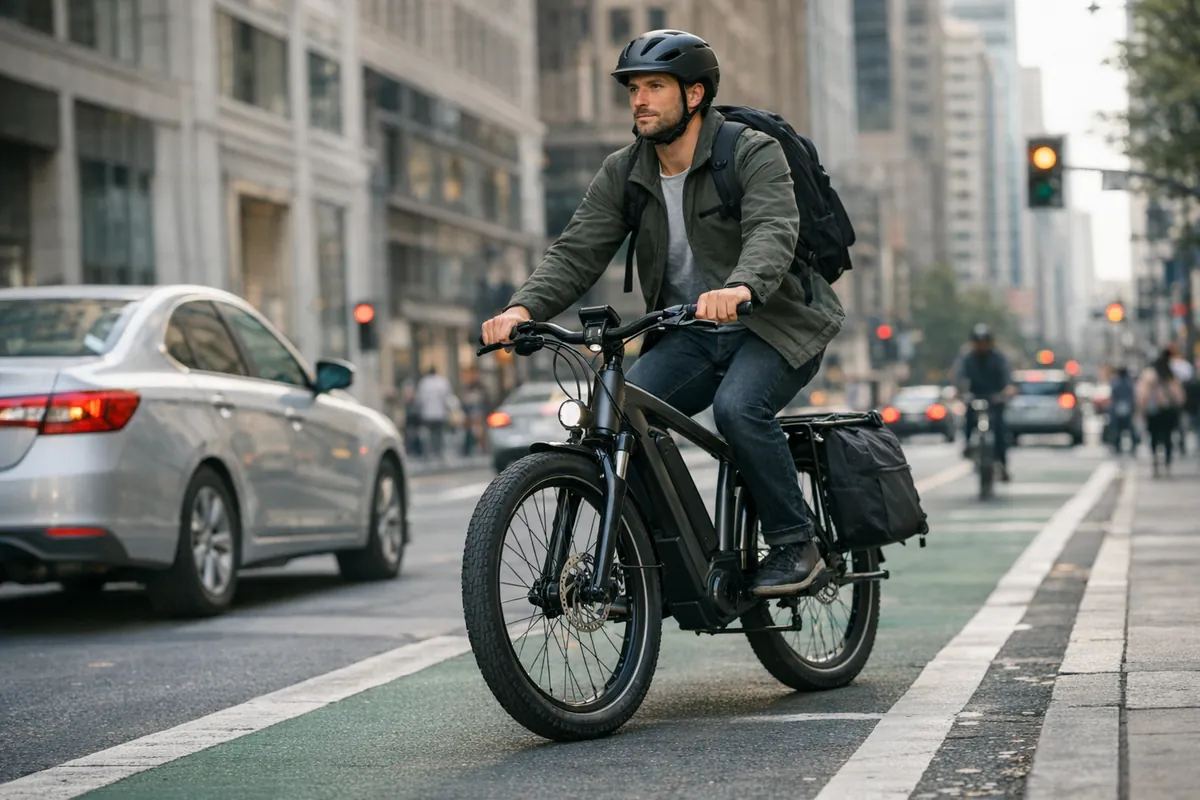
The important distinction is that a Class 2 eBike usually includes throttle capability, which can matter when a state, city, or trail authority decides where that bike is allowed.
In the common three-class eBike system used in many states, a Class 2 eBike is generally an electric bicycle that can use a motor up to 20 mph and may be operated with a throttle. That throttle feature is what often separates it from a Class 1 eBike, which is typically pedal-assist only.
That distinction matters because some laws and local access rules are not only about speed. They may also care about how the bike delivers power. In practical terms, lawmakers or trail managers may view a throttle-capable eBike differently from one that only assists while pedaling. Riders who are still sorting out where eBikes end and other vehicle categories begin may find it helpful to compare an e-bike and a moped.
| Class 2 law issue | What it often affects | Why it matters |
|---|---|---|
| Motor assistance | Usually up to 20 mph | This is part of the standard Class 2 definition |
| Throttle capability | Often included | This can affect how some rules treat the bike |
| Road use | Often allowed | Many states treat Class 2 eBikes as street-legal bicycles |
| Bike lane or path access | Can vary | Local or trail-specific rules may be stricter than state law |
| Local control | City, county, park, or trail authority | State law may not be the only rule riders need to check |
The biggest legal difference is usually not top speed alone. It is the combination of a 20 mph limit and throttle capability. That makes Class 2 eBikes different from Class 1 bikes, which are commonly pedal-assist only, and different from faster Class 3 bikes, which are usually built around pedal assist up to 28 mph.
That means the class label does real work. It helps define not only what the bike can do, but also how access rules may apply. Some places are comfortable allowing all three eBike classes on roads, while others are more cautious once throttle operation or higher assisted speed enters the picture.
In many states, Class 2 eBikes are allowed on roads and may also be allowed in some bike lanes. That makes them appealing for riders who want a simple urban or suburban transportation option without stepping into higher-speed territory.
Shared-use paths are where things can get less predictable. A local greenway, waterfront trail, or park route may have its own rules, and those rules may treat throttle-capable bikes differently from pedal-assist-only bikes. In practice, state law gives you the starting point, but the posted rules where you ride may matter just as much. Looking at state-specific references such as California motorized bicycle laws or Florida motorized bicycle laws can help show how those answers may vary from place to place.
Practical tip: before riding a Class 2 eBike on a new trail or multi-use path, check both the state framework and the local posted rules. A bike that is legal on the street may still face restrictions on a nearby path system.
Yes, and that is the safest assumption to make. Even when multiple states use the same three-class model, they may still handle access, rider requirements, or local control differently. One state may clearly allow Class 2 eBikes in a broad range of settings, while another may leave more room for local trail agencies or cities to set narrower rules.
This is why broad summaries are useful for orientation, but not enough for final decisions. A rider who wants a dependable answer should still look at state-specific material, especially if the route involves local parks, beach paths, greenways, or municipal trail systems.
Most riders do not need to memorize legal language. They need answers to a few practical questions. Can the bike be used on the road? Is it allowed in the bike lane? Can it go on the local trail network? Are there extra equipment, helmet, or age-related rules where they live?
Those questions matter more than general assumptions because legality often depends on where the bike is actually being used. The class definition starts the analysis, but it does not always finish it. Posted signs, local regulations, and current state guidance are what turn a broad answer into a useful one. Riders who want more context around general roadway access may also find can you drive a motorized bike on the road helpful.
Class 2 ebike laws usually turn on two main ideas: the bike’s 20 mph assistance limit and its throttle capability. In many places, that still leaves Class 2 eBikes in a bicycle-friendly legal category, especially for roads and everyday transportation use.
The catch is that access rules can still shift depending on the state, the city, and the path or trail system involved. The safest approach is to treat the Class 2 label as your starting point, then confirm the state and local rules for the routes you actually plan to ride. That is the most practical way to stay both informed and legal.