What to know before buying an ebike starts with a practical question: will this bike fit your real riding, storage, budget, and service needs after the excitement of the sale wears off?
Quick answer: Before buying an ebike, match it to your normal routes, hills, cargo needs, storage space, and comfort level with maintenance. A cheap ebike can still be the wrong choice if it is too heavy, awkward to store, short on real-world range, hard to service, or built around a battery system with poor long-term support.
The best ebike is not automatically the one with the biggest motor, longest advertised range, or fattest tires. It is the one you will actually ride because it feels controlled, comfortable, useful, and manageable in your day-to-day life.
Start with the ride you will take most often. A bike for flat neighborhood errands does not need the same setup as a commuter bike, hill climber, cargo hauler, or weekend trail machine.
If you mostly ride paved paths and calm streets, comfort, stable handling, reliable brakes, and easy mounting may matter more than peak power. If your route has steep grades, heavy loads, rough pavement, or frequent stop-and-go traffic, motor type and battery capacity move higher on the list.
Be honest about distance, too. A five-mile errand bike can be simple. A daily commuter needs more margin for wind, cold weather, detours, and days when you use higher assist because you are tired or carrying gear.
An ebike can look perfect in photos and still feel wrong in person. Stand-over height, reach, handlebar position, saddle comfort, frame style, and low-speed balance all affect control.
Weight deserves special attention. Many ebikes are much heavier than regular bicycles. That can make them feel planted on the road, but it also matters when you lift the bike onto a rack, roll it through a hallway, carry it up stairs, or park it in a tight space.
Good rule: If you cannot comfortably move the ebike when the motor is off, slow down before buying it. At some point, you will need to push it, lift it, store it, or handle it with a low battery.
Advertised range is useful, but it is not a promise. Rider weight, tire pressure, wind, hills, temperature, cargo, assist level, and stop-and-go riding can all change how far an ebike goes on one charge.
A bigger battery can help, but it also adds cost and weight. The better question is not “What is the maximum range?” It is: Can this bike handle my normal ride with a comfortable buffer?
Also check whether the battery is removable. Removable batteries can make charging and storage easier, especially if you live in an apartment or park the bike away from an outlet. For more detail, MBHQ has a guide on whether you should buy an e-bike with a removable battery.
The motor affects ride feel as much as speed. Hub motors are common and often cost less. Mid-drive motors usually feel more bicycle-like and can perform better on hills, but they may cost more and put more wear through the drivetrain.
Sensor type matters, too. Cadence sensors tend to add power when they detect pedaling. Torque sensors respond more closely to how hard you press on the pedals. Riders who want a smoother, more natural feel often prefer torque sensing, though it can raise the price.
If you want a deeper breakdown before comparing models, read MBHQ’s guide to electric bike motors explained.
| Buying factor | Why it matters | What to check |
|---|---|---|
| Fit | Comfort and control depend on frame size and riding position. | Stand-over height, reach, saddle, handlebar position. |
| Weight | Heavy bikes are harder to lift, store, rack, and move without power. | Total weight, stairs, storage, car rack limits. |
| Battery | Range changes with terrain, assist level, weather, and rider load. | Watt-hours, removable design, charger, replacement cost. |
| Motor | Motor placement and sensor type shape hill performance and ride feel. | Hub vs. mid-drive, torque vs. cadence sensor. |
| Service | Parts support affects long-term ownership cost. | Brake parts, tires, battery availability, local shop support. |
Ebike weight and speed put more demand on wear parts. Strong brakes are not a luxury; they are part of basic control. Hydraulic disc brakes are common on better-equipped ebikes, but properly sized mechanical disc brakes can still work well.
Tires should match your terrain. Smooth commuter tires roll efficiently on pavement. Wider tires can add comfort and grip, but they may also add drag and weight. Fat tires can feel stable and fun, yet they are not automatically better for every rider.
Look at the drivetrain, too. Chains, cassettes, chainrings, and brake pads may wear faster on powerful or heavily loaded ebikes. That does not make ebikes fragile. It just means maintenance belongs in the budget from the start.
The sticker price is only part of the story. You may also need a helmet, lock, lights, fenders, rack, panniers, replacement tubes, brake pads, better tires, or a car rack rated for ebike weight.
Battery replacement is the major long-term cost to understand before buying. Ask whether replacement batteries are available, what they cost, and whether the brand has a realistic service path. MBHQ’s ebike battery replacement guide covers that issue in more detail.
Before you buy: Price out the bike plus the accessories you need in the first 30 days. A lower sale price can lose its shine fast if the bike immediately needs a stronger lock, better lights, a rack, or replacement wear parts.
A new ebike usually gives you clearer warranty coverage, easier returns, and less uncertainty around the battery. A used ebike can save money, but the risk is higher because battery age, charger condition, crash history, and hidden electrical problems are harder to judge.
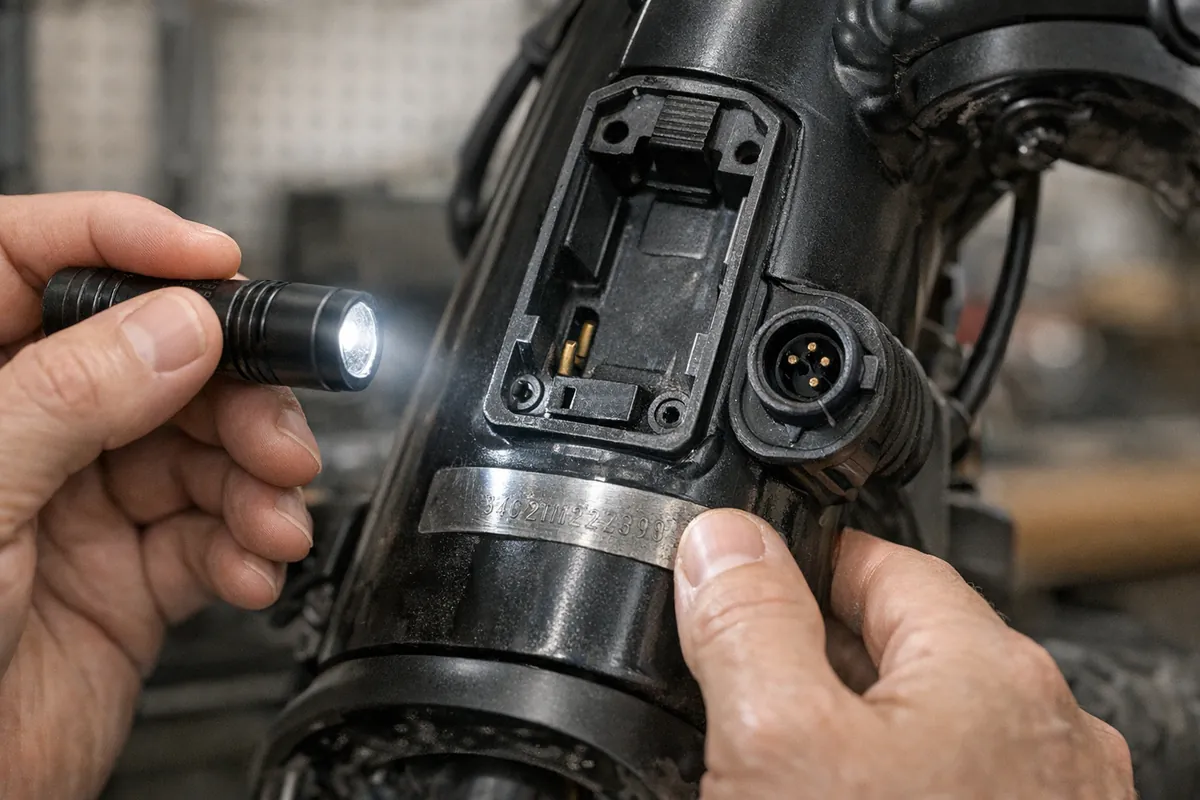
If you are buying used, inspect the battery mount, charger, display, wiring, brakes, frame, tires, and drivetrain carefully. Ask how the battery was stored and whether the seller has purchase records. A test ride should feel smooth and predictable, with no strange cutouts, warning errors, or grinding noises.
For a more detailed used-bike inspection process, use MBHQ’s used e-bike buying checklist.
Bring a short checklist before you visit a shop or meet a seller. It keeps the conversation grounded and helps you avoid getting distracted by a discount.
Be cautious with vague battery claims, missing chargers, damaged wiring, unknown brands with no parts support, heavily modified electrical systems, cracked frames, weak brakes, or a seller who will not allow a proper test ride.
Also watch for bikes that are too powerful for where you plan to ride. Local rules vary, and some paths, parks, or streets may restrict certain ebike classes or motorized setups. Check your local rules before buying if road, path, or trail access is part of the decision.
The smartest way to buy an ebike is to make the bike prove it fits your life. Specs matter, but comfort, control, serviceability, battery support, and daily usability matter more.
If you are choosing between two models, pick the one that handles your normal route with less friction. The right ebike should feel useful on an ordinary Tuesday, not just impressive in a product listing.