What is a Class 2 ebike? A Class 2 eBike is an electric bicycle with a throttle that can move the bike without pedaling, but motor assistance is generally limited to 20 mph. You can still pedal it like a regular bike, but the throttle is the feature that separates Class 2 from most Class 1 models.
Quick answer: A Class 2 eBike has pedal assist plus a throttle, with motor-powered assistance typically capped at 20 mph. It is often a good fit for casual riders, commuters, stop-and-go city trips, and anyone who wants help starting from a stop without needing to pedal first.
A Class 2 eBike is defined by one simple thing: it has a throttle. That throttle may be a twist grip, thumb lever, button, or small control on the handlebar. When you use it, the motor can help propel the bike without you turning the pedals.
Most Class 2 eBikes also include pedal assist. That means the bike can add power while you pedal, just like a Class 1 eBike. The difference is that a Class 2 model gives you another way to use the motor when you need it.
In the common three-class eBike system used in many parts of the United States, Class 2 bikes are usually limited to motor assistance up to 20 mph. Once you reach that assisted speed, the motor should stop adding power. You can still go faster under your own pedaling effort or downhill, but the electric assist is not supposed to keep pushing beyond the class limit.
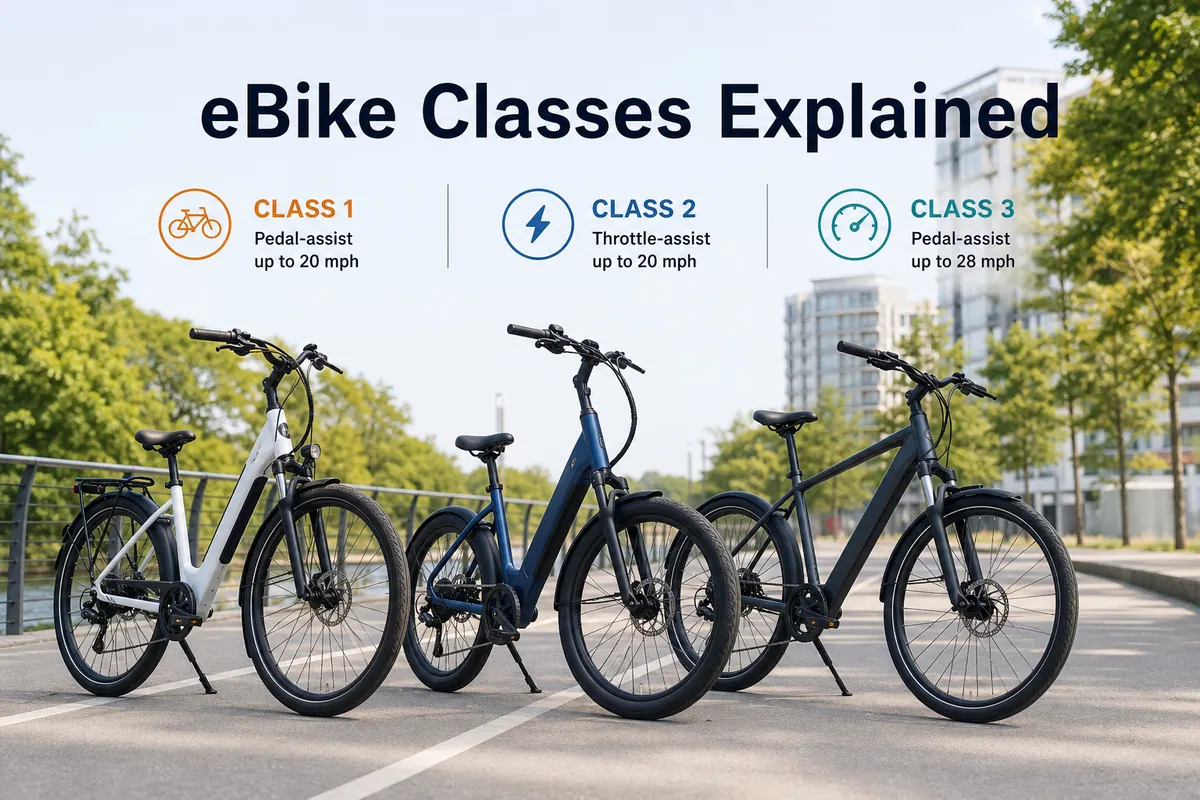
Key distinction: Class 1 eBikes use pedal assist only. Class 2 eBikes add a throttle. Class 3 eBikes are usually faster pedal-assist bikes, commonly assisted up to 28 mph, and may face tighter access rules.
| Feature | Class 2 eBike |
|---|---|
| Throttle | Yes, throttle assistance is the defining feature |
| Pedal assist | Usually included, though the throttle is what makes it Class 2 |
| Assisted speed | Typically limited to 20 mph under motor power |
| Typical motor limit | Often 750 watts or less in many U.S. class systems |
| Best fit | Commuting, errands, relaxed riding, and easier starts from stops |
A Class 2 eBike feels approachable because you have choices. You can pedal normally, use pedal assist when you want a smoother boost, or press the throttle when starting from a stop feels awkward.
That throttle is especially helpful at intersections, on slight hills, or when carrying groceries. It can also make riding feel less intimidating for people who are new to electric bikes. The point is not speed; it is control.
If you want to understand how the motor actually delivers that help, our guide to electric bike motors explained breaks down the basic motor types without making the topic harder than it needs to be.
The easiest way to separate the eBike classes is to look at how the motor engages and when assistance stops.
A Class 1 eBike provides motor assistance only while you pedal. It does not have a throttle that moves the bike on its own. For riders who want a more bicycle-like feel, Class 1 is often the cleanest fit.
A Class 2 eBike includes a throttle and is typically assisted up to 20 mph. It still behaves like a bicycle, but the throttle gives you a backup when pedaling is inconvenient or tiring.
A Class 3 eBike is usually a faster pedal-assist model, commonly assisted up to 28 mph. These bikes can be excellent for longer commutes, but local access rules may be stricter than they are for Class 1 or Class 2 bikes.
Before buying, it helps to compare your riding needs with practical ownership factors like fit, battery size, brakes, weight, and support. Our eBike buying tips guide is a good next step if you are still deciding what style makes sense.
Practical tip: If you ride in shared spaces, use the throttle gently. Smooth starts and predictable speed matter more than using every bit of motor power the bike can offer.
In many places, Class 2 eBikes are treated as bicycles or low-speed electric bicycles when they meet the local class definition. But eBike laws are not identical everywhere. States, cities, trail systems, parks, campuses, and private paths can all set their own access rules.
That means the better question is not just whether a Class 2 eBike is legal. It is where you plan to ride it. Streets, bike lanes, multi-use paths, natural-surface trails, and sidewalks may all be treated differently.
For road-use context, start with our guide on whether you can drive a motorized bike on the road. If licensing is your bigger concern, this overview of whether you can ride a motorized bicycle without a license can help you frame the next question to check locally.
A Class 2 eBike is a strong fit if you want an electric bike that feels forgiving in real life. It can help when you are tired, carrying cargo, restarting on a hill, or moving through traffic lights where quick starts feel safer.
It may be especially useful for:
A Class 2 bike is not automatically the best choice for every rider. If you mainly ride trails where throttles are restricted, a Class 1 model may be easier to live with. If you need a faster long-distance commuter and your local rules allow it, Class 3 may be worth a look. Match the class to the places you actually ride, not just the spec sheet.
Start with the label. Many eBikes include a class sticker or printed specification showing the class, top assisted speed, motor wattage, and whether a throttle is included. If the bike has no clear class labeling, ask the seller before assuming it qualifies as Class 2.
Next, check the throttle behavior. Some bikes have throttles that work from a dead stop. Others require a bit of pedaling first. That difference can matter if your main reason for buying Class 2 is easy takeoff.
Also look at brakes, total bike weight, tire size, battery placement, and whether the bike is comfortable at low speed. A throttle can make a bike easier to use, but it does not fix poor handling, weak brakes, or a frame that does not fit you well.
The first mistake is assuming a throttle means the bike is a motorcycle. A compliant Class 2 eBike is still designed around low-speed bicycle use. It has limits, and those limits are part of why it may be allowed in more places than higher-powered vehicles.
The second mistake is assuming every throttle eBike is legal everywhere. Some public trails and local paths restrict throttle use even when Class 2 eBikes are allowed on nearby roads. Local rules always matter.
The third mistake is buying only for power. A smooth motor, predictable throttle, good brakes, and a comfortable riding position usually matter more than chasing the biggest number in the product description.
A Class 2 eBike is an electric bicycle with a throttle, usually limited to 20 mph of motor assistance. It gives you pedal assist when you want a normal bike feel and throttle power when you need an easier start or a short break from pedaling.
For many everyday riders, that balance is the appeal. Class 2 is practical, flexible, and easy to understand: pedal when you want, use the throttle when it helps, and always check the rules for the roads and paths you plan to ride.