If you are comparing a motorized bicycle vs ebike, the simplest difference is this: a motorized bicycle usually means a standard bicycle fitted with a gas or electric motor kit, while an ebike is built around an electric motor, battery, controller, and bicycle drivetrain from the start. Both can help you ride farther with less effort, but they feel different to own, maintain, and legally understand.
Quick answer: Choose an ebike if you want quiet operation, cleaner storage, easier daily use, and a more mainstream buying path. Choose a motorized bicycle if you like tinkering, want a kit-based project, or are specifically drawn to gas-assisted bicycle builds. For most commuters and casual riders, an ebike is the easier recommendation.
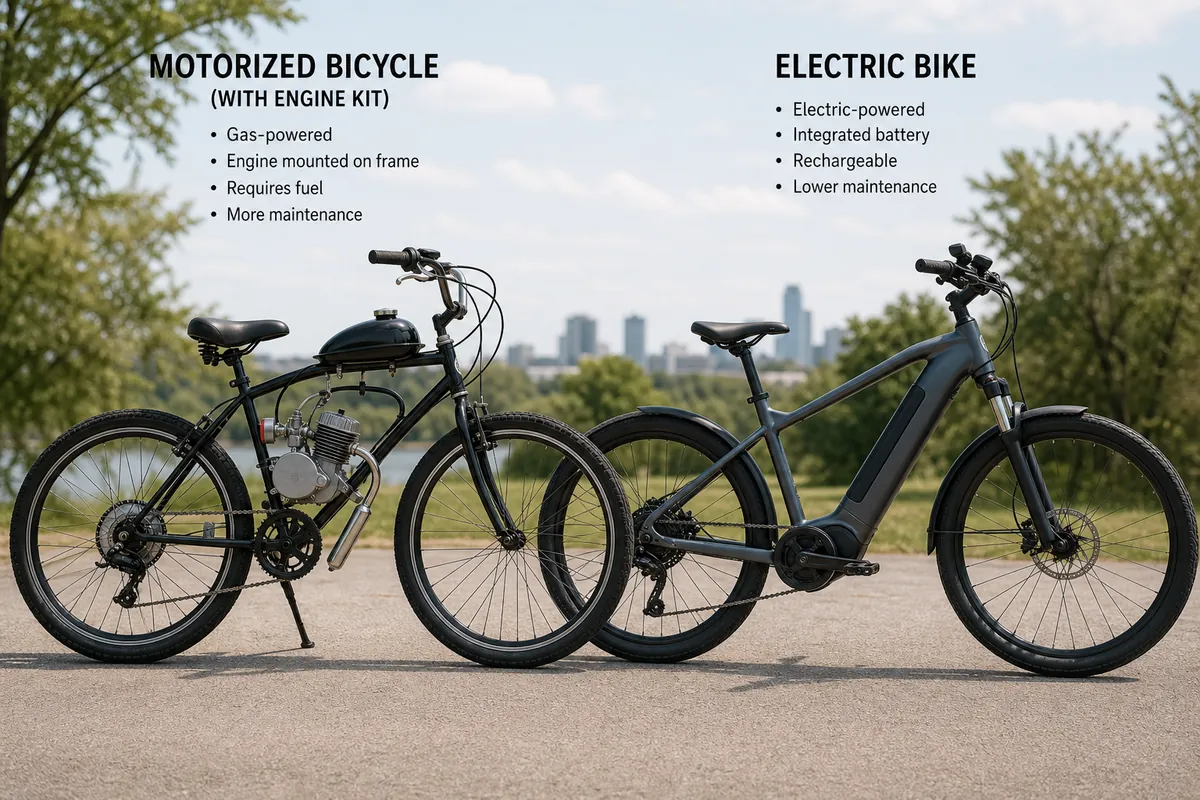
A motorized bicycle is usually a bicycle that has been modified with an added motor. That motor may be gas-powered, electric, or part of a conversion kit. The result depends heavily on the donor bike, kit quality, installation skill, and local rules.
An ebike is typically sold as a complete electric bicycle or built from an electric conversion system. It uses a battery, motor, controller, and pedal-assist or throttle controls to add power. If you want to understand the basic motor types before buying, our guide to electric bike motors is a useful next step.
The overlap can get confusing because some people use “motorized bicycle” as a broad phrase for almost anything with pedals and a motor. In practical shopping terms, though, buyers usually mean one of two paths: a kit-powered motorized bike project or a ready-to-ride ebike.
Key distinction: An ebike is usually the cleaner, quieter, more predictable ownership choice. A motorized bicycle can be more customizable, but it often asks more from the owner in setup, maintenance, and legal homework.
| Category | Motorized bicycle | Ebike |
|---|---|---|
| Typical setup | Standard bicycle plus a motor kit or custom build | Purpose-built electric bicycle or electric conversion |
| Power source | Often gas, sometimes electric | Rechargeable battery |
| Noise | Gas builds can be loud | Usually quiet |
| Maintenance | More mechanical tinkering, especially with gas kits | Bike maintenance plus battery and electrical care |
| Storage | Gas smell and fuel storage can be an issue | Apartment- and garage-friendly if battery safety is handled well |
| Legal clarity | Can vary widely by state and setup | Often easier to classify, but still location-specific |
| Best fit | DIY riders, hobbyists, budget tinkerers | Commuters, casual riders, practical buyers |
For most riders, the ebike wins on daily convenience. You charge the battery, check the tires and brakes, and ride. There is no fuel mixing, no exhaust smell, and usually less vibration. That matters if the bike lives in an apartment, office, garage, or shared storage area.
A motorized bicycle can still make sense if you enjoy mechanical projects. Gas kits, in particular, attract riders who like tuning, troubleshooting, and building something personal. The tradeoff is that the bike may need more attention before it feels dependable.
The practical test is simple: if you want transportation, lean ebike. If you want a project that can become transportation, a motorized bicycle may be more appealing.
A motorized bicycle kit can look cheaper at first. You may already own a bike, and some kits cost less than a complete ebike. But the final cost can rise once you add tools, replacement parts, stronger brakes, better tires, lighting, mounts, and the time needed to sort everything out.
Ebike prices vary widely. Entry-level models can be affordable, while premium bikes with stronger motors, better batteries, hydraulic brakes, and dealer support cost much more. If you are shopping rather than building, start with practical criteria instead of chasing the lowest price. Our e-bike buying tips cover the checks that matter before you commit.
Used options can also change the math. A used ebike may be a good deal, but battery age and replacement cost are serious factors. A used motorized bicycle may hide installation shortcuts, worn drivetrains, or questionable wiring. Either way, the cheapest listing is not always the cheapest bike to own.
This is where the comparison gets serious. Motorized bicycle laws vary by state, motor type, displacement, speed capability, equipment, and how the vehicle is classified. Some setups may be treated differently from bicycles, mopeds, or motorcycles.
Ebike rules also vary, but many states use class-based systems for electric bicycles. That can make an ebike easier to understand at the point of purchase, especially if the manufacturer clearly lists class, top assisted speed, motor wattage, and throttle setup.
Before riding either one on public roads, check the rules where you live. MBHQ has a focused guide on whether you can drive a motorized bike on the road, and another on whether you can ride a motorized bicycle without a license. Those questions can change the entire purchase decision.
Practical callout: Do not buy only on speed claims. A faster setup may create more legal, braking, storage, insurance, and safety questions. The best choice is the one you can ride legally and maintain confidently.
A gas motorized bicycle often feels more mechanical. There may be vibration, engine noise, and a more hands-on starting routine. Some riders love that old-school machine feel. Others find it tiring once the novelty wears off.
An ebike usually feels smoother. Pedal assist can make the motor feel like a tailwind, especially with a well-tuned torque sensor. Throttle-equipped ebikes can feel closer to light electric transport, though the exact behavior depends on the model and local rules.
Range is not a clean win for either side. A gas motorized bicycle can be quick to refuel, but it depends on fuel, engine condition, and setup. An ebike range depends on battery size, rider weight, terrain, wind, tire pressure, assist level, and temperature. Treat any advertised range as a best-case estimate, not a promise.
Motorized bicycles tend to reward owners who notice small problems early. Loose mounts, chain alignment, vibration, carburetor tuning, fuel lines, and brake wear can all matter. A clean installation helps, but a kit bike is still a kit bike.
Ebike maintenance is usually more familiar for people who already ride bicycles: tires, brake pads, drivetrain cleaning, bolts, and occasional adjustments. The extra layer is electrical care. Battery storage, charging habits, water exposure, and replacement cost all deserve attention.
If you prefer predictable service, a complete ebike from a reputable seller may be easier to support. If you like diagnosing your own machine, a motorized bicycle can be satisfying. Neither path is maintenance-free; they simply ask for different kinds of attention.
Both choices add speed and weight compared with a normal bicycle. That makes braking, tire condition, visibility, and helmet use more important. A weak donor bike with rim brakes may not be a smart base for a powerful motorized build.
Ebike buyers should pay close attention to brakes, battery quality, frame fit, and real-world speed control. Motorized bicycle builders should be even more careful about frame strength, mounting hardware, chain routing, heat, fuel handling, and stopping distance.
For either option, avoid treating the motor as the whole story. The frame, wheels, brakes, tires, lights, and rider control matter just as much.
A motorized bicycle is a better fit if you want a hands-on build, enjoy mechanical troubleshooting, and understand that the finished bike may need regular adjustment. It may also appeal if you already have a suitable bicycle and want to experiment with a kit.
This path is less ideal if you need quiet transport, simple storage, easy legal classification, or a bike your local shop will happily service. Many bike shops are cautious around modified motorized builds, especially if the installation quality is unknown.
An ebike is the better fit for most commuters, casual riders, and shoppers who want a cleaner ownership experience. It is quieter, easier to charge at home, and more likely to fit into normal bike parking and storage routines.
An ebike also makes sense if you want accessories, warranty support, predictable controls, and a clearer product category. The buying process still requires care, but you are usually comparing complete bikes instead of trying to judge every part of a custom build.
If you are still comparing both categories, shop with your real use case in mind. For commuting, errands, bike paths, and low-drama ownership, start with ebikes. For kit projects, mechanical learning, or gas-assisted tinkering, compare motorized bicycle options carefully and check your local rules first.
For most people, an ebike is the better all-around choice. It is quieter, cleaner, easier to store, and usually simpler to explain to a seller, mechanic, landlord, or family member. It also fits better with how many riders actually use powered bikes: short trips, errands, commuting, fitness support, and weekend rides.
A motorized bicycle still has a place. It can be fun, affordable in the right situation, and deeply customizable. But it works best when you want the build experience as much as the finished ride.
So the real answer is not just motorized bicycle vs ebike. It is project vs product. Pick the motorized bicycle if you want to build and tinker. Pick the ebike if you want the easiest path to riding more often.
* We may earn a commission when you buy through our links.