The best panniers for ebike commuting are waterproof or highly water-resistant bags with a secure rack attachment, enough structure to protect work gear, and enough heel clearance to stay out of your pedal stroke. For most riders, a pair of rear panniers in the 20- to 40-liter total range is the practical sweet spot: roomy enough for a laptop, lunch, lock, rain layer, and charger without turning the bike into a wobbling cargo setup.
Quick answer: Choose commuter panniers that match your rear rack diameter, use a locking or semi-locking hook system, resist rain, and keep weight low on both sides of the bike. If you carry a laptop, prioritize a padded sleeve or use a separate padded case inside the pannier. If you park outside, look for quick-release hardware so the bag comes with you.
Ebike commuting changes the pannier decision a little. The bike is heavier, speeds are often higher, and many riders carry more than they would on a regular bicycle because the motor makes the extra weight feel manageable. That does not mean any big bag will do. A commuter pannier has to stay quiet over bumps, avoid the drivetrain and spokes, clear your heels, and survive the daily mess of wet pavement, grocery stops, office clothes, and lockups.
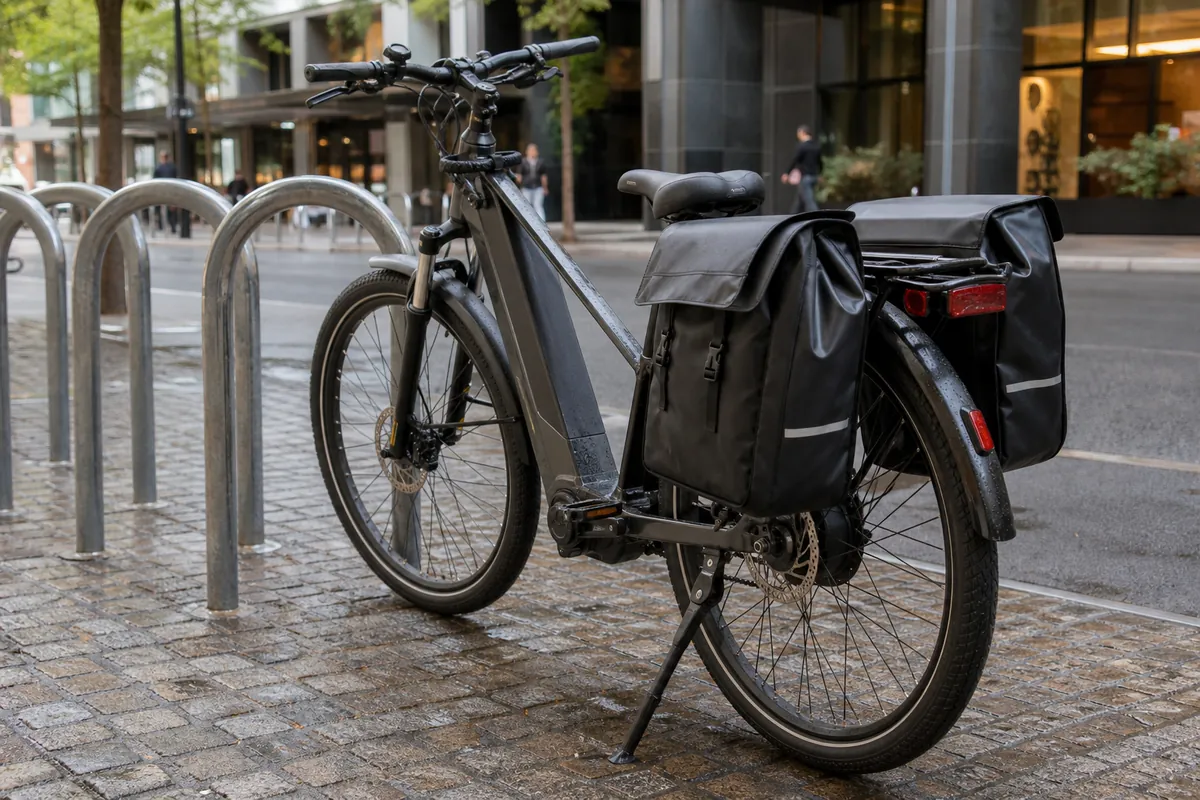
Instead of chasing one universal “best” bag, start with the commute. A five-mile office ride with a laptop calls for different panniers than a 14-mile ride with rain gear, groceries, and a heavy chain lock. The right choice is the bag that fits your rack, holds your real cargo, and stays stable when the ebike is moving faster than a casual city bike.
| Commuter need | What to look for | Why it matters on an ebike |
|---|---|---|
| Rain protection | Waterproof roll-top or coated fabric with covered seams | Ebike commuters often ride year-round, and road spray can hit bags from below and behind. |
| Secure mounting | Adjustable hooks, lower stabilizer, and rack compatibility | Higher average speeds make rattly or loose bags more annoying and less safe. |
| Work gear | Internal sleeve, flat back panel, or room for a laptop case | A soft bag full of loose gear can bounce and press awkwardly against the rack. |
| Daily errands | 20 to 40 liters total capacity for most commuters | The motor helps with weight, but oversized bags can still affect handling. |
| Parking stops | Fast release handle and shoulder strap | Leaving an easy-to-remove pannier on the bike invites theft or weather damage. |
A pannier does not need to be “ebike-specific” to work well on an ebike. What matters is whether it fits the rack and handles the demands of heavier, faster, more utility-focused riding. Many quality bicycle panniers work perfectly on electric bikes, while some generic cargo bags are a poor match even if the listing says “ebike.”
The biggest difference is stability. Ebikes make it easy to carry more, but extra weight behind the saddle can change braking feel, low-speed balance, and how the bike tracks through turns. If you are still choosing the bike itself, our e-bike buying tips can help you think through rack compatibility, frame style, and commuter needs before accessories enter the picture.
Trust note: Treat product listings as a starting point, not proof of fit. Check your rack tube diameter, rack platform width, heel clearance, and weight rating before buying panniers for an ebike commute.
For most ebike commuters, one medium pannier is enough for light office days, while a matched pair is better for groceries, gym clothes, or winter layers. A single large bag can work, but it loads one side of the bike. A balanced pair usually feels calmer, especially when the bike is carrying a charger, lock, laptop, and lunch at the same time.
Use these rough capacity ranges:
If your commute regularly includes groceries or bulky gear, read our guide to e-bike cargo capacity before assuming the motor can safely make any load disappear. The motor helps you move the weight; the frame, rack, wheels, tires, and brakes still have to manage it.
Waterproof panniers usually use coated fabric, welded or sealed seams, and a roll-top closure. They are the simplest choice if your commute includes heavy rain, wet roads, or outdoor parking. Water-resistant panniers can be easier to organize and nicer to carry into an office, but they may need a rain cover when the weather turns ugly.
For ebike commuting, road spray deserves as much respect as rain. A bag can get soaked from the tire side even when the sky is only misty. If you ride in wet conditions, pair good panniers with fenders and sensible battery habits. Our guide to riding an e-bike in the rain covers the bigger wet-weather picture.
Roll-top panniers are the practical default for all-weather commuting. They are simple, tough, and forgiving when you overpack slightly. The tradeoff is organization: many roll-top bags are one large compartment, so small items can sink to the bottom unless you use pouches.
Briefcase or office panniers look cleaner indoors and often include laptop sleeves, document pockets, and shoulder straps. They are a strong choice for office commuters who care about carry comfort after parking the bike. Just check weather protection carefully; a polished commuter bag is not automatically storm-ready.
Backpack panniers are useful when your commute includes stairs, transit, or a long walk from parking to work. The compromise is hardware complexity. Make sure the hooks tuck away or sit comfortably when carried on your back, and confirm the backpack straps cannot dangle into the wheel while riding.
Practical callout: If you carry a laptop, do not rely on pannier padding alone unless the bag is clearly designed for electronics. A slim padded laptop sleeve inside a waterproof pannier is often the more flexible setup.
The most common pannier mistake is buying for capacity before fit. A bag can have great fabric, good reviews, and the right price, yet still be annoying if it clips poorly to your rack or hits your heel every pedal stroke.
Check these before ordering:
If your ebike has a rear-rack battery, be especially careful. Some panniers sit nicely beside rack batteries; others interfere with the battery rail, key access, taillight, or charging port. When in doubt, measure the usable side rail space and compare it with the pannier’s mounting diagram.
Panniers are convenient because they come off the bike quickly. That is also why you should rarely leave them outside. A commuter pannier should have a solid grab handle, a shoulder strap or backpack option if you walk far, and a release system you can operate without wrestling the bike.
Your lock also needs a home. Heavy chain locks and U-locks are awkward in backpacks, so a pannier can be a back-saver. Keep dense items low in the bag and close to the rack side. For parking strategy, combine your bag plan with the basics in our guide to securely locking your bike.
For most riders searching for the best panniers for ebike commuting, the safest first buy is a waterproof rear pannier pair with adjustable rack hooks, a lower stabilizer, reflective details, and at least one practical carry option off the bike. You do not need the fanciest bag, but you should avoid bargain panniers with vague mounting hardware and no clear rack compatibility.
Start with the commuting style that sounds most like you:
The best setup is boring in the right way: it clips on securely, stays dry, clears your feet, and disappears into the routine after the first week.
If you are ready to compare options, start with commuter-focused panniers and verify the mounting system against your rack before buying. Product pages change often, so use the listing photos and specs to confirm waterproofing, capacity, hook style, and whether the bag is sold individually or as a pair.
The right panniers make an ebike feel less like a weekend toy and more like a dependable transportation tool. Prioritize fit, weather protection, stable mounting, and realistic capacity before color or clever pockets. A clean, balanced rear pannier setup can carry the boring daily stuff beautifully, which is exactly what a commuter accessory should do.
Before your first loaded commute, take a short test ride with the bags packed the way you will actually use them. Listen for rattles, check heel clearance, brake a few times, and make sure nothing shifts toward the spokes. Small adjustments at home are much better than discovering a fit problem halfway to work.
* We may earn a commission when you buy through our links.