The best ebike for heavy riders is a sturdy model with a published payload rating, confident brakes, stable wheels, and enough motor support for your real terrain. Do not shop by wattage alone. A good heavy-duty ebike should carry the rider, gear, cargo, locks, and daily extras without feeling strained.
Quick answer: Look for an ebike with a total payload rating of at least 300 pounds, with 350 to 400 pounds or more preferred if you carry cargo or ride hills. Prioritize hydraulic disc brakes, wider tires, reinforced wheels, a frame that fits your body, and a battery with realistic range margin.
Payload is the first filter because it usually means the total weight the bike can carry, not just rider weight. That can include your body, backpack, work bag, groceries, water, lock, rack bags, clothing, and accessories. Buy for your loaded riding weight, not your bathroom-scale weight.
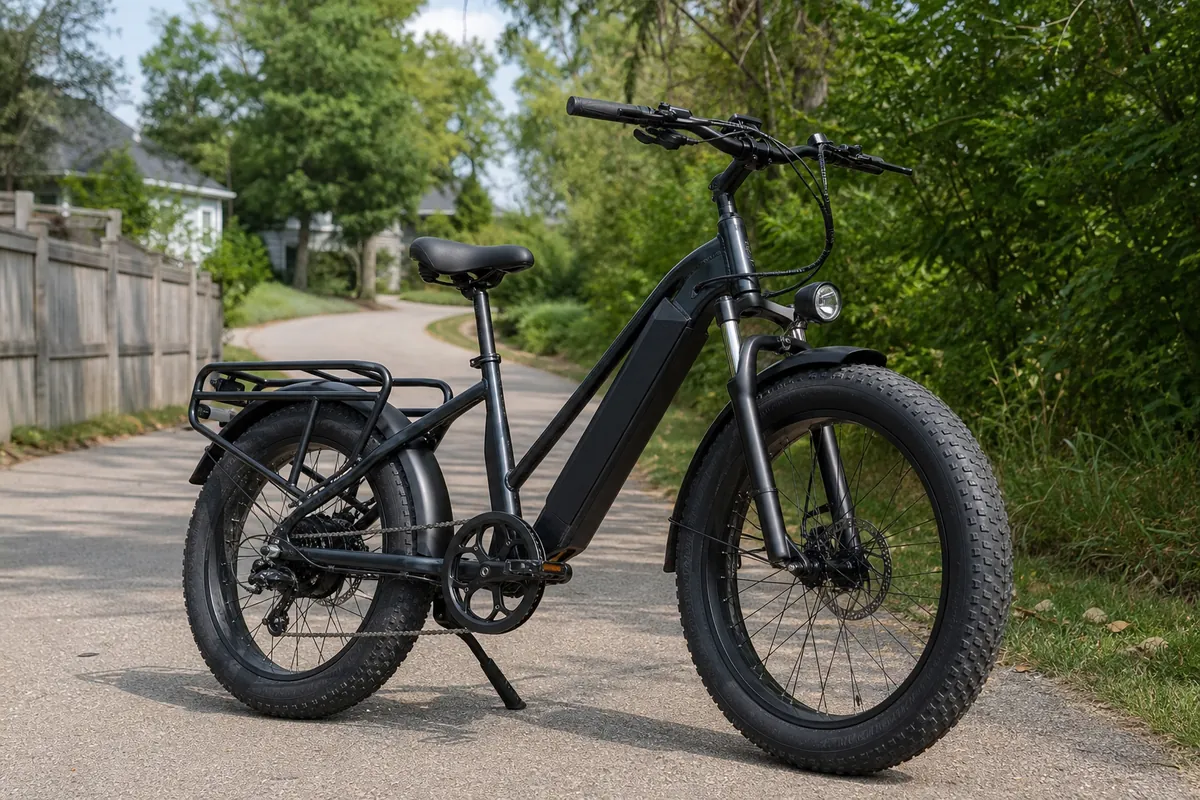
Start with the manufacturer’s payload rating. If a bike is rated for 275 pounds and you weigh close to that, it may technically support you, but it leaves little room for cargo, clothing, accessories, or road impact.
Many heavier riders should start around a 300-pound rating and move higher when possible. If you are tall, carry gear, ride rough roads, or want a calmer margin, a 350- to 400-pound rating is a better target.
That number still needs context. A high payload rating is more useful when the rest of the bike supports it: wheels, spokes, tires, brakes, frame design, and rack ratings all need to make sense together.
Trust check: Treat payload ratings as a screening tool, not a comfort guarantee. Fit, terrain, brake feel, wheel strength, and riding style all affect whether an ebike feels right in daily use.
Look for a clear total payload rating, not just vague phrases like “strong frame” or “heavy duty.” Total payload is the combined load on the bike, so it gives you the most useful starting point.
If you plan to carry groceries, tools, a child seat, or work gear, check the rack rating too. A rear rack rating is not the same thing as the whole-bike payload limit. MBHQ’s guide to e-bike cargo capacity explains how these numbers fit together.
Hydraulic disc brakes are usually the better choice for heavier riders because they tend to offer stronger, smoother stopping with less hand effort than many mechanical systems. Larger rotors can also help with heat and braking force on hills.
This is not the part of the bike to downplay. A heavy rider on a heavy ebike can put serious demand on the brakes, especially when descending or stopping in traffic. Brake pads are a wear item too, so review MBHQ’s guide on how often to replace e-bike brake pads before you buy.
Wide tires can add comfort and grip, but they are not magic by themselves. Look for strong rims, quality spokes, and tire volume that matches your roads.
Fat tires can feel planted on rough pavement, gravel, packed dirt, and poor shoulders. A heavy-duty commuter or utility bike with moderately wide tires may feel better on smooth roads. The right tire is the one that makes your actual ride feel controlled.
For flat neighborhoods, a good rear hub motor may be enough. For steep hills, frequent starts, or heavier cargo, torque and gearing matter more. Mid-drive motors can feel natural on climbs because they use the bike’s drivetrain, but they often cost more and can add drivetrain wear.
If the motor specs feel confusing, start with MBHQ’s plain-English guide to electric bike motors. It helps separate useful performance details from marketing noise.
| Feature | What to Look For | Why It Matters |
|---|---|---|
| Payload rating | 300 pounds or higher; more if carrying cargo | Gives the frame, wheels, and components more margin |
| Brakes | Hydraulic disc brakes, preferably with larger rotors | Improves stopping confidence under heavier loads |
| Tires | Wider tires matched to pavement, gravel, or mixed riding | Adds comfort, grip, and stability |
| Frame style | Step-through or step-over based on fit and mobility | Makes starts, stops, and mounting easier |
| Motor | Enough torque for hills, starts, and rider weight | Prevents the bike from feeling underpowered |
| Battery | Enough capacity for your route with margin | Heavier loads and hills can reduce range |
A high-capacity ebike still needs to fit your body. Seat height, handlebar reach, standover height, and step-through clearance all affect how confident the bike feels.
Step-through frames are often easier to mount, especially if you have limited hip mobility or carry a rear bag. Step-over frames can feel more traditional and may appeal to riders who prefer a sportier position.
Neither frame style is automatically better. The right choice is the one that lets you start, stop, turn, and put a foot down without feeling cramped or stretched.
Not always. Fat tire ebikes are popular with heavier riders because they can feel stable and comfortable, but they are not the only good option.
A fat tire bike may make sense if you ride broken pavement, dirt paths, gravel, sand, snow, or rough shoulders. The extra tire volume can smooth out bumps and give the bike a planted feel. The tradeoff is weight, rolling resistance, and sometimes slower steering.
For mostly paved riding, a heavy-duty commuter, utility, or cargo-style ebike with moderately wide tires may be the better daily machine. Choose for your roads, not just the most rugged-looking tire.
Practical tip: Add your body weight, usual clothing, backpack, lock, water, tools, and cargo before comparing payload ratings. That total is the number your ebike has to carry.
Heavier total load can reduce range, especially with hills, wind, cold weather, soft tires, and high assist levels. A brand’s maximum range estimate is often based on easier conditions than many riders use.
If your commute is 15 miles round trip, avoid buying a bike that only claims 20 miles in ideal conditions. Give yourself margin. A bigger battery helps, but efficiency, tire pressure, posture, terrain, and assist level all matter.
Removable batteries can also make charging easier if you live in an apartment or store the bike away from an outlet. MBHQ’s guide on removable e-bike batteries covers the practical tradeoffs.
For most heavy riders, the cleanest path is to shop by category first, then compare specs. Start with heavy-duty commuter bikes, utility ebikes, cargo ebikes, and fat tire models. Remove anything with a payload rating too close to your real loaded weight.
Next, compare brakes, wheel quality, tire size, frame fit, battery size, warranty support, and replacement parts. Price matters, but a cheap ebike that feels unstable or underbraked is not a good deal.
If you are narrowing the field, use this buyer search as a starting point. Focus on listings that clearly publish payload capacity, frame sizing, brake type, tire size, battery specs, and warranty terms.
Be careful with listings that hide the payload rating, rely on vague strength claims, or show only motor wattage without brake and wheel details. Wattage gets attention, but it does not prove the bike is well matched to a heavier rider.
Also watch for tiny batteries paired with heavy frames. The bike may move, but range can disappoint quickly under real load. Poor fit charts, unclear warranty support, and missing replacement-part information are warning signs too.
The best ebike for heavy riders is the one with enough real capacity, confident brakes, stable wheels, and a frame that fits your body. A powerful motor helps, but it should support a complete heavy-duty build, not distract from weak parts elsewhere.
Buy with margin. If the bike’s rating barely covers you before cargo, keep looking. A better-matched ebike will feel steadier, stop better, and be easier to live with over the long run.
* We may earn a commission when you buy through our links.