The best ebike for beginners is usually a comfortable, simple, legal Class 1 or Class 2 electric bike with stable handling, predictable pedal assist, reliable brakes, a removable battery, and local support you can actually use. You do not need the most powerful motor or the longest spec sheet to start well. You need an e-bike that feels easy to ride, easy to stop, easy to charge, and easy to live with after the first week.
Quick answer: For most first-time riders, start with a step-through or relaxed commuter-style e-bike, a 500W-or-less nominal motor where legal, hydraulic or well-adjusted mechanical disc brakes, a removable battery, upright riding position, integrated lights, fenders, and tires wide enough to feel planted. Avoid bargain bikes with vague battery specs, poor return policies, or no clear parts support.
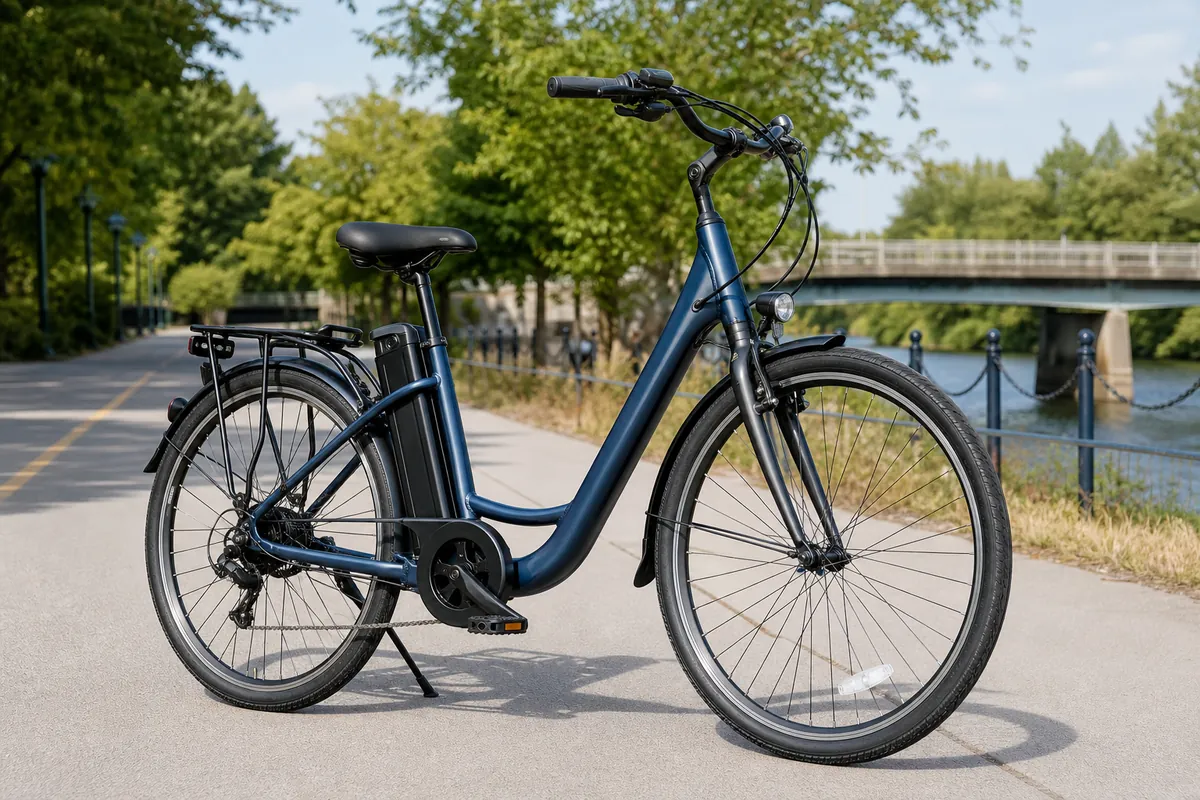
Beginner buyers often get pulled toward extreme claims: huge wattage, giant range numbers, fat tires for everything, or the cheapest model that looks exciting online. Those details can matter, but they are not the starting point. A first e-bike should lower friction. It should make short trips, errands, light commuting, and weekend rides feel natural instead of turning every outing into a maintenance or confidence test.
If you are still early in the research process, pair this guide with our broader e-bike buying tips. That will help you compare marketing claims with the practical details that show up once the bike is in your garage, apartment, or car rack routine.
A beginner-friendly e-bike is not simply the cheapest e-bike or the least powerful one. It is the bike that gives a new rider enough help without creating new problems. The sweet spot is usually comfort first, then control, then support, then price.
Comfort matters because confidence starts before the motor turns on. A bike with an upright riding position, easy standover height, and handlebars that do not force you into an aggressive posture will feel better in traffic, on paths, and during stop-and-go riding. Many new riders are happiest on a step-through frame because it is easier to mount, easier to dismount, and less awkward when the rear rack is loaded.
Control matters even more than speed. Smooth pedal assist, predictable throttle behavior where throttles are legal, and brakes that bite consistently are more useful than a motor that surges. If a bike feels jumpy in the lowest assist levels, it can make a new rider tense. Look for bikes with multiple assist levels, a readable display, and a low setting that actually feels gentle.
Beginner buyer principle: Choose the e-bike you can manage when the battery is low, the path is busy, and the ride does not go exactly as planned. Easy handling beats impressive specs when you are still building habits.
There is no single perfect beginner e-bike for every rider. The right category depends on where you ride, how you store it, and whether you need it for errands, fitness, commuting, or casual weekend use.
A commuter or hybrid e-bike is the safest first recommendation for many adults. These bikes usually put you in an upright position, work well on pavement and packed paths, and often include practical parts such as fenders, lights, racks, and kickstands. They are not the flashiest option, but they tend to be the easiest to justify if you want one bike for normal life.
For a beginner, look for tires around city or light all-terrain width, not ultra-narrow road tires. A little extra tire volume adds comfort and forgiveness. If you plan to carry groceries, a laptop bag, or a lock, confirm the rear rack rating rather than assuming every rack is built for real cargo.
Step-through frames are especially beginner-friendly for riders who value easy mounting, shorter stoplights, casual clothing, or less hip mobility demand. They can also be helpful if you plan to add a rear basket or panniers, because swinging a leg over a loaded rear rack gets old fast.
The tradeoff is that some step-through frames can feel less rigid than comparable step-over designs, especially on very heavy or very inexpensive bikes. That does not mean you should avoid them. It means you should test for wobble, frame flex, and steering feel if possible.
Folding e-bikes make sense for apartment living, mixed car trips, RV travel, and storage-limited homes. They are not always lighter than standard e-bikes, so do not assume "folding" means easy to carry upstairs. Many folding models are compact, but still heavy enough to be awkward.
If you choose this category, pay close attention to folded size, latch quality, handlebar stability, battery removal, and whether the folded bike can be rolled. A folding e-bike that technically folds but is miserable to move may not solve the problem you bought it for.
Fat tire e-bikes look stable, and they can feel comfortable over rough pavement, gravel, sand, or snow. For beginners, though, they are not always the easiest first choice. They tend to be heavier, bulkier, and less nimble in tight spaces. They can also be harder to lift onto racks or store indoors.
If you ride rough roads or want a recreational cruiser feel, a fat tire e-bike can work. If your real use case is paved paths and errands, a lighter commuter-style bike may feel better after the novelty fades.
| Beginner rider need | Best e-bike direction | What to prioritize | Watch out for |
|---|---|---|---|
| First commuter bike | Commuter or hybrid e-bike | Lights, fenders, rack, upright fit, dependable brakes | Overly aggressive riding position or weak accessory support |
| Easy mounting and casual errands | Step-through e-bike | Low standover, stable frame, comfortable saddle, simple controls | Very heavy frames or noticeable flex under load |
| Apartment or travel storage | Folding e-bike | Folded size, battery removal, latch quality, manageable weight | Assuming compact means lightweight |
| Rough pavement or mixed surfaces | Comfort hybrid or moderate fat tire e-bike | Tire stability, brake strength, ride comfort, frame control | Buying more tire and weight than you need |
| Budget-first purchase | Entry commuter from a supportable brand | Warranty clarity, battery quality, brakes, return policy | Vague specs, unknown cells, no replacement parts path |
Spec sheets can make e-bike shopping feel more technical than it needs to be. A few details are worth understanding before you buy; many others are only useful after you know your use case.
Motor placement and control style affect ride feel. Hub motors are common on affordable commuter e-bikes and can be perfectly good for beginners. Mid-drive motors often feel more natural and climb efficiently, but they usually cost more and can add drivetrain wear. If you want a deeper breakdown, read our guide to electric bike motors.
For many new riders, the bigger question is not "How many watts can I get?" It is "Does the bike start smoothly and stay predictable at low speed?" A smooth 350W or 500W setup can be more beginner-friendly than a punchier bike that lurches from a stop.
Range claims vary with rider weight, assist level, hills, wind, temperature, tire pressure, terrain, and cargo. Treat advertised range as a rough estimate, not a guarantee. Beginners are usually better served by choosing a battery that comfortably covers their normal ride with margin instead of chasing the largest possible number.
A removable battery is often worth prioritizing. It makes indoor charging easier, simplifies winter storage, and can reduce the hassle of apartment living. If you are comparing models, our article on whether to buy an e-bike with a removable battery covers the practical tradeoffs.
E-bikes are heavier than regular bicycles, and many riders carry more speed than they expect. That makes brakes a major beginner feature. Hydraulic disc brakes are nice because they typically require less hand effort and offer strong modulation, but well-adjusted mechanical disc brakes can still work for moderate riding.
Tires should match your route. Smooth pavement does not require huge knobby tires. Gravel paths do not need fragile slicks. For a first e-bike, aim for stable, practical tires with enough width to absorb bumps and enough tread for your surface. Predictable beats dramatic.
Do not ignore weight. A heavy e-bike can ride fine once moving, but the hard parts happen off the saddle: lifting it over a curb, rolling it through a doorway, loading it on a rack, or turning it around in a tight garage. If you plan to transport the bike by car, confirm your rack can handle the bike weight before you buy.
Practical check: Before buying, picture the least convenient part of ownership: charging, storing, locking, lifting, or getting service. If the bike fails that daily-life test, a better spec sheet will not fix it.
Budget matters, but the cheapest e-bike is not always the best beginner e-bike. The lowest price can hide weak brakes, hard-to-source batteries, unclear warranty support, poor assembly, or parts that need upgrades soon after purchase.
A better budget strategy is to decide which features are non-negotiable and which ones can be simpler. For many first-time buyers, the non-negotiables are safe brakes, a battery from a reputable supplier, a frame that fits, reasonable return terms, and parts support. Nice-to-have features include color displays, app integrations, suspension forks, torque sensors, and premium drivetrains.
If your budget ceiling is firm, compare bikes in a realistic price band instead of chasing luxury features. Our guide to the best electric bikes under $2,000 can help you think through value without treating cheap as the only goal.
Some upgrades genuinely make a first e-bike easier to own. Others mostly make the product page look better.
Integrated lights are worth having if you ride near traffic or at dusk. Fenders matter if you commute, ride after rain, or do not want every damp path to become a laundry problem. A rear rack is valuable for errands, but only if it has a real weight rating and useful mounting points.
A torque sensor can make pedal assist feel more natural because the bike responds to how hard you pedal. A cadence sensor can still be fine, especially on lower-cost bikes, but it may feel more like an on-off assist system. Neither is automatically right for everyone. The best choice depends on whether you want a bicycle-like feel or simple powered cruising.
Suspension is more nuanced. A basic suspension fork can add comfort, but low-quality suspension can add weight and maintenance without improving much. Wider tires, correct tire pressure, and a comfortable riding position often do more for beginner comfort than cheap suspension parts.
Be cautious when a bike looks impressive but the seller is vague about fundamentals. Battery details should be clear. Warranty terms should be easy to find. Replacement parts should not feel like a mystery. If the brand cannot explain charger compatibility, brake parts, tire size, controller support, or battery replacement, that is a real ownership risk.
Also be careful with unrealistic range promises. If a low-cost e-bike claims extreme range without explaining battery capacity, assist level, and test conditions, treat that as marketing rather than planning data. The same goes for speed claims that may not match local e-bike laws. Rules vary by location, class, road type, and age requirements, so check your local regulations before assuming a bike is legal everywhere you want to ride.
Finally, watch for bikes that are too large, too heavy, or too powerful for your actual use. New riders often buy for the fantasy ride instead of the normal Tuesday ride. The normal Tuesday ride is the one that determines whether the bike becomes transportation or collects dust.
Use this checklist before you click buy or walk out of a shop:
If you can test ride, do it. Ride slowly, start on a slight incline, brake firmly in a safe place, shift through the gears, and turn tightly at low speed. A beginner-friendly e-bike should make those basics feel calm.
If you are still comparing categories, start broad and look for beginner-friendly patterns: upright commuter geometry, step-through options, removable batteries, clear warranty terms, and sensible included accessories. The links below are general shopping searches, not endorsements of every product shown. Use the checklist above to filter aggressively.
The best beginner e-bike is the one that makes you want to ride again tomorrow. For most first-time buyers, that means a comfortable commuter, hybrid, or step-through model with smooth assist, dependable brakes, a practical battery setup, and support that does not disappear after checkout. Buy for control, fit, charging, storage, and service first. Speed and flashy extras can wait.
When in doubt, choose the bike that feels easiest to live with. A simple, confidence-building e-bike will teach you what you actually value, and that is the strongest foundation for every upgrade later.
* We may earn a commission when you buy through our links.