If you are shopping for an ebike for hills, what to look for is simple at first: strong low-speed torque, sensible gearing, enough battery, confident brakes, and a frame that fits the rider and terrain. A bike that feels fast on flat pavement can still struggle on long climbs if the motor, controller, battery, and drivetrain are not built for steady load.
Quick answer: For hill riding, prioritize torque over top speed. A good hill-ready ebike should have a motor that pulls smoothly at low speed, gearing that lets you keep cadence on climbs, a battery with enough capacity for elevation gain, and brakes that can control the extra weight on descents. Mid-drive motors are often the strongest choice for serious hills, while quality hub-drive bikes can work well for moderate climbs.
The tricky part is that spec sheets do not always tell the whole story. Watt ratings, battery voltage, and marketing claims can point you in the right direction, but the real question is whether the bike can climb without overheating, draining the battery too fast, or forcing you to grind at an uncomfortable cadence.
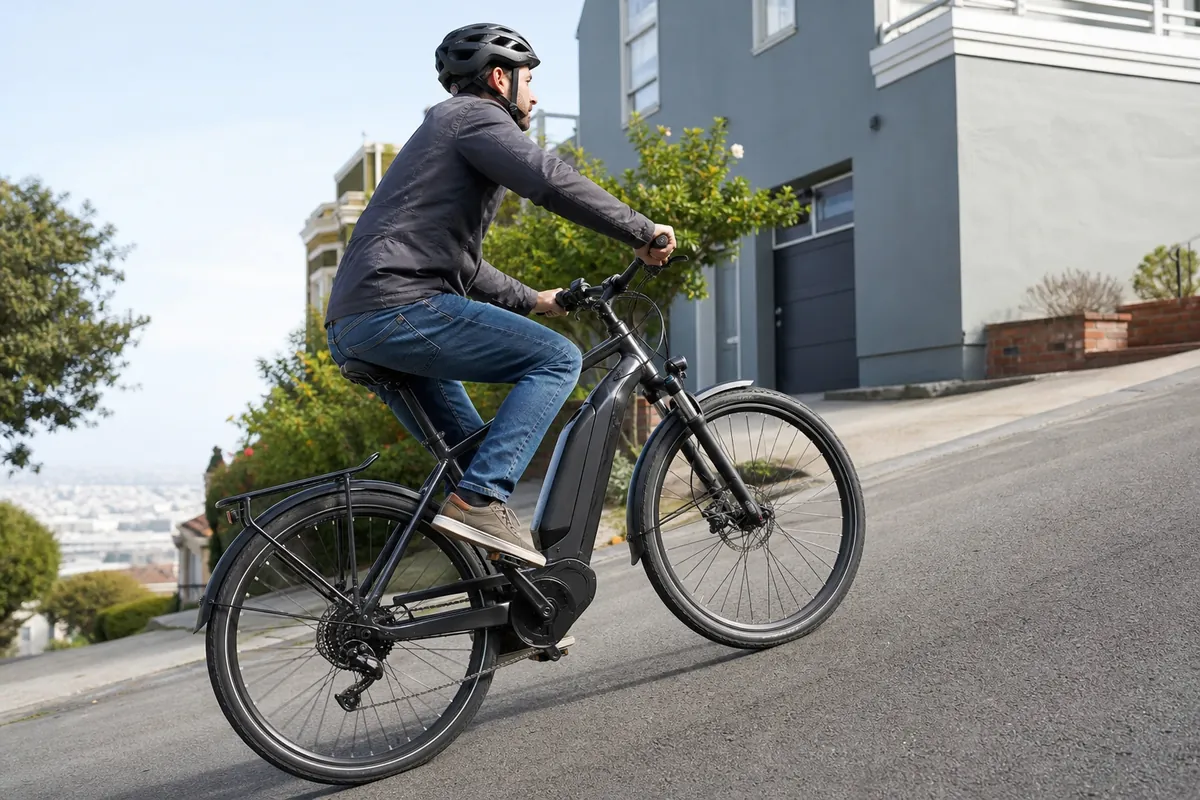
Start with the climb itself. A short driveway, rolling suburban hills, and a long mountain road ask very different things from an ebike. The steeper and longer the climb, the more you should care about torque delivery, heat management, battery capacity, and brake quality.
If you are still comparing broad categories, our e-bike buying tips can help you sort fit, budget, and use case before you get lost in motor specs. For hills, though, the shortlist should get more specific fast.
Best fit for most hill riders: Choose a bike that climbs comfortably at a steady pace instead of chasing the highest advertised speed. A calm, controlled climb is usually a better sign than a short burst of power.
Torque is the shove that helps the bike get moving and keep moving when the road tilts upward. On hills, this matters more than a high top speed claim. A motor that feels lively on flat roads may feel weak once rider weight, cargo, and grade stack up.
Mid-drive motors usually have an advantage on steep climbs because they can use the bike's gears. That lets the motor spin in a healthier range while the drivetrain multiplies effort. Hub motors can still climb well, especially on moderate hills, but they depend more heavily on motor size, controller tuning, and heat handling.
For a deeper breakdown of motor placement and ride feel, see our guide to electric bike motors. The short version: for serious hills, smooth low-speed pull beats a big number on a sales page.
Good gearing keeps both you and the motor from bogging down. Look for a low climbing gear that lets you pedal at a comfortable rhythm instead of mashing slowly. This is especially important on mid-drive ebikes, where poor shifting habits can put extra stress on the chain, cassette, and motor.
On a test ride, find a real hill if you can. Shift before the climb gets steep, then listen and feel. The bike should pull steadily without loud strain, jerky surges, or a sudden drop in assist. If the bike only feels good when you attack the hill at speed, it may not be the best choice for daily climbing.
Climbing uses more energy than flat cruising. That sounds obvious, but it matters when you compare range claims. Many advertised range numbers are based on lighter assist, flatter routes, and ideal conditions. Hills, wind, cold weather, cargo, and rider weight can all reduce real-world range.
Do not buy only for your shortest trip. If your normal route includes a long climb home, give yourself battery margin. A larger battery may add weight, but running out of assist halfway up a hill is worse. Battery care also matters over time; poor charging and storage habits can shorten useful capacity, so review basic e-bike battery maintenance before you commit to a bike.
| Feature | Why it matters on hills | What to look for |
|---|---|---|
| Motor type | Affects climbing feel and heat load | Mid-drive for steep or frequent climbs; quality hub drive for moderate hills |
| Torque delivery | Helps the bike pull from low speed | Smooth assist without surging, grinding, or fading |
| Gearing | Keeps cadence comfortable on climbs | A true low gear and clean shifting under load |
| Battery | Hills drain energy faster | Enough capacity for your route plus a practical reserve |
| Brakes | Controls speed on descents | Strong disc brakes, ideally with confident modulation |
| Weight rating | Rider and cargo load affect climbing | Rated capacity that comfortably covers you, gear, and accessories |
Hill buying is not only about getting up the climb. You also need to come back down safely. Ebikes are heavier than regular bikes, and downhill speed can build quickly. Strong disc brakes are a must for frequent hills, and hydraulic discs are often easier to modulate on longer descents.
Brake pads also wear faster when a heavy ebike sees a lot of stop-and-go riding or steep downhills. Before you buy, check pad availability and service access. Our guide on how often to replace e-bike brake pads explains the wear signs to watch for.
Tires matter, too. Wider tires can add comfort and grip, but very soft tires can feel sluggish. The right setup depends on your road surface, rider weight, and weather. For steep paved hills, predictable grip and stable handling matter more than a tiny gain in range.
Practical test: If possible, test the ebike on the kind of hill you actually ride. Start from a slow roll, shift into a low gear, climb for more than a few seconds, then descend and brake. A parking-lot test will not reveal much about hill performance.
A mid-drive ebike is usually the better choice for steep hills, heavier riders, cargo, or routes with repeated climbing. Because the motor works through the drivetrain, it can take advantage of low gears. That makes the bike feel more natural when climbing slowly.
A rear hub-drive ebike can still be a good hill bike if the climbs are moderate and the system is well matched. Look for smooth acceleration, enough torque for your weight, and a battery that does not sag badly under load. Be careful with very cheap hub-drive bikes that advertise power but pair it with weak brakes, poor tires, or limited service support.
Front hub motors are usually less appealing for serious hills because traction can feel less planted, especially on loose or wet surfaces. They can be fine for light assist on gentle slopes, but they would not be my first pick for a hill-focused buyer.
Some specs are useful; others need context. Motor wattage can help compare bikes in the same class, but it does not tell you how the bike handles heat, how the controller is tuned, or how it feels at low speed. Torque figures are helpful, but only when the full system is well designed.
Battery voltage and amp-hour numbers can also be misleading if you only look at one of them. What you really want is a battery system that matches the motor and your route. A powerful motor with a small battery may feel strong at first but drain quickly on repeated climbs.
Also check the maximum rider and cargo rating. If you plan to carry groceries, tools, a child seat, or panniers, include that weight in your decision. A hill bike should be chosen for the loaded ride, not the empty showroom ride.
Before buying, ask how the bike handles long climbs, not just whether it can climb. A useful answer should mention motor type, gearing, battery size, brake setup, service support, and rider load. If the seller only repeats top speed or range claims, keep digging.
For most riders, the best ebike for hills is not the most aggressive one. It is the bike that climbs predictably, stops confidently, and still feels comfortable after the novelty wears off.
If you are comparing current options, start with hill-focused ebike listings and filter from there. Use the checklist above while you shop, and pay close attention to motor type, brake setup, battery size, and total weight rating.
When choosing an ebike for hills, look past the fastest-sounding specs and focus on the whole climbing system. Motor torque, gearing, battery reserve, brakes, tires, and rider weight all work together. If one part is weak, the bike may still move, but it will not feel relaxed or dependable on real climbs.
A good hill ebike should make the climb feel manageable without turning the descent into a white-knuckle ride. Choose the bike that feels steady, serviceable, and honest about its limits. That is the one you are more likely to ride often.
* We may earn a commission when you buy through our links.