The best cargo ebike for families is usually a stable, purpose-built electric cargo bike with room for kids, strong brakes, practical accessories, and enough rated payload for real daily use. Do not start with motor wattage alone. Start with how many children you need to carry, where they will sit, how much extra gear comes with them, and whether the bike still feels controlled at low speed.
Quick answer: For most families, the safest first choice is a longtail cargo ebike with an integrated rear rack, hydraulic disc brakes, a low or step-through frame, child-passenger accessories from the bike maker, and a total payload rating that comfortably covers the rider, kids, bags, and any seats or rails. If you need to carry two younger kids, groceries, and school bags, prioritize stability and passenger hardware over top speed.
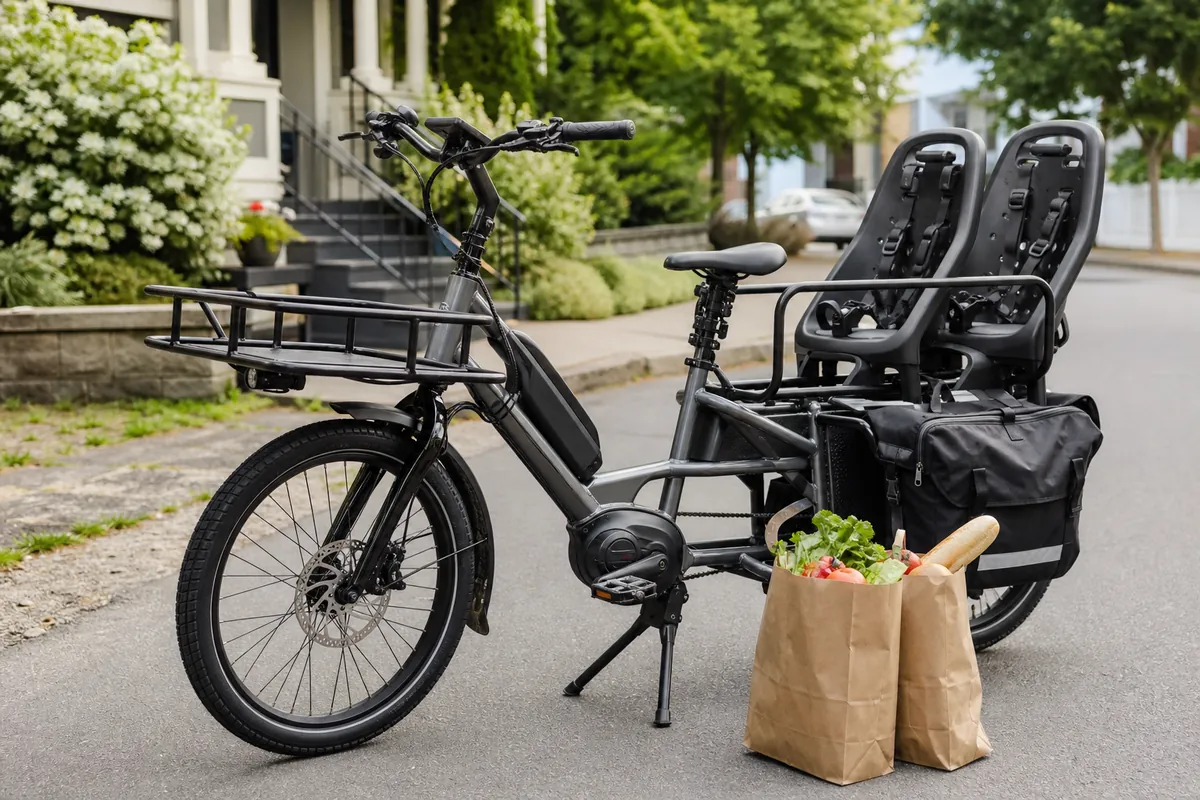
A family cargo ebike asks more from a bike than a normal commuter model. It has to carry shifting weight, stop predictably, fit more than one rider’s routine, and still be easy enough to use on a busy weekday morning. That is why the “best” choice depends less on a single spec and more on the whole system.
If you are still comparing general categories, start with our broader e-bike buying tips. This guide narrows the decision to family cargo use: kids, school runs, groceries, daycare bags, hills, storage, and real-world handling.
A good family cargo ebike should feel calm, not twitchy. The frame should be designed for cargo from the start, with passenger-rated accessories that match the bike. A regular ebike with an improvised rear rack is not the same thing.
The core buying question is simple: can this bike carry my actual family load without making every ride feel like a balancing act? To answer that, look at these areas first.
Family-first rule: Buy the bike around the hardest ride you expect to do often, not the easiest one. Two kids, a hill, a backpack, a grocery stop, and a windy afternoon will reveal more than a flat solo test ride.
Most family buyers end up choosing between a longtail cargo ebike, a front-loader, or an ebike plus trailer. Each can work, but they feel very different.
A longtail cargo ebike looks closest to a normal bicycle, but the rear end is stretched to carry passengers or cargo. For many families, this is the most practical all-around format. It is usually easier to store than a front-loader and easier to ride than it looks once you adjust to the longer rear rack.
Longtails are a strong fit for school drop-offs, errands, and mixed kid-plus-bag trips. Look for rear passenger rails, foot protection, and accessories made by the same brand. Passenger comfort is not a bonus feature here; it is part of the buying decision.
Front-loaders place the cargo box in front of the rider. They can be excellent for younger children because you can see your passengers while riding. They also carry bulky items well.
The tradeoff is size. Front-loaders can be longer, heavier, and harder to store. They may also take more practice at low speed. If you have a garage, flat routes, and several short family trips each week, a front-loader may be worth the learning curve.
A trailer can be the lower-cost path if you already own a suitable ebike. It also separates kid-carrying from the bike itself, which some families like.
The downsides are length, visibility, turning space, and attachment compatibility. If you go this route, confirm the trailer works with your axle, frame, brakes, and local riding environment. A trailer is useful, but it does not turn every ebike into a true cargo ebike.
| Setup | Best for | Main tradeoff |
|---|---|---|
| Longtail cargo ebike | School runs, errands, one or two child passengers, daily utility | Rear weight changes handling, especially when kids move around |
| Front-loader cargo ebike | Younger children, bulky cargo, families with garage storage | Longer, heavier, and usually more awkward to park |
| Ebike with trailer | Occasional kid hauling or cargo hauling on a compatible ebike | More length behind the bike and more compatibility checks |
| Compact cargo ebike | Small homes, tighter storage, one-child trips, urban errands | Less passenger and cargo room than a full-size cargo model |
Family cargo riding is weight management. Before you compare display screens or top assist modes, check the bike’s rated payload and how that number is defined. Some brands list total payload. Others separate rider weight, rear rack capacity, and accessory limits.
Our guide to e-bike cargo capacity goes deeper on those ratings, but the short version is this: leave margin. A child seat, passenger rails, school bags, groceries, locks, and water bottles all count. So does the rider.
Brakes deserve the same attention. Cargo ebikes are heavier than standard bikes, and family loads make stopping distance more important. Hydraulic disc brakes are common on better cargo models because they can offer strong, controlled braking with less hand effort. Mechanical disc brakes can still work, but they may need more adjustment and more hand pressure.
Stability shows up in small moments: starting from a stop, turning into a driveway, leaning the bike onto a kickstand, and loading a child who is excited to climb aboard. A sturdy double-leg kickstand, low center of gravity, and predictable steering can matter more than another assist level.
Practical callout: If possible, test the bike with realistic weight before buying. Bring a loaded backpack, try low-speed turns, practice stopping, and check whether you can hold the bike steady while mounting and dismounting. A family cargo ebike should feel manageable when the ride is messy, not only when the showroom is quiet.
A family cargo ebike does not need to feel like a small motorcycle. It needs to move a heavy load smoothly from a stop, climb your regular hills, and avoid jerky starts with kids onboard.
Mid-drive motors often feel natural on hills because they work through the bike’s gears. Hub motors can be simpler and common on value-focused cargo ebikes. Neither layout is automatically best for every family, so compare the full bike, not the motor label alone. For more context, see our guide to electric bike motors.
Battery size matters, but range estimates are often optimistic because extra weight, hills, cold weather, tire pressure, and high assist settings all reduce real-world distance. If your route includes hills or two passengers, treat the advertised range as a best-case signal, not a promise.
Removable batteries are worth considering if you park outside, store the bike in a garage, or need to charge indoors. They also make a heavy cargo bike easier to manage during maintenance or transport.
The right accessories can make the difference between a bike you admire and a bike you use every weekday. For family cargo use, look beyond the base model price and price the complete setup.
Common family accessories include:
Use brand-approved passenger accessories where possible. This is especially important for child seats, rails, and foot protection. A bargain part that does not fit cleanly can create daily friction, and daily friction is what makes families stop riding.
Before you commit, run through the boring questions. They are the ones that save money.
Maintenance also matters more on a family cargo bike. Extra weight can wear brake pads faster, so keep an eye on stopping feel and pad thickness. Our guide on how often to replace e-bike brake pads is a useful next read if you are planning daily school runs.
If you are ready to compare current options, use the search below to look at cargo ebikes and family-focused accessories in one place. Treat it as a starting point, then verify payload rating, child-passenger compatibility, brake type, battery details, warranty, and local service before buying.
For most families, the best cargo ebike is the one that makes the repeat ride easy: school, park, groceries, home. Choose the layout first, confirm the payload and passenger setup, then compare motor feel, battery range, accessories, and service support. A slightly less flashy bike that fits your family routine is often the better buy.
* We may earn a commission when you buy through our links.