If you are searching for class 3 e-bike laws, the practical answer is straightforward: a Class 3 eBike is often legal to ride, but the rules can change depending on the state, the kind of roadway, and whether you are using a local trail or shared-use path. In most states that follow the three-class framework, a Class 3 eBike is a pedal-assist electric bicycle that can provide assistance up to 28 mph, and that higher assisted speed is the main reason it may be treated differently from a slower eBike.
Quick answer: Class 3 e-bike laws usually focus on how the bike is defined, where it can be ridden, and whether added rider rules apply because it can assist up to 28 mph. Roads and many commuting routes are often allowed, but bike paths, local trails, helmet rules, and age requirements can vary by state and by local authority.
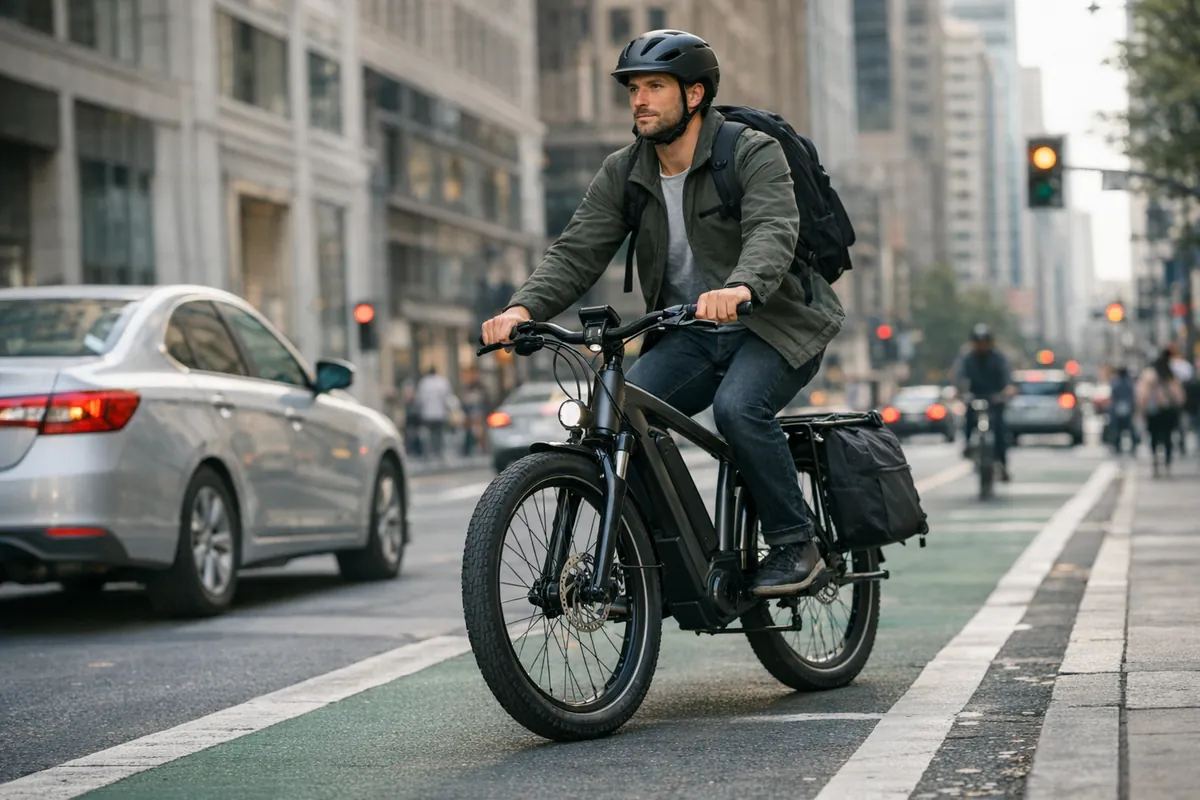
The key distinction is not simply that the bike is electric, but that a Class 3 eBike pairs pedal assist with a higher assisted speed than lower eBike classes.
In the three-class system used by many states, a Class 3 eBike is generally defined as a pedal-assist electric bicycle that stops providing motor assistance at 28 mph. That definition matters because it gives lawmakers a way to separate faster commuter-style eBikes from lower-speed models that are more commonly grouped with casual path riding.
Even so, the label does not answer every legal question by itself. A Class 3 eBike may still be treated differently from place to place, especially when you move beyond ordinary road use and start looking at local paths, parks, or trail systems. Riders who are still sorting out category confusion may want to compare an e-bike and a moped, since many misunderstandings begin when people assume every faster electric two-wheeler is governed the same way.
| Class 3 law issue | What it often affects | Why it matters |
|---|---|---|
| Top assisted speed | Pedal assist up to 28 mph | This is usually what separates Class 3 from lower eBike classes |
| Road use | Often permitted | Many laws treat Class 3 eBikes as practical commuter bikes |
| Bike lane access | Frequently allowed, but not always | Some areas limit access in certain facilities |
| Path and trail access | Sometimes restricted | Shared-use spaces may be governed more narrowly than roads |
| Helmet or age rules | Can vary by jurisdiction | Faster bikes sometimes trigger extra rider requirements |
| Local control | City, county, park, or trail authority rules | State law may be only part of the real answer |
The biggest difference is speed. Because a Class 3 eBike can assist up to 28 mph, lawmakers may see it as a better fit for transportation and commuting than for slower shared-use spaces. That does not automatically make it a motor vehicle in the same sense as a scooter or moped, but it does mean the law may draw a firmer line around where it belongs.
That distinction matters in practice. A rider may hear that eBikes are legal in a state and assume all classes are treated alike, but that is often too broad. Class 1, Class 2, and Class 3 eBikes can share the same broad framework while still facing different access rules once speed enters the picture.
For many riders, road use is the easiest part of the analysis. Class 3 eBikes are often written into law with street riding and commuting in mind, which is why they are commonly allowed on roads and, in many places, in at least some bike lanes. If your riding is mostly urban or suburban commuting, this is often where Class 3 makes the most sense.
Still, the answer is rarely universal. Some jurisdictions place limits on certain bike facilities, especially where a route blends into a slower corridor meant for shared recreation rather than transportation. If you are trying to understand the broader street-use question, it can also help to review can you drive a motorized bike on the road for added context around how roadway access questions are often framed.
This is where class 3 e-bike laws become more nuanced. A greenway, park path, waterfront trail, or rails-to-trails route may be managed by a local agency rather than controlled only by general state traffic law. That means a Class 3 eBike can be perfectly legal on the road, useful for commuting, and still restricted once the route moves into a multi-use path system.
Posted signs matter here, and so do local rules that riders may overlook. In real-world use, the state definition gets you started, but the trail authority or city rule may finish the answer. The class label is only the starting point.
Practical tip: before riding a Class 3 eBike on a new route, check both the state framework and the local rules for paths, parks, and trails. A bike that is perfectly legal for road commuting may still be restricted once the route enters a shared-use system.
Yes, and that is the safest way to approach the topic. Even when two states recognize the same three-class model, they may not handle path access, helmet requirements, or rider age in exactly the same way. One state may define the class clearly but leave more room for local control, while another may write more detailed rules directly into statewide law.
That is why broad summaries help with orientation but do not replace state-specific checking. Looking at pages such as California motorized bicycle laws and Nevada motorized bicycle laws can give riders a better sense of how familiar categories may still lead to different practical outcomes from one state to another.
Most riders do not need a long legal brief. They need answers to practical questions they can use right away. Can the bike be ridden on the road? Is it allowed in a bike lane? Is the local path network open to Class 3 eBikes? Are there helmet or age requirements where you live?
Those questions matter more than abstract labels because they shape the actual ride. They also explain why a quick search can leave riders with an incomplete answer. A state may allow Class 3 eBikes broadly, yet a local park system may still limit access on specific trails. In other words, legality is often route-specific, not just bike-specific.
It also helps to remember that policies can change. Trail systems update posted rules, cities revise ordinances, and states refine eBike definitions over time. For that reason, current state resources and posted local guidance are usually more reliable than an old forum post or secondhand claim from another rider.
Class 3 e-bike laws are mostly about the relationship between speed, access, and riding context. Because these bikes can provide pedal assistance up to 28 mph, they are often treated as strong commuter options for roads and transportation routes, while paths and recreational trails may face tighter rules.
The most useful takeaway is simple: knowing that your bike is Class 3 helps, but it does not answer every legal question on its own. To ride with confidence, pair the class definition with current state law, local access rules, and posted signs for the route you actually plan to use. That approach is more accurate, more practical, and much safer than assuming one rule covers every ride.