If you are comparing a 2 stroke vs 4 stroke bicycle engine kit, the short answer is this: choose a 2-stroke kit if you want the cheapest, lightest, simplest gas-bike conversion, and choose a 4-stroke kit if you care more about smoother riding, lower noise, and not mixing oil into your fuel.
Quick answer: A 2-stroke bicycle engine kit is usually better for budget builds, compact frames, and riders who do not mind fuel mixing, extra exhaust smell, and a louder ride. A 4-stroke bicycle engine kit is usually better for riders who want a calmer setup with cleaner fueling habits and a more practical, moped-like feel.
Best default pick: most casual riders should lean 4-stroke if the frame has room and the budget works. Pick 2-stroke when low cost, simple installation, and easy parts availability matter most.
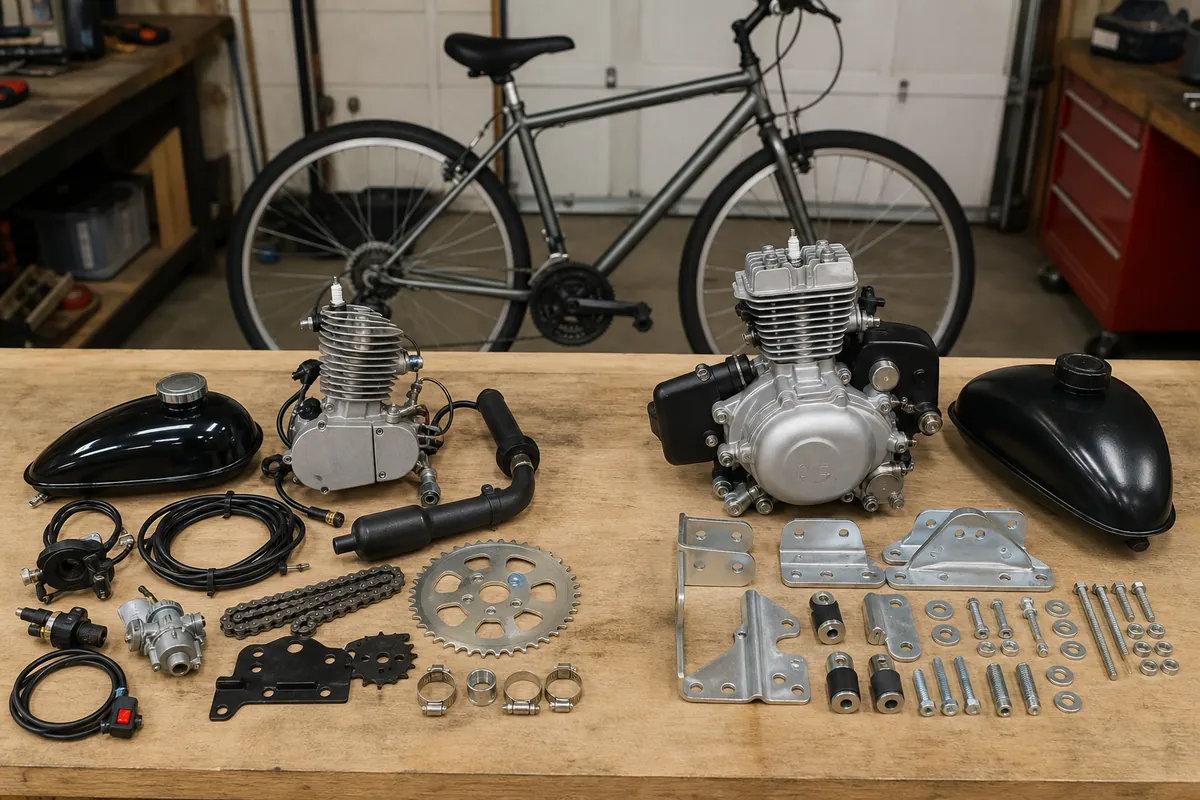
Both styles can turn a regular pedal bicycle into a gas-assisted motorized bike, but they do it with different tradeoffs. The right choice depends on your budget, frame space, local rules, tolerance for noise, and how much maintenance you are willing to accept.
Before you buy either kit, check whether your build can be used legally where you ride. Gas-powered bicycle rules vary by state and city, and some areas treat motorized bicycles differently from e-bikes, mopeds, or motorcycles. Our guides on riding a motorized bike on the road and motorized bicycle license questions are worth reading before you spend money.
The biggest difference is how the engine completes its power cycle. A 2-stroke engine fires more often for its size, which helps it feel punchy and keeps the engine compact. A 4-stroke engine separates intake, compression, power, and exhaust into four movements, which tends to make it smoother and more fuel-friendly.
That technical split turns into real-world differences you can feel right away. A 2-stroke kit usually feels raw, light, and mechanical. A 4-stroke kit usually feels steadier and more relaxed, but it takes up more space and often costs more.
| Factor | 2-stroke bicycle engine kit | 4-stroke bicycle engine kit |
|---|---|---|
| Typical cost | Usually cheaper | Usually more expensive |
| Weight and size | Lighter and more compact | Heavier and bulkier |
| Fueling | Requires gas and oil mix | Uses straight gasoline with separate engine oil |
| Noise and vibration | Louder, buzzier feel | Smoother and often quieter |
| Maintenance style | Simple, but fuel mix and tuning matter | More parts, but more familiar oil-change care |
| Best for | Budget DIY builds and compact frames | Practical riders who want smoother road manners |
A 2-stroke bicycle engine kit is the classic budget motorized-bicycle setup. It is usually inexpensive, widely available, and compact enough to fit many diamond-frame bicycles. If your goal is a low-cost project bike, this is the route most people notice first.
The appeal is obvious: fewer moving parts, lower weight, and strong power for the engine size. A small 2-stroke can feel lively on a bicycle because the bike itself is light. That punchy feel is part of the charm.
There are catches. A 2-stroke kit typically needs premixed fuel, meaning gasoline blended with 2-stroke oil at the ratio specified by the kit maker. Get that wrong and you can shorten engine life. These engines also tend to be louder, smokier, and more noticeable in neighborhoods.
The 2-stroke choice makes the most sense when price matters more than polish. It is not the refined option, but it can be the simplest way to learn the motorized bicycle world without spending much.
A 4-stroke bicycle engine kit is usually the better fit for riders who want a calmer machine. It tends to start, idle, and cruise in a way that feels more familiar if you have used a small lawn engine, scooter, or mini bike.
The big practical advantage is fueling. You normally add regular gasoline to the tank and manage engine oil separately. There is no routine premixing at every fill-up, which makes ownership cleaner and less fussy.
A 4-stroke kit can also be quieter and smoother, though exact results depend on the specific engine, exhaust, frame, and installation quality. For riders who want to use the bike often, that smoother feel matters. It makes the whole build feel less like a weekend experiment and more like a small transportation machine.
The downside is packaging. A 4-stroke engine is usually larger and heavier than a comparable 2-stroke kit. Some frames simply do not have enough room. Mounting can be less forgiving, and the higher kit cost can push some buyers toward electric options or complete used bikes instead.
Best fit by rider type: Choose 2-stroke if you want a low-cost project, enjoy tinkering, and can tolerate noise, smell, and premixed fuel.
Choose 4-stroke if you want smoother road manners, simpler fueling, and a more practical feel for repeated rides.
Do not choose an engine kit on engine type alone. Frame fit can make or break the project. A kit that looks good online may be awkward on your bike if the frame triangle is small, the tubes are unusual, or the brakes and cables leave little room.
Many motorized bicycle kits are designed around traditional steel diamond-frame bikes. Aluminum frames, full-suspension bikes, step-through frames, carbon frames, and unusual cruiser shapes can create fit problems. Braking also matters. A motorized bicycle that can go faster than normal pedaling needs strong, well-maintained brakes.
If you are still deciding whether this kind of project fits your riding style, read why motorized bikes appeal to riders and think about the whole build: frame, brakes, wheels, tire condition, mounting points, chain line, and local use case.
On paper, the 2-stroke vs 4-stroke debate can look like a spec-sheet decision. In real life, your neighbors, riding routes, and local enforcement matter too.
A 2-stroke kit is usually more obvious. It may sound sharper, smell oilier, and draw more attention. Some riders enjoy that small-engine character. Others quickly realize they wanted transportation, not a machine that announces every ride.
A 4-stroke setup is not silent. It is still a gas engine on a bicycle. But it often has a lower, steadier sound and a more restrained feel. For mixed neighborhood riding, that can be a meaningful advantage.
Practical buying note: Before ordering any bicycle engine kit, check three things: your frame dimensions, your local motorized bicycle rules, and whether replacement parts are easy to find. A cheap kit is not cheap if it does not fit your bike or cannot be used where you ride.
Many buyers assume a 2-stroke kit is automatically easier because it has fewer parts. Sometimes that is true. The engine layout is simple, and common repairs can be approachable for a patient DIY owner.
But a 2-stroke also demands discipline. Fuel mix matters. Carburetor tuning can matter. Exhaust leaks, vibration, chain alignment, and loose hardware can show up if the install is rushed.
A 4-stroke kit may feel more familiar because you treat oil and fuel separately. That does not make it maintenance-free. You still need to check fasteners, mounts, chain tension, oil level, throttle operation, and brakes.
Either way, the bicycle underneath is now doing harder work. Tires, spokes, bearings, brake pads, and cables deserve more attention than they did as a pedal-only bike.
A 2-stroke kit usually wins on entry price. That is why it remains popular with first-time builders. If your budget is tight and you accept a rougher ownership experience, it can be a good value.
A 4-stroke kit usually costs more because the engine package is more complex and often includes a bulkier mounting setup. You may also need to spend more time confirming fit before buying.
Do not compare kit price alone. Add the likely extras: better brakes, fresh tires, tools, fuel container, oil, spare chain parts, threadlocker, lights, helmet, and any legal equipment your area requires. For some riders, those add-ons make a complete e-bike or e-bike conversion worth considering. Our e-bike buying tips can help if you are deciding whether gas power is still the right path.
If you are ready to shop, compare both engine styles side by side and pay close attention to frame compatibility, included mounting hardware, fuel system details, and replacement-part availability. Avoid buying on engine size or price alone.
Most riders should choose a 4-stroke bicycle engine kit if they want a more practical, repeatable riding experience and have a compatible frame. The smoother sound, cleaner fueling routine, and calmer feel make it easier to live with.
A 2-stroke bicycle engine kit still makes sense for budget-first builders. It is lighter, cheaper, and easier to find. If you enjoy tuning small engines and want the classic motorized bicycle feel, it can be the more fun choice.
The honest answer is that neither kit is perfect. A 2-stroke is usually cheaper but rougher. A 4-stroke is usually smoother but heavier and pricier. Pick based on how you will actually use the bike, not just which engine sounds better in a product listing.
In the 2 stroke vs 4 stroke bicycle engine kit decision, the best choice comes down to your tolerance for tradeoffs. Choose 2-stroke for a low-cost, lightweight DIY build with more tinkering. Choose 4-stroke for smoother riding, easier fueling habits, and a more practical feel.
Whichever way you go, confirm frame fit, braking strength, parts availability, and local rules before buying. That homework matters more than a small difference in advertised horsepower.
* We may earn a commission when you buy through our links.