This used ebike buying guide is for the buyer who wants secondhand savings without inheriting someone else’s battery problem, brake issue, or mystery repair bill. The short version: buy the condition, not the discount. A clean used e-bike with a healthy battery, straight frame, working electronics, and available replacement parts is often a better deal than a cheaper bike with vague history.
Quick answer: A used e-bike is worth considering when the seller can show the charger, keys, display, battery health clues, service history, and a clean test ride. Walk away from swollen batteries, cut wiring, missing chargers, frame cracks, grinding motors, brake problems, or a seller who refuses a proper inspection.
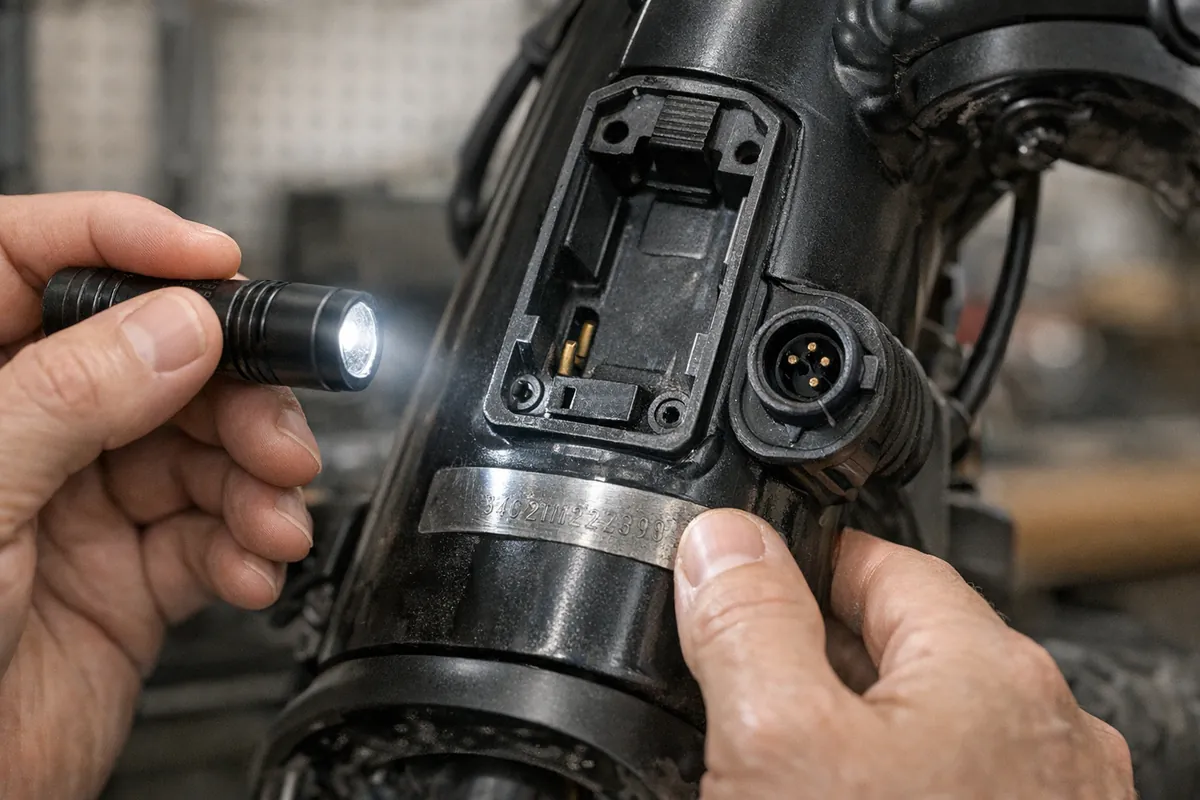
The battery is usually the highest-risk part of a used e-bike purchase. It is also one of the easiest places for a “cheap” bike to become expensive. Before getting excited about the frame, motor, accessories, or low mileage claim, look closely at the pack, charger, mounting rail, charging port, and how the bike behaves under load.
Ask how old the battery is, whether it is original to the bike, how often it was charged, and where it was stored. A seller may not know every detail, but vague answers matter less than visible condition and basic consistency. A battery that locks firmly into place, charges normally, shows no swelling, and does not cut out during a test ride is a much better sign than one that looks abused or has been sitting dead for months.
If you want a deeper pre-purchase checklist, use our used e-bike buying checklist alongside this guide. It is especially useful when you are meeting a private seller and need a quick inspection flow.
Buyer note: A used e-bike battery can look fine from the outside and still have reduced range. Treat seller range claims as estimates, not guarantees, unless the bike has recent diagnostic data or a very clear service history.
A good used e-bike inspection is part bicycle check, part electronics check. The regular bike parts still matter: frame, wheels, tires, brakes, drivetrain, headset, fork, seatpost, and controls. The electric system adds another layer: battery, charger, display, controller, motor, wiring, sensors, lights, and error codes.
Start with the frame. Look around welds, head tube, bottom bracket area, rear dropouts, rack mounts, and any hinge points on folding models. Paint chips are normal on a used bike; cracks, dents near stress points, or signs of a hard crash are different. If the frame is questionable, the rest of the deal stops being attractive.
Next, inspect the wheels and brakes. E-bikes are heavier than regular bicycles, so loose spokes, warped rotors, worn pads, and underpowered brakes matter more. Brake pads are replaceable, but their condition tells you how the bike was ridden and maintained. If the lever pulls to the bar, the rotor scrapes badly, or the bike shudders during braking, price the repair before you buy.
| Area to inspect | Good signs | Red flags |
|---|---|---|
| Battery | Locks securely, charges normally, no swelling, no corrosion | Missing charger, swollen case, damaged port, sudden power cutouts |
| Motor | Smooth assist, no grinding, no repeated error codes | Jerky power, loud clicking, overheating smell, assist failure |
| Frame | Straight alignment, normal cosmetic wear, no cracks | Cracks, major dents, bent fork, crash damage near welds |
| Brakes | Firm lever feel, even stopping, pads still usable | Weak stopping, leaking hydraulics, warped rotors, metal-on-metal noise |
| Parts support | Known brand, available battery, standard tires and brake parts | Unknown model, no replacement battery, proprietary parts with no seller support |
A parking-lot spin is better than nothing, but it is not enough. If the seller allows it, ride long enough to test each assist level, both brakes, shifting, throttle if equipped, walk mode if present, lights, display buttons, and any app-connected features. Listen for motor noise on acceleration and watch for error codes when the bike is under load.
Try a small hill if one is nearby. A weak battery or stressed motor often reveals itself when the bike has to work. The assist should feel predictable, not like it is surging, hesitating, or cutting in and out. A little drivetrain noise may be normal on a used bike, but electrical hesitation is not something to casually ignore.
Check fit during the ride, too. The best bargain is still a poor buy if the frame size is wrong, the cockpit feels cramped, or the bike is too heavy for your storage situation. If you are still comparing new and used options, our broader e-bike buying tips can help you sort comfort, range, motor style, and ownership costs before you commit.
Battery condition deserves its own checklist because it can make or break the purchase. You do not need laboratory testing to avoid the worst mistakes, but you do need to slow down and look for practical clues.
Replacement availability is a serious part of the deal. Some used bikes are inexpensive because the original battery is tired and replacements are hard to find. Before buying, check whether a compatible pack exists and what it might cost. For planning purposes, our guide to e-bike battery replacement explains the decision points that matter when an older pack is near the end of its useful life.
Practical callout: If the battery is missing, the charger is missing, or the seller says it “just needs a charger,” treat the bike as a project unless the price is low enough to cover a replacement battery, charger, diagnostics, and the possibility that the controller or motor also has issues.
A used e-bike does not need a perfect paper trail, but the seller should be able to explain where it came from and why it is being sold. Ask for the original receipt if available, the model year, the serial number location, charger details, keys, manuals, app access, and any service records. If the bike uses a removable battery, confirm that every key is included.
Be careful with mismatched stories. A seller who cannot identify the model, does not have the charger, avoids serial-number questions, or pressures you to buy immediately is adding risk. That does not automatically prove anything is wrong, but it changes the deal. The cleaner the history, the less discount you need; the messier the history, the more room you need for repairs and uncertainty.
There is no single fair price because model age, battery condition, parts availability, mileage, local demand, and included accessories all matter. A lightly used bike from a known brand with original charger, healthy battery, good brakes, and available replacement parts can justify a stronger price. An unknown-brand bike with a weak battery, worn brakes, and no support should be priced like a gamble.
When comparing prices, look beyond the asking number. Add likely costs for brake pads, tires, tubes, chain, cassette, tune-up labor, battery replacement, charger replacement, and missing accessories. A used e-bike that is $300 cheaper than another option may not be cheaper after the first month.
Also compare against new-bike alternatives. If a new budget e-bike comes with warranty coverage and known parts support, the used option needs to offer meaningful savings or a higher-quality platform. Our guide to the best electric bikes under $2,000 is a useful reference point when you want to know whether a used asking price is actually attractive.
Private sellers can offer better prices, but you take on more inspection responsibility. A reputable shop may charge more, yet it may also provide a tune-up, basic warranty, battery check, or at least a more transparent condition report. Neither route is automatically best. The right choice depends on your comfort level and the specific bike.
If you are new to e-bikes, a shop-inspected used model may be worth paying extra for. If you already know how to inspect bicycle components and spot electrical red flags, a private-party deal can make sense. Either way, do not let accessories distract you. Racks, bags, locks, mirrors, and phone mounts are nice, but battery health and frame condition come first.
Some problems are negotiation points. Others are exit signs. Worn tires, tired brake pads, a rusty chain, or a missing bell may be manageable if the price reflects the work. A damaged battery, cracked frame, missing charger, or unstable assist system is different.
One red flag does not always mean the bike is unusable, but it should change the price and your expectations. Multiple red flags usually mean there is a better bike to find.
A used e-bike can be a smart way to save money, especially if you find a known model with a healthy battery, honest seller, and parts that are still easy to replace. The winning move is to stay boring and methodical: inspect the battery first, test the motor under load, check the regular bicycle components, confirm parts support, and price the bike based on what it will cost to own after the sale.
If the bike passes those checks, the deal may be worth pursuing. If the seller rushes you, the battery story is weak, or the electronics behave strangely, keep looking. A good used e-bike should feel like a practical transportation buy, not a repair mystery with pedals.