Motorized Bicycle Laws in Oregon turn on one key split: Oregon treats a true electric assisted bicycle as a bicycle, but it treats a moped as its own motor-vehicle category with license, insurance, and roadway rules. If your ride can go over 30 mph on level ground or uses a combustion engine above 50cc, you are likely outside Oregon's moped bucket and into motorcycle territory instead.
Note: This Oregon guide is based on current Oregon DMV guidance, Oregon statutes, and Oregon Parks references linked below. It is informational only and not legal advice.
Last reviewed / source-checked: 2026-03-16
Local caveat: Oregon cities, counties, parks, trails, and beach-access areas can impose narrower rules than the statewide baseline, especially for e-bikes and trail use.
Oregon's moped rules are narrower than many riders expect. The vehicle has to stay within the 30 mph ceiling, use an automatic or direct power-drive system, and stay within the 50cc combustion cap if it uses a gas engine. Once a machine breaks those limits, Oregon stops treating it like a moped and starts treating it more like a motorcycle.
That threshold is one of the most important parts of Motorized Bicycle Laws in Oregon. A bike that looks small or moped-like can still be treated as a motorcycle if its actual specs exceed the legal ceiling.
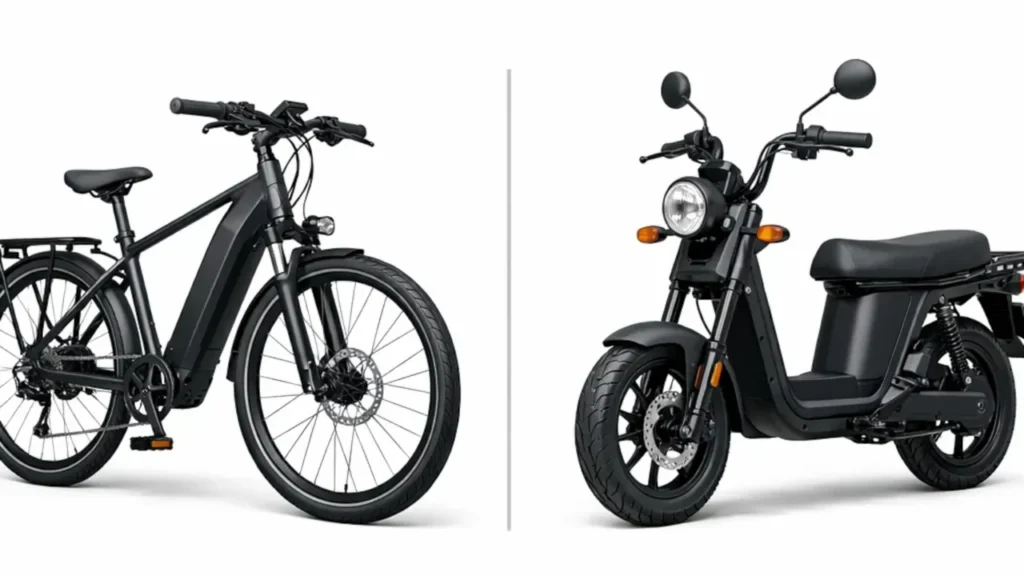
Oregon's code includes helmet and passenger rules for moped operators, and DMV guidance says moped riders generally follow the same rules of the road as motorcycle riders. In practice, that means a moped rider should think in terms of traffic-lane operation, insurance compliance, and road-use rules instead of assuming bicycle treatment.
Oregon handles e-bikes very differently. Under Oregon law, an electric assisted bicycle is treated as a bicycle rather than a motor vehicle for Oregon Vehicle Code purposes. That is the core legal split that keeps a compliant e-bike out of the moped lane.
The most important practical point is not memorizing every class label. It is understanding that Oregon separates compliant e-bikes from mopeds and motorcycles, then generally applies bicycle-style operating rules unless a narrower local rule or land-manager rule says otherwise.
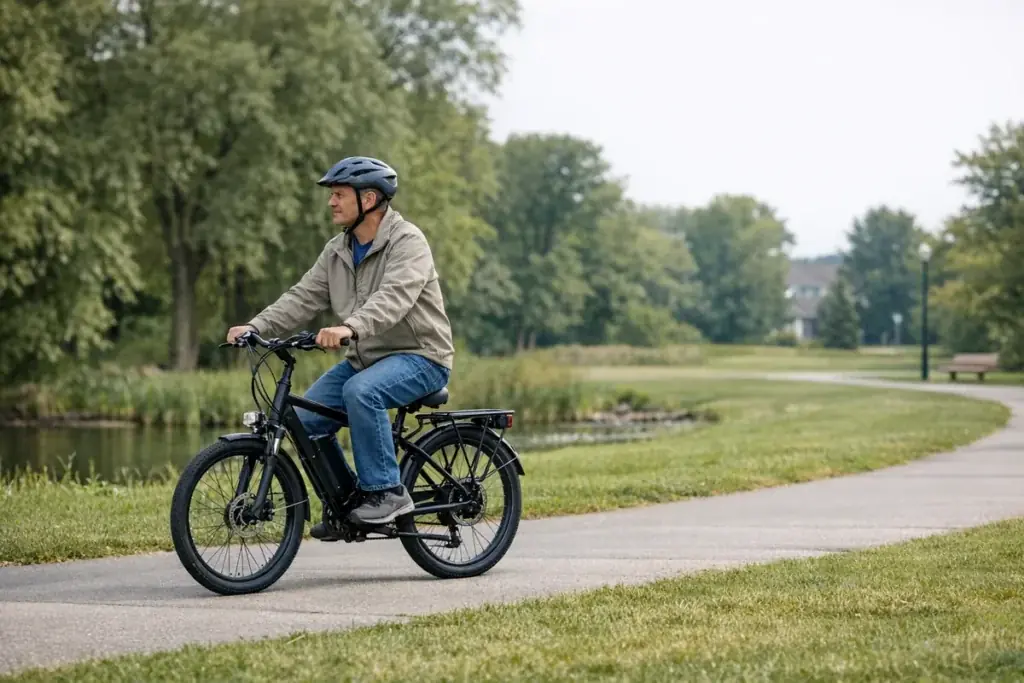
Oregon DMV's bicycle guidance says e-bikes may ride in bicycle lanes and on paths, but not on sidewalks. If there is no bicycle lane, the rider may use the regular lane with traffic. Oregon DMV also warns that cities, counties, and land owners often set their own e-bike rules, especially in parks and on trails.
This is one of the clearest practical answers for parents and teen riders. Oregon DMV's current bicycle guidance sets the minimum e-bike operating age at 16. If you are planning around a child or teenager, verify the current Oregon DMV rule before purchase or use.
That is the classic Oregon moped case. You still need a valid driver license, and DMV says insurance applies if you use it on highways or other public premises. You should plan to ride it in the regular traffic lane, not the bike lane, unless you are literally pedaling it.
That likely pushes the machine out of Oregon's moped definition. Once it exceeds the 30 mph ceiling or the 50cc cap, you should stop assuming the lighter moped rules apply and verify the motorcycle-endorsement and registration consequences before riding it on public roads.
That is generally the easier Oregon path. DMV guidance says e-bikes may use bicycle lanes and paths, but not sidewalks. Your next question should be whether the city, trail manager, campus, or park authority has posted a narrower local rule.
Now the land-manager layer matters. Oregon Parks has been updating its e-bike rules, and the state makes clear that access can vary by trail type, posted restriction, shore zone, and specific protected areas. A statewide bicycle answer does not automatically mean universal park-trail access.
Oregon is a good example of why the statewide answer is only the starting point. DMV's bicycle guidance says e-bikes can use lanes and paths, but the same guidance also warns that cities, counties, and land owners often write narrower rules. Oregon Parks has separately updated e-bike rules for agency property and ocean-shore use, which means a legal street setup can still face trail or shore restrictions once you move onto managed land.
If your main question is commuter street use, Oregon is fairly straightforward. If your main question is trails, parks, beach access, or local greenways, you should check the specific operator's posted rule before riding.
This page is for general informational purposes only and is not legal advice. Oregon rules can change, and local governments, land managers, and park systems can impose narrower operating limits. Verify the current rules before riding on public roads, bike paths, beaches, or trails.