eBike total cost of ownership includes more than the price on the tag. The real number includes the bike, battery care, charging, locks, helmet, accessories, maintenance, repairs, storage, and the trips the eBike can replace. For many riders, the running costs are low, but the best value comes from buying a bike that fits real daily use.
Quick answer: An eBike’s total cost of ownership includes the upfront purchase, safety gear, lock, cargo setup, electricity, tires, brake pads, drivetrain wear, tuneups, battery care, possible battery replacement, and theft prevention. Charging is usually cheap; the bigger costs are purchase price, maintenance, accessories, and whether the bike actually replaces car, transit, or rideshare trips.
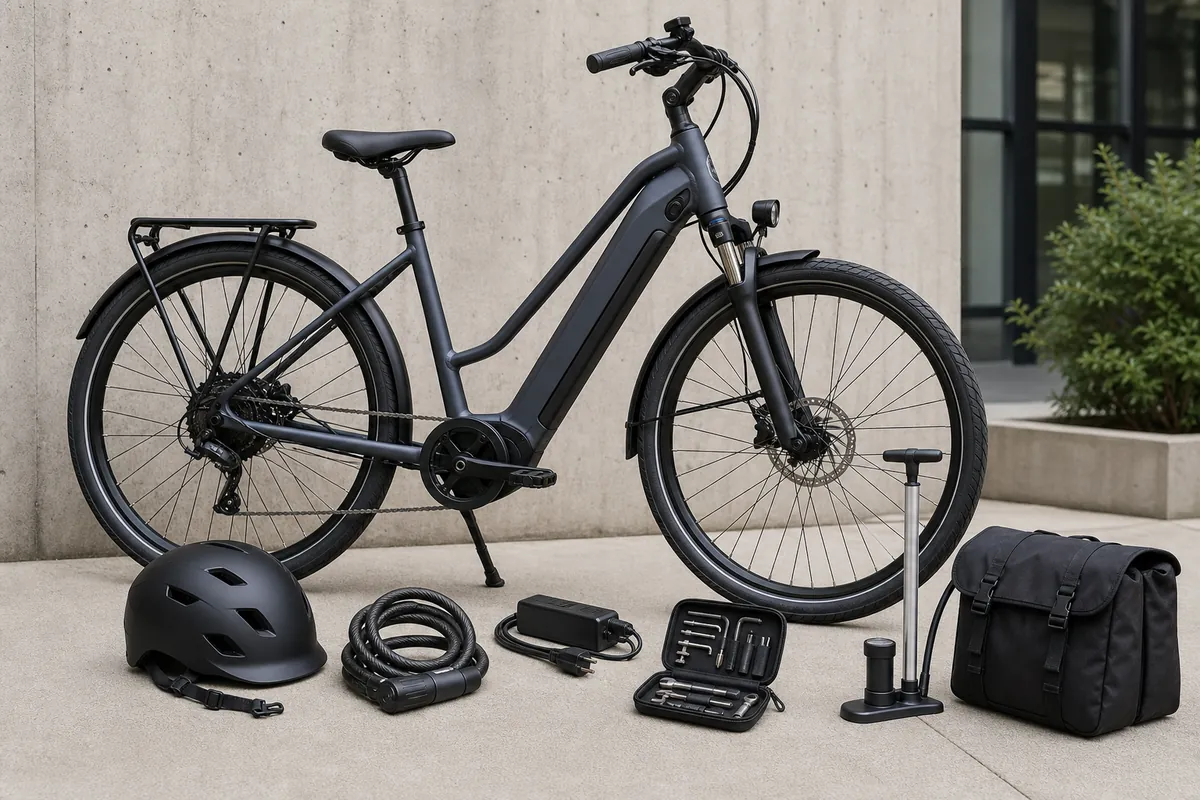
The cheapest eBike on day one is not always the cheapest eBike to own. A reliable bike that fits your route, stores safely, and gets used often can be the better long-term value.
Total cost of ownership means looking at the full life of the bike, not just the checkout price. A low sticker price can still become expensive if the bike needs immediate upgrades, has weak parts, or does not match your daily riding.
A more useful approach is to ask what the bike needs to become reliable transportation. That might include better security, weather gear, cargo bags, battery care habits, and regular maintenance. If you are still choosing a model, our e-bike buying tips guide can help you compare practical features before money leaves your pocket.
| Cost area | What it includes | Why it matters |
|---|---|---|
| Upfront purchase | Bike, battery, charger, included accessories | This is the biggest first cost, but not the only one |
| Safety and security | Helmet, lock, lights, possible theft coverage | These costs protect you and the bike |
| Daily operation | Electricity, tire pressure, chain care, small supplies | Usually low, but still part of ownership |
| Maintenance | Brake pads, tires, chain, tuneups, adjustments | Wear parts decide how reliable the bike feels |
| Battery life | Charging habits, storage, possible replacement | The battery can be one of the largest long-term costs |
| Practical setup | Fenders, rack, bags, mirrors, pump, tools | Accessories can turn a fun bike into useful transportation |
The purchase price gets the most attention because it is visible. It is also where many shoppers make the biggest mistake. A cheap eBike can be fine for light riding, but it may not be the lowest-cost choice if you need better brakes, a stronger battery, service support, or commuter accessories right away.
At the same time, you do not need to buy the most expensive model to get value. The goal is fit. A daily commuter needs different parts than a weekend path rider. A cargo rider needs different capacity than someone doing short neighborhood trips.
Some eBikes include lights, fenders, racks, and a kickstand. Others look cheaper because those items are missing. Once you add a helmet, strong lock, cargo bag, pump, flat kit, mirror, and weather gear, the total can move quickly.
Price the whole setup before comparing bikes. A model that costs more upfront but includes the right commuter gear may be cheaper than a bare bike that needs upgrades.
Many riders worry about charging cost, but it is usually one of the smallest parts of eBike ownership. The exact cost depends on battery size, local electricity rates, how often you ride, and how much energy you use per trip.
In practical terms, the bigger question is not the cost of one charge. It is whether the battery gives enough range for your route without constant stress. Riding fast, climbing hills, carrying cargo, using high assist, and cold weather can all reduce range.
The battery is one of the most important long-term cost items. It affects range, convenience, resale value, and replacement cost. A poorly supported battery can make a cheap bike feel risky, especially if replacement packs are hard to find.
Good habits help. Avoid rough storage, extreme heat, unnecessary moisture exposure, and careless charging routines. For more detail, see our guide to e-bike battery maintenance.
eBikes need normal bicycle maintenance, plus extra attention because they are heavier and often ridden more often. Tires, brake pads, chains, spokes, cables, rotors, and tuneups should all be part of the budget.
Brake wear matters in particular. eBikes can carry more speed and weight than standard bikes, which puts more demand on the braking system. If you are planning long-term costs, our guide on how often to replace e-bike brake pads is worth reading.
Practical budget rule: assume the first year costs more than “bike plus tax.” Add security, helmet, cargo gear, flat repair, maintenance, and a little repair cushion before deciding what you can afford.
Security is part of total cost because a stolen eBike can erase every savings calculation. A strong lock, careful parking, indoor storage, and a removable battery routine can all reduce risk.
If you live in an apartment, storage can be just as important as the bike’s specs. A heavy eBike that must be carried up stairs may not get used. A bike that cannot be stored safely may create constant stress. In some cases, a lighter or folding model can be worth more than a larger battery or stronger motor.
Cost per mile depends on how often you ride. A bike used twice a year has a high cost per mile no matter how efficient it is. A bike used for commuting, errands, and regular local trips spreads the purchase and maintenance costs over many more miles.
This is where eBikes can shine. The running cost for each local trip is often low, especially compared with car fuel, parking, rideshare, and some transit costs. But usage is the key. The bike only becomes cheap per mile when the miles actually happen.
The strongest ownership case comes when an eBike replaces real transportation spending. Short car trips, parking fees, transit rides, rideshare trips, and second-car use can all change the math.
Start by listing your normal week. Look for grocery runs, work trips, gym rides, school drop-offs, coffee stops, and short errands. If several of those can move to an eBike, the ownership cost starts to make more sense. If none can, the bike may still be fun, but the savings case is weaker.
The best way to save money is to buy the right bike for your real route. Avoid paying for features you will not use, but do not cut corners on brakes, battery support, fit, and serviceability.
Used eBikes can reduce upfront cost, but they deserve caution. Battery age, charger condition, frame damage, service history, and replacement parts matter. If you are considering one, use our used e-bike buying checklist before making the deal.
An eBike is easier to justify when it gets used often and solves a real problem. That might be commuting without parking, replacing short car trips, riding farther with less effort, or making errands easier.
It is harder to justify when storage is poor, the route feels unsafe, the bike is uncomfortable, or the owner rarely rides. Total cost of ownership is personal because the value depends on use, not just the bike.
eBike total cost of ownership includes the purchase price, gear, security, charging, maintenance, battery care, repairs, and storage. Charging is usually inexpensive, but accessories, maintenance, and battery support deserve real attention.
The best value comes from a bike that fits your route and gets used regularly. Buy for your real trips, protect the battery, maintain the wear parts, and plan the full setup from the start. That is how an eBike becomes practical transportation instead of a costly garage ornament.