Use this buying used ebike battery health checklist before you hand over cash, because the battery is often the most expensive unknown on a secondhand electric bike. A clean frame and a smooth test ride are nice, but a weak, abused, unsupported, or unsafe battery can erase the savings fast.
Quick answer: Before buying a used ebike, check the battery age, charger match, charge behavior, range on a real test ride, case condition, connector wear, brand support, replacement cost, and whether the seller can prove basic history. Walk away from swelling, cracks, heat smells, error codes, missing chargers, suspiciously cheap replacement packs, or a seller who will not let you test the bike under load.
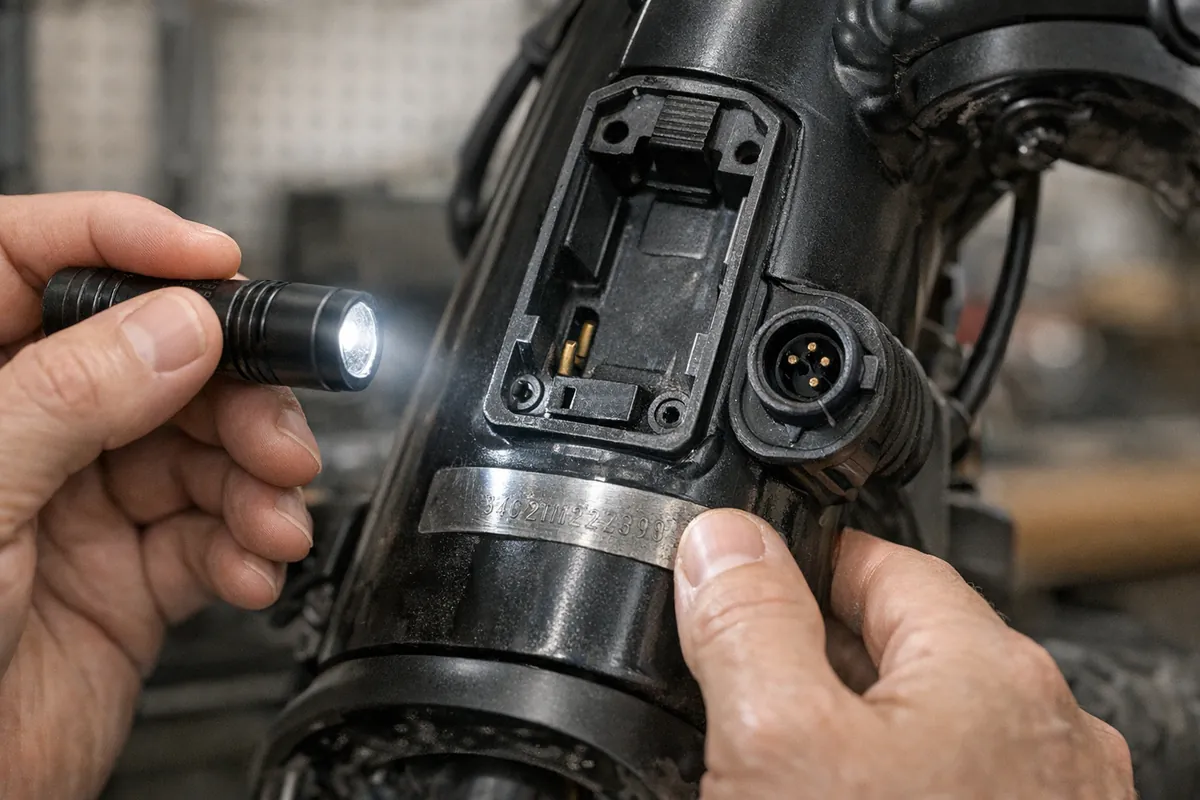
A used ebike can be a smart buy when the battery is healthy, replaceable, and correctly matched to the bike. It can also become a money pit if the pack is near the end of its life or tied to a brand that no longer supports that model.
Think of the battery check as your price filter. If the pack looks questionable, the bike is not automatically worthless, but the deal should be priced like you may need a replacement soon. For the broader bike inspection, pair this battery review with our used e-bike buying checklist so you do not miss brakes, drivetrain wear, electronics, or fit.
Start with the basics. You want to know what the battery is, how old it is, how it behaves, and whether you can replace it without turning the bike into a project.
| Battery check | What to look for | Buyer risk |
|---|---|---|
| Age and history | Original receipt, model year, charging habits, storage habits | Older unknown packs may have reduced range |
| Physical condition | No swelling, cracks, corrosion, burnt smell, or loose case seams | Damage can point to safety or reliability problems |
| Charger match | Correct voltage, connector, brand labeling, and clean plug fit | Wrong chargers can be unsafe or hard on the pack |
| Charge behavior | Charges normally, no sudden shutoff, no odd heat, no warning lights | Unstable charging can mean battery or BMS trouble |
| Range test | Battery drops gradually during a real ride under assist | Fast voltage sag suggests weak cells or poor capacity |
| Replacement support | Battery is still sold by the brand or a reputable service channel | Unsupported packs can make repairs expensive or impractical |
Ask when the bike and battery were purchased, whether the battery is original, and how often it was used. A seller who has receipts, order history, or app records is giving you more than a story; they are giving you something you can verify.
Battery age matters because lithium-ion packs lose capacity with use, storage conditions, and time. The exact condition depends on the pack, but a several-year-old battery with no records should be priced with caution.
If the seller says, "It still works fine," ask what that means in miles, terrain, rider weight, assist level, and weather. Range claims without context are almost useless.
Remove the battery if the design allows it. Look at the shell, seams, mounting rail, lock area, terminals, and charge port. You are checking for impact damage, corrosion, melted plastic, missing covers, loose fit, or any sign the pack has been opened.
Do not buy a battery that is swollen, cracked, leaking, unusually hot, or smells burnt or chemical. Those are not bargaining points. They are walk-away signals.
If the pack is removable, also think about how you will charge and store it after purchase. Removable batteries can make apartment charging easier, but they also add lock, storage, and handling considerations.
Buyer protection note: A used ebike battery should look boring: clean case, clean ports, firm mounting, normal charging, predictable power delivery, and a seller who can answer basic questions. Drama is expensive here.
The charger should match the battery system. Check the voltage label, connector, brand markings, and physical fit. A charger that "sort of works" or came from another bike is a problem, especially if the seller cannot explain where it came from.
Plug it in if you can. The battery should start charging normally, with no sparking, loose connection, flashing fault pattern, or odd heat. A little warmth during charging may be normal depending on the system, but hot plastic, smell, buzzing, or intermittent charging should end the deal.
For safe ownership after purchase, it is worth reviewing basic charging habits too. MBHQ has a separate guide on whether you can charge an e-bike battery indoors, including practical risk-reduction steps.
A parking-lot spin is not enough. You need a real test ride that puts the battery under load, because weak packs can look fine at rest and fall apart when the motor asks for current.
Ideally, inspect the bike after the seller has charged it fully. If that is not possible, ask what percentage it started at and how long it has been sitting. A battery that drops sharply from a high charge during a short ride deserves extra skepticism.
Watch the display while riding. The charge bars or percentage should decline gradually. Some displays are not perfectly precise, but sudden drops under acceleration or hill climbing can point to voltage sag.
Ride in a normal assist mode first. Then test a higher assist level, a moderate hill, or a few strong accelerations if the area is safe. Listen and feel for power cutting out, fault codes, jerky assist, or the display resetting.
If the bike shuts down under load and then comes back after a pause, treat that as a serious warning. The issue could be the battery, controller, wiring, or display, but you should not pay healthy-bike money for a mystery fault.
Used sellers often repeat the original manufacturer range, even when the battery is older. That number was usually measured under favorable conditions. A heavier rider, colder weather, hills, high assist, low tire pressure, and stop-start riding can all reduce range.
Ask the seller what range they personally get now, on their normal route. Then compare that to the battery size, bike type, terrain, and your own needs. If your commute or errands leave no buffer, the deal is weaker than it looks.
Not every issue means you must walk away. Some simply mean the seller needs to price the bike honestly. Your job is to separate normal used-bike wear from battery risk that could cost hundreds of dollars or more.
The biggest red flag is not always one defect. Often it is the pattern: vague history, rough storage, questionable charger, no replacement path, and a price that assumes everything is fine.
Practical callout: Before you negotiate, look up the exact replacement battery for that bike. If a real replacement is unavailable or too expensive for your budget, treat the used ebike as a higher-risk buy even if it rides well today.
A used ebike is only a bargain if the total ownership cost still makes sense. Search the brand's site, authorized dealers, and reputable service sources for the exact battery model. Match voltage, mount style, connector, capacity range, and compatibility notes.
A similar-looking battery is not enough. Ebike battery systems can depend on the mount, communication protocol, controller compatibility, firmware, and charger. If the brand no longer supports the model, you may need a specialist rebuild or a custom solution, and that changes the value of the bike.
Use our e-bike battery replacement guide to think through cost, compatibility, and when replacement makes more sense than repair. For battery care after you buy, the basics in e-bike battery maintenance can help protect the pack you already have.
Good sellers usually do not mind direct questions. They may not know every technical detail, but they should be able to describe normal use, charging habits, storage, and any past problems.
If the seller gets defensive about normal battery questions, slow down. A good used purchase should become clearer as you inspect it, not more confusing.
Battery condition should change the price more than cosmetic wear. Scratches are visible. Battery risk is hidden, expensive, and central to how useful the ebike will be.
If the battery is clean, charges normally, performs well under load, and has a clear replacement path, it supports a stronger offer. If the pack is old, undocumented, weak on the test ride, or hard to replace, price the bike as if you may need to solve that problem soon.
Do not pay premium used money for an unknown battery. The seller may still have a perfectly usable bike, but unknown risk belongs in the price.
Buy the used ebike if the battery checks out, the charger is correct, the ride test is normal, replacement support exists, and the price leaves room for normal maintenance.
Pause or walk away if the battery shows damage, the charger is missing or suspicious, the bike cuts power under load, replacement packs are unavailable, or the seller blocks basic inspection. There will always be another used ebike. A bad battery deal can follow you home.
The best used ebike battery health checklist is not complicated: verify the story, inspect the pack, test it under load, confirm replacement options, and let the battery risk shape the price. That keeps the deal grounded in what the bike can actually do for you, not just how good it looks in the listing.