The best ebike for seniors is usually a comfortable step-through electric bike with an upright riding position, stable tires, simple controls, smooth pedal assist, and dependable brakes. The right choice should feel calm at low speed before it feels powerful.
Quick answer: For most older riders, start with a step-through comfort ebike, wider tires, hydraulic disc brakes, an easy-to-read display, and a removable battery if charging indoors matters. Do not chase the fastest motor first. Fit, balance, braking, and everyday handling matter more than raw specs.
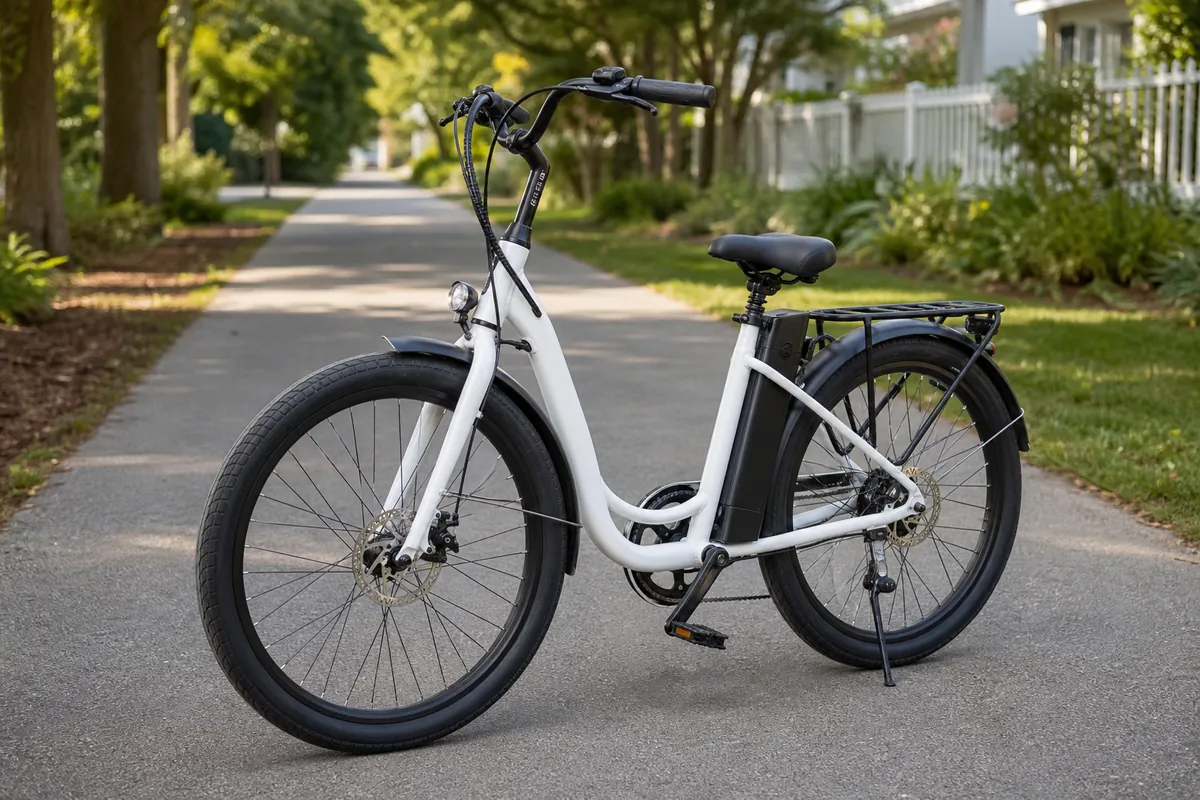
Shopping for a senior-friendly ebike is not about finding one magic model. It is about matching the bike to the rider’s balance, strength, storage space, roads, and comfort level. A bike can look great online and still feel wrong if the frame is too tall, the throttle is jumpy, or the display is hard to read.
Use this guide as a buying filter. If you are still learning the basics, our e-bike buying tips can help you sort frame styles, batteries, motors, and real-world tradeoffs before you narrow your shortlist.
The frame comes first. A step-through frame makes mounting and dismounting easier because the rider does not have to swing a leg high over the saddle or rear rack. That detail can make daily rides feel less rushed, especially for riders with hip stiffness, knee pain, or balance concerns.
Next, look at posture. An upright riding position helps keep weight off the wrists and makes it easier to look ahead. Swept-back handlebars, an adjustable stem, and a supportive saddle can make short rides feel much more natural.
Brakes deserve serious attention. Ebikes are heavier than regular bicycles, so predictable stopping power matters. Hydraulic disc brakes are often a strong choice because they can provide smooth braking with less hand effort. Well-adjusted mechanical disc brakes can still work, but they should feel easy to squeeze and control.
Battery setup also matters. A removable battery can be easier to charge indoors, especially if the bike lives in a garage, shed, or shared storage space. If charging location is part of the decision, read our guide on whether an e-bike with a removable battery makes sense.
Senior-friendly buying rule: Choose the ebike that feels easiest to ride slowly, stop smoothly, and store safely. Low-speed confidence is the real test.
Most seniors should begin with comfort, commuter, or cruiser-style electric bikes. These bikes usually focus on upright posture, predictable steering, and practical parts like lights, fenders, and rear racks.
A step-through comfort ebike is the safest starting point for many older riders. The low frame entry helps with mounting, while the relaxed posture keeps the ride easy. Wider tires can add stability and soften rough pavement.
This style is a good fit for neighborhood rides, paved paths, errands, and casual fitness. It is usually not the right pick for aggressive trail riding or high-speed commuting, but that is not the goal for most senior buyers.
Folding ebikes can work for apartments, RVs, and small garages. The tradeoff is weight. Many folding ebikes are still heavy, and lifting one into a trunk can be harder than expected.
If a folding model looks appealing, check the actual carry weight and folded size before buying. A compact bike only helps if the rider can move it safely.
Fat tire ebikes look stable, and they can feel planted on gravel or loose surfaces. They are also often heavier, taller, and harder to load onto racks. For paved paths and neighborhood riding, a moderate-width tire may be the better everyday choice.
If the bike will travel by car, weight becomes part of the purchase. Our guide on whether your car rack can carry an e-bike is worth checking before choosing a heavy model.
| Feature | Why it matters for seniors | What to look for |
|---|---|---|
| Step-through frame | Makes mounting and dismounting easier | Low standover height and a stable frame feel |
| Upright riding position | Reduces strain on wrists, neck, and back | Adjustable stem, swept-back bars, comfortable saddle |
| Brakes | Heavier bikes need confident stopping | Hydraulic disc brakes or well-tuned mechanical discs |
| Motor behavior | Smooth assist builds confidence | Gentle pedal assist levels and predictable throttle response |
| Battery setup | Charging should not require awkward lifting | Removable battery and an easy-to-reach charge port |
| Total weight | Affects storage, loading, and low-speed handling | Light enough for the rider’s real storage routine |
Fit is where many ebike purchases go wrong. A senior-friendly bike should let the rider place feet down easily, reach the bars without stretching, and operate the brakes without strain.
Check standover height first. Even with a step-through frame, getting on and off should feel simple. Then check saddle height. The rider should be able to pedal comfortably without feeling perched too high.
Handlebar reach matters too. If the rider has to lean forward, the bike may feel tiring even on short rides. Adjustable stems and handlebars can help, but they cannot fix every frame mismatch.
If possible, test the bike at slow speed. Starts, stops, parking-lot turns, and gentle slopes reveal more than a quick straight-line ride. A good senior ebike should feel calm before it feels fast.
Motor power can help with hills, headwinds, and tired legs. Still, more power is not always better. Smooth pedal assist often matters more than a large wattage number, especially for riders who want steady help instead of sudden surges.
For range, look past the biggest advertised claim. Real-world range depends on rider weight, speed, hills, wind, tire pressure, temperature, and assist level. A rider using high assist on hills will drain the battery faster than someone cruising on flat paths.
The better question is simple: can the bike handle the rider’s normal route with a comfortable margin left over? If yes, the battery is probably large enough. If battery care is new to you, our e-bike battery maintenance guide covers habits that can help protect long-term performance.
Before buying: Measure the full storage path from the street to the bike’s parking spot. Include stairs, tight doors, ramps, and lifting points. A great ebike on the road can become a bad fit if it is stressful to store every day.
A good senior ebike should be easy to control, easy to stop, and easy to see. Integrated lights are useful, but they are only part of the setup. Reflective details, a bright rear light, and a properly fitted helmet all help make routine rides safer.
Look for tires with enough volume to smooth rough pavement. Suspension can help too, but it adds weight and maintenance. For many riders, a comfortable saddle, wider tires, and correct tire pressure may do more for daily comfort than a complicated suspension setup.
Controls should be simple. A large display, clear assist buttons, and easy-to-read battery indicators reduce fuss while riding. If the rider has limited hand strength, test the brake levers and shifter before buying. Small control details become big comfort details over time.
Avoid bikes that are too tall, too heavy, or too aggressive for the rider’s actual use. A powerful fat tire bike may look reassuring, but it can be difficult to lift, store, or maneuver at walking speed.
Be careful with vague listings. If a seller does not clearly state frame size, total weight, brake type, battery specs, or warranty coverage, keep looking. The best deal is not a deal if the bike creates a daily hassle.
For online purchases, check assembly requirements and local service options. Some direct-to-consumer bikes offer strong value, but service can be harder if no nearby shop will work on them. That does not make them bad choices; it just means the buyer should know the support path before ordering.
If you are comparing options, use this shortlist to stay focused:
For safety planning, choose a properly fitted bike helmet, add bright lights, and check local riding rules before the first longer ride. Those basics matter even more on a heavier electric bike.
If you are ready to compare current options, start with step-through comfort ebikes and senior-friendly electric bikes. Look for models that match the fit and safety checklist above, then narrow by budget, service support, and battery setup.
Before you buy, confirm the return policy, assembly needs, real bike weight, and whether replacement parts are easy to find. Those details are not flashy, but they often decide whether the bike becomes a daily joy or a garage ornament.
The best ebike for seniors is the one that makes riding feel simple again. Prioritize a low step-through frame, upright comfort, stable tires, strong brakes, smooth assist, and a battery setup that fits the rider’s home.
Skip the spec-sheet race. A calm, well-fitting ebike with dependable support is usually the smarter buy than a heavier, faster bike that feels intimidating after the first week.
* We may earn a commission when you buy through our links.