The best eBike for long distance commuting should give you dependable range, steady comfort, strong brakes, practical cargo support, and a charging routine that fits your real week. For a longer work ride, the smartest choice is not just the bike with the biggest advertised range; it is the one that can handle your route every day without turning the last miles into a battery gamble.
Quick answer: Choose a long-distance commuter eBike with enough battery range for your round trip plus a safety buffer, comfortable geometry, efficient tires, dependable disc brakes, fenders, lights, rack or pannier support, and serviceable parts. If your route has hills, wind, cold mornings, cargo, or limited charging, buy more range and comfort than the minimum spec suggests.
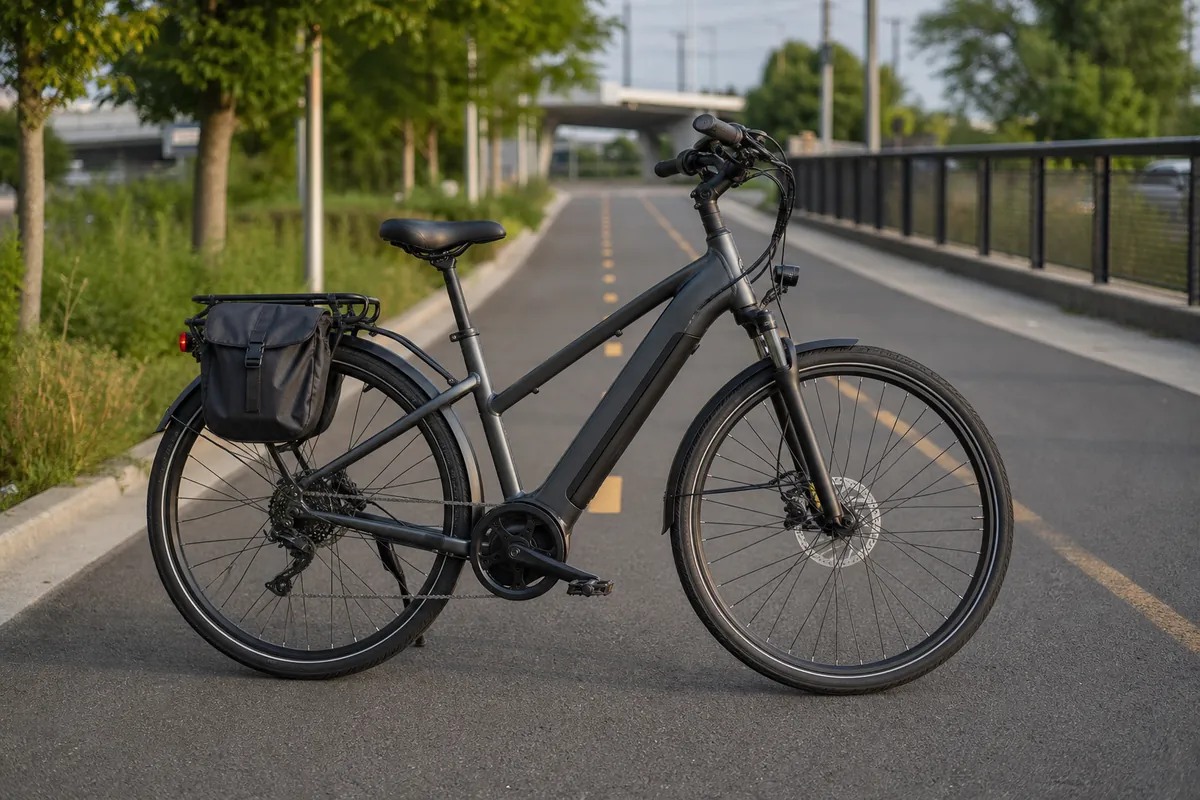
Long-distance commuting exposes weak choices fast. A bike that feels fine on a short test ride can become frustrating if the saddle, range, brakes, tires, or charging routine does not fit the daily route.
A long-distance commuter eBike has to do two jobs well. It needs to cover the miles without range stress, and it needs to keep you comfortable enough to repeat the ride day after day.
Start with the route. Count total round-trip miles, hills, wind exposure, rough pavement, traffic stops, bike path sections, and where you can charge. Then compare bikes around that reality. If you are still sorting broad eBike categories, our guide to the best electric bikes can help you frame the options before narrowing down to commuter-specific needs.
| Buying factor | What to prioritize | Why it matters for long commutes |
|---|---|---|
| Battery range | Round-trip range plus a healthy buffer | Cold, hills, wind, cargo, and high assist can reduce real range |
| Motor feel | Smooth assist that matches your terrain | Jerky or weak assist gets tiring over many miles |
| Comfort | Correct frame size, saddle, grips, and riding position | Small fit problems become bigger on repeated long rides |
| Brakes | Strong disc brakes, ideally well-supported and easy to service | Higher average speed and extra bike weight demand control |
| Tires | Efficient commuter tires with puncture protection | Flats and drag matter more when the ride is far from home |
| Cargo setup | Rack, panniers, fenders, lights, and secure mounts | Daily gear needs to ride with the bike, not strain your back |
Advertised range can be useful for comparison, but it is not a promise for your commute. Assist level, rider weight, cargo, hills, wind, tire pressure, temperature, and stop-and-go riding all change battery use.
For long-distance commuting, range buffer is not a luxury. It is what keeps a late meeting, cold morning, detour, or headwind from turning the final miles into a slog. If your round trip is near the edge of a bike’s claimed range, look for a larger battery, a more efficient setup, or a plan to charge at work.
Cold weather deserves special attention because it can reduce usable range. If your commute runs through winter mornings, read our guide to e-bike range in cold weather before choosing battery size.
Motor power helps with hills and fatigue, but comfort decides whether you will keep riding. A long commuter route magnifies saddle pressure, wrist strain, neck angle, knee fit, and handlebar reach.
An upright riding position can feel relaxed and visible in traffic. A more active position may feel better for faster or longer routes. Neither is automatically best. The right fit is the one that lets you arrive without feeling beaten up.
The saddle, grips, pedals, and handlebar position are the parts you feel every mile. If a bike checks every spec box but feels wrong, keep looking or budget for fit changes. A comfortable bike gets used; an uncomfortable one becomes garage decor.
Practical route test: calculate your round-trip distance, then add margin for hills, wind, cold, errands, battery aging, and the days you want higher assist. That number is closer to your true minimum range than the commute distance alone.
Long-distance commuting often means higher average speeds, more time near traffic, and more chances for changing conditions. Brakes should feel strong and predictable, especially on hills or with cargo.
Hydraulic disc brakes are worth considering for longer commutes because they can offer strong stopping with less hand effort. Mechanical disc brakes can also work well when properly adjusted, but the key is serviceability and consistent performance.
Tires deserve the same attention. Efficient commuter tires with puncture protection usually make more sense than aggressive off-road tread for paved routes. Keep them inflated and inspect them often. If your commute is long enough that a flat would ruin the day, carry a repair plan; our guide on what to carry for an e-bike flat tire is a useful checklist.
A long commute is easier when the assist feels natural. Hub motors can be simple and effective for many flat or rolling routes. Mid-drive motors often feel strong on hills and can use the bike’s gears efficiently, though they may add drivetrain wear and cost more.
Torque sensors usually feel more natural than basic cadence-only systems because assist responds to how hard you pedal. That can matter on longer rides, where smooth power delivery feels less tiring. Look for a motor setup that matches your terrain rather than chasing the highest number on the listing.
A long-distance commuter eBike should carry your day without making you miserable. Backpacks can work, but they add sweat and shoulder strain. A rear rack with panniers is often more comfortable for laptops, clothes, lunch, locks, and rain gear.
Fenders are also worth having. They keep road spray off your shoes, drivetrain, and work clothes. Integrated lights are helpful, but make sure they are bright enough for your route. If you ride before sunrise, after dark, or through low-light paths, lighting becomes a core safety feature, not an accessory.
Check rated cargo capacity before loading the bike. Our e-bike cargo capacity explained guide covers why rider weight, bags, racks, and accessories all count.
A bike can have excellent specs and still be wrong if charging is a hassle. Think through where the battery will charge, whether it is removable, how heavy the bike is, and where it will live at home and work.
Removable batteries are helpful for apartment riders, office charging, cold storage, and theft prevention. Non-removable batteries can still work if you have easy outlet access. Either way, basic battery care matters: avoid harsh storage conditions, keep charging routines sensible, and make sure replacement battery support is not a mystery.
Long-distance commuter eBikes often cost more because they need stronger batteries, better brakes, better components, and practical accessories. That makes security part of the buying decision.
Look for a frame that is easy to lock through the main triangle, parking locations that feel realistic, and a way to remove or secure the battery. A heavy bike that cannot be locked well may create stress every time you park it.
Budget depends on distance, terrain, comfort needs, and how much you rely on the bike. A short casual commute can tolerate more compromise. A long daily route should not.
Spend first on battery capacity, brakes, tires, fit, service support, and commuter equipment. Fancy displays and oversized claims matter less if the bike lacks fenders, rack support, replacement battery availability, or a comfortable riding position.
The value pick is the bike with the fewest daily excuses. If it is easy to charge, comfortable to ride, safe to stop, and practical to park, it has a better chance of replacing car miles or transit trips.
When comparing long-distance commuter eBikes online, use the listing as a starting point, not the final answer. Check battery watt-hours, brake type, bike weight, frame size, tire style, included lights and fenders, rack compatibility, warranty support, return policy, and replacement battery availability.
The best eBike for long distance commuting is the one that fits your actual route, not the one with the loudest spec sheet. Prioritize range buffer, comfort, brakes, efficient tires, commuter gear, charging access, and service support.
If the bike can handle your round trip with margin, carry your gear, stop confidently, and stay comfortable over repeated miles, it is far more likely to become real transportation instead of an expensive experiment.
* We may earn a commission when you buy through our links.