The best ebike for hills is usually a torque-rich mid-drive electric bike with responsive pedal assist, low climbing gears, hydraulic disc brakes, and enough battery capacity for repeated elevation gain. If your regular rides include steep streets, long grades, or loaded errands, prioritize climbing control over headline speed.
Quick answer: For most hill-heavy riders, the safest bet is a mid-drive commuter, trekking, cargo, or e-MTB-style ebike with at least a 500Wh battery, hydraulic disc brakes, a wide-range drivetrain, and published motor torque in the roughly 70Nm to 90Nm range. Hub-drive bikes can still work on moderate hills, but they need enough motor power, sensible gearing, and good brake hardware to feel composed.
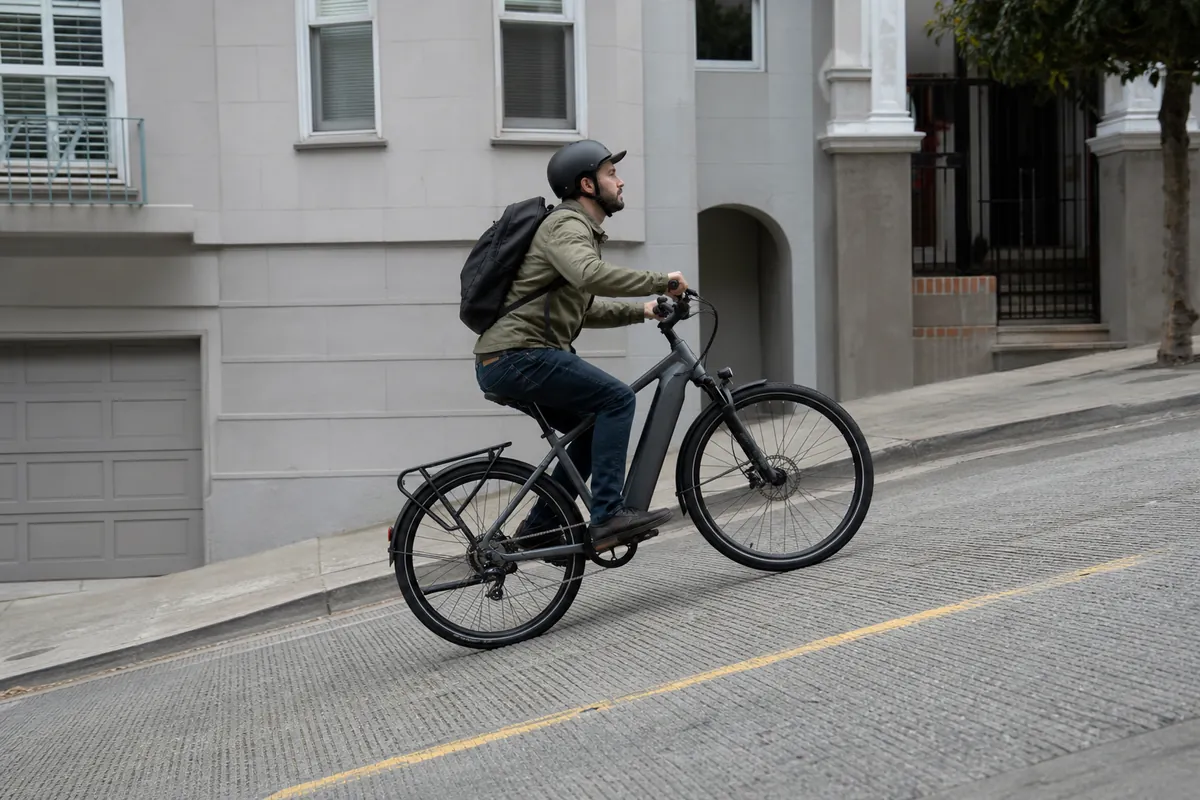
Hill riding asks more from an electric bike than flat-path commuting. The motor has to pull harder for longer, the battery drains faster, and the brakes do more work on the way back down. That is why the best choice is rarely the cheapest high-wattage bike on a spec sheet. Look for a complete climbing system: motor, gears, frame, tires, brakes, and battery all working together.
If you are still sorting out the basics, start with our guide to electric bike motors. Motor placement and torque delivery matter a lot on hills, and the right choice depends on whether your climbs are short and punchy, long and steady, or part of a loaded commute.
For hill climbing, torque matters more than top speed. Torque is the twisting force that helps the bike get moving and keep moving up a grade. A motor with stronger low-speed support will usually feel better on climbs than a bike that only looks powerful because of a large watt rating.
Mid-drive motors are the most hill-friendly design for many riders because they send power through the bike’s drivetrain. That lets the motor use the rear gears, much like your legs do. On steep grades, that advantage can make a bike feel smoother, more efficient, and easier to control.
Rear hub motors can still be a good fit for rolling neighborhoods, short climbs, and budget-focused buying. The tradeoff is that many hub motors do not benefit from the bike’s gears in the same way a mid-drive does. On longer or steeper climbs, that can mean more heat, more battery use, and less natural pedaling feel.
Hill-buying rule: Do not judge an ebike by wattage alone. Compare motor type, torque rating, gearing range, brake quality, total bike weight, rider-and-cargo load, and whether the brand clearly publishes battery capacity and support details.
A good hill ebike should respond predictably when you push on the pedals. Torque sensors usually feel more natural than basic cadence sensors because they add assist in proportion to your effort. That matters on climbs, where sudden or delayed power can make tight turns, starts, and traffic situations feel awkward.
For casual hills, a lower-torque motor may be fine. For steeper streets, heavier riders, trailers, child seats, groceries, or cargo racks, move up the torque range and pay closer attention to cooling, drivetrain quality, and brake hardware.
Hills reduce range because the motor works harder. A battery that feels generous on flat ground may feel merely adequate when every ride includes elevation. For hill-focused buying, a 500Wh battery is a sensible starting point, while larger packs can be worth it if your route is long, steep, cold, windy, or loaded.
Battery care also matters after you buy. If you are spending real money on a hill-capable ebike, protect the pack with basic habits from our e-bike battery maintenance guide, especially around storage temperature, charging routines, and long idle periods.
The best style depends on what you carry and where you ride. A light commuter may be perfect for paved city grades. A trekking-style ebike gives you a more upright fit and useful accessories. An e-MTB-style build can make sense when your climbs include rough pavement, gravel, or poor traction. A cargo ebike is the right answer only if it has the motor, brakes, and frame rating for the load you actually plan to carry.
| Rider need | Best hill-friendly choice | What to check before buying |
|---|---|---|
| Daily city hills | Mid-drive commuter or trekking ebike | Torque rating, low gears, hydraulic brakes, fenders, rack compatibility |
| Budget hill riding | Strong rear hub commuter ebike | Brake quality, battery capacity, total bike weight, warranty support |
| Very steep streets | Mid-drive ebike with wide-range gearing | Low climbing gear, torque sensor, motor support modes, brake rotor size |
| Kids, groceries, or heavy loads | Hill-rated cargo ebike | Payload rating, motor torque, brake hardware, wheelbase stability |
| Mixed pavement and rough paths | Hardtail e-MTB or adventure ebike | Tire grip, suspension setup, drivetrain range, local trail rules |
If you are comparing models by price, the lower-cost bike is not automatically wrong. Just be honest about your hills. Our best electric bikes under $2,000 guide can help frame the tradeoffs, but steep terrain is one area where saving money on the motor, brakes, and drivetrain can show up quickly.
A hill-capable ebike has to climb well and descend safely. Hydraulic disc brakes are strongly preferred for serious hill use because they offer better control and less hand fatigue than many mechanical systems. Larger rotors can also help manage heat on repeated descents, especially with heavier riders or cargo.
Gearing is just as important. A wide-range drivetrain gives you a low gear for steep climbs, which helps the motor and your legs stay in a more efficient rhythm. If a bike has a powerful motor but poor gearing, it may still feel strained when the grade kicks up.
Weight is the quiet spec that affects everything. A very heavy ebike can feel stable and sturdy, but it takes more energy to climb, is harder to lift onto a rack, and can be awkward if the battery runs low. Before buying, check whether your storage, stairs, car rack, and daily handling match the bike’s real weight.
Practical check: If your route includes steep stop signs or traffic lights, pay special attention to start-from-stop behavior. A bike that climbs fine once rolling may still feel clumsy if the assist comes on late, the low gear is not low enough, or the frame is too heavy for your comfort.
Start with your route, not the bike. A short 8% neighborhood climb is different from a long 12% grade with groceries and a child seat. Write down the steepest hill you regularly ride, your total rider-and-cargo load, your desired range, and whether you need to carry the bike indoors.
Then compare bikes around the parts that matter:
For a broader pre-purchase framework, use our e-bike buying tips before you compare carts. Hill riders should be especially careful with vague listings that do not clearly state battery capacity, motor details, brake type, warranty terms, or total supported payload.
If you are shopping today, use the product pages below as broad search starting points rather than a substitute for checking each model’s specifications. Filter for mid-drive or high-torque hub motors, hydraulic disc brakes, suitable frame size, published battery watt-hours, and a return policy you can live with.
For a wider search, compare electric bikes that mention hill riding, commuting on grades, cargo use, or high-torque motors. Read the actual spec table carefully; marketing language is not the same as climbing hardware.
The first mistake is chasing the biggest motor number without checking the rest of the bike. A high-powered system paired with weak brakes, limited gearing, or a small battery can be a poor hill setup. The second mistake is ignoring total load. Rider weight, bags, child seats, locks, racks, and weather all change how a bike climbs.
Another mistake is assuming throttle-only climbing will solve everything. Throttles can be helpful, but on steep hills they may drain the battery quickly and place more heat load on the motor. Pedaling in an appropriate gear is usually better for range, control, and component stress.
Finally, do not forget the descent. The bike that feels exciting uphill should also feel calm, predictable, and easy to slow down on the way home. For steep neighborhoods, brake confidence is part of the purchase, not an accessory.
The best ebike for hills is the one that matches your grade, load, range, and handling needs without leaning on one flashy spec. For most riders, that points toward a mid-drive bike with strong torque, a wide gear range, hydraulic disc brakes, and a battery that leaves margin for real-world climbing.
If your hills are mild, a well-built hub-drive commuter can be enough. If your climbs are steep, long, loaded, or daily, spend more attention on the complete system. The right hill ebike should make the climb feel manageable, but it should also make the descent, storage, charging, and long-term ownership feel sensible.
* We may earn a commission when you buy through our links.