The best child seat for an ebike is usually a rear rack-mounted seat that is explicitly rated for your bike, your rack, and your child’s weight. Start with compatibility first, then look for a secure harness, enclosed footrests, spoke protection, and enough room to ride without hitting the seat with your heels or knees.
Quick answer: For most families, the safest first choice is a rear-mounted child seat from a reputable brand, installed on an ebike rack that is rated for passengers or child-seat use. If your ebike does not have a strong, compatible rear rack, look at a frame-mounted option approved by the seat maker, a cargo ebike passenger setup, or a child trailer instead.
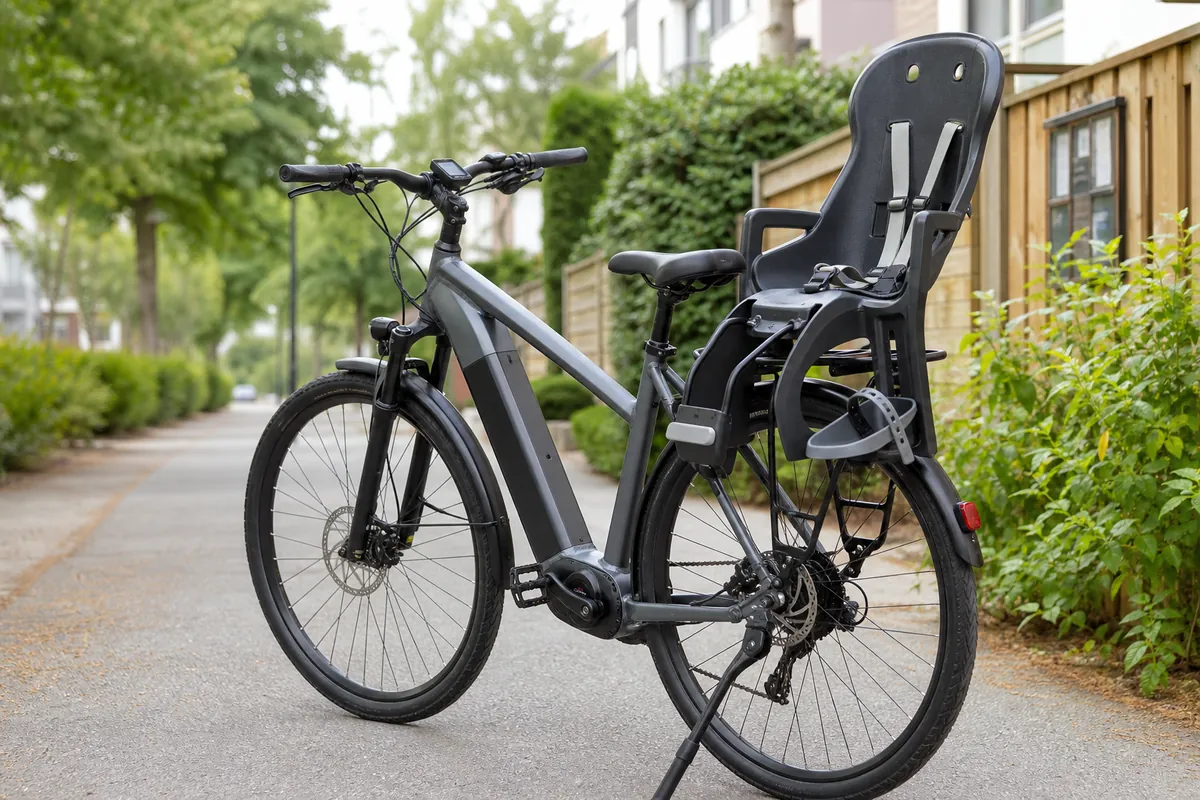
An ebike makes family errands easier, but adding a child seat changes the way the bike handles. You are putting extra weight high and behind you, often on a bike that already weighs more than a regular bicycle. That does not mean child seats and ebikes are a bad match. It means the “best” seat is the one that fits the bike correctly before it looks convenient.
If you are still choosing the bike itself, read the e-bike buying tips first. A stable frame, strong brakes, a suitable rear rack, and predictable low-speed handling matter more once you plan to carry a small passenger.
For a typical commuter or utility ebike, look for a rear rack-mounted child seat with a clear rack compatibility system, a child weight range that fits your passenger, and full foot protection. Many families should avoid bargain seats with vague fit claims, especially if the seat relies on a rack that was only designed for light cargo.
The practical winner is not always the flashiest seat. It is the one that gives you a confirmed attachment path, keeps the child’s feet away from the wheel, and does not overload the bike’s rear rack or frame.
| Seat type | Best fit | Main caution |
|---|---|---|
| Rear rack-mounted child seat | Most commuter, utility, and cargo-style ebikes with a compatible passenger-rated rack | The rack must be rated for the seat and child, not just panniers |
| Rear frame-mounted child seat | Bikes without a suitable rack, when the frame shape is approved by the seat maker | May not fit step-through frames, suspension frames, or unusual ebike tubing |
| Front-mounted child seat | Short rides with smaller children on bikes with enough cockpit space | Can interfere with steering, cables, display, throttle, and rider knees |
| Cargo ebike passenger kit | Families carrying kids often or riding with extra bags | Works best when the bike is designed around child passengers from the start |
| Child trailer | Longer rides, heavier loads, or riders who want lower center of gravity | Wider footprint and different visibility needs in traffic |
The first question is not “Which child seat has the nicest padding?” It is “Can this seat attach to this ebike exactly as designed?” Ebikes often have thicker frames, integrated batteries, rear suspension, unusual racks, or proprietary cargo platforms. Those details can make a seat that fits a regular bike a poor fit on an electric one.
Check three ratings before you buy:
If your rack says it can carry groceries, that does not automatically mean it can carry a child seat. A child moves, leans, and creates different forces than a strapped-down bag. For more context on load ratings, see our guide to e-bike cargo capacity.
Fit check: Do not rely on “universal” language by itself. Match the seat to the rack width, rack tube shape, mounting system, wheel size, brake location, and any manufacturer limits for child passengers.
A good rear rack-mounted seat keeps the child behind the rider, leaves the handlebar area clean, and works well for school drop-offs, errands, and neighborhood rides. On many ebikes, this is the most realistic setup because the rear of the bike already has structure for cargo.
Look for a seat with a secure harness, adjustable footrests, wheel guards, and a mounting system that has a clear fit chart. If your ebike uses a known rack standard or a brand-specific passenger rack, try to choose a seat that names that system directly. Guesswork is where family accessories get expensive and frustrating.
Rear seats do have tradeoffs. They raise the center of gravity and can make the bike feel wobbly when starting, stopping, or walking it through a tight space. Practice with weight before riding with a child, and take the first real rides on quiet streets or paths.
A front-mounted child seat can feel more social because the child is in view and close to your arms. Some riders like that for very short trips with smaller children. On an ebike, though, front seats deserve extra caution.
Many ebikes have displays, throttle controls, brake hoses, large stems, or swept handlebars that leave less room than expected. A front seat can also affect steering and may crowd your knees. If the child is getting tall or the cockpit already feels busy, skip the front seat and look at a rear setup or trailer.
A child seat adds weight, and added weight asks more from the whole bike. Brakes matter a lot here. If your ebike already feels slow to stop, noisy under braking, or vague on descents, fix that before adding a passenger. Our guide on when to replace e-bike brake pads is a useful pre-check.
Tire pressure matters too. A rear child seat can put more load on the back tire, so use the tire sidewall and bike maker’s guidance rather than guessing. The bike should feel planted, not squirmy, when you turn slowly or brake gently.
Rider confidence is part of the setup. You should be able to start smoothly, stop without swerving, put a foot down quickly, and walk the loaded bike without fighting it. If that feels marginal, a lower trailer or cargo bike passenger system may be a better fit.
Before the first ride: Install the seat exactly by the manual, tighten hardware to the specified guidance, check that straps cannot reach the wheel, and do a short test ride without the child. Then add the child only after the bike feels stable at walking speed, starts, stops, and gentle turns.
The best ebike child seat should make small mistakes less likely. That means secure contact points, clear adjustments, and parts that stay put after repeated rides.
A five-point harness is common on many quality child seats, but the details matter. The straps should adjust smoothly, sit securely on the child, and resist twisting. The buckle should be easy for an adult to operate but difficult for a child to open mid-ride.
Foot protection is not optional. Choose a seat with enclosed or well-guarded footrests and straps that hold the child’s feet in place. The goal is simple: feet, shoelaces, and loose clothing should stay away from the spokes, brake rotor, chain, and tire.
Some tall-backed seats can push a child’s helmet forward, especially when the child leans back. Check the seating position with the helmet on. A child helmet should fit correctly every ride; for help choosing one, see the e-bike helmet guide.
If you use the bike for both solo rides and family trips, a removable seat can be worth paying for. Just make sure the quick-release mechanism still locks securely and that you inspect it often. Convenience should not make the attachment feel vague.
A child trailer is not as compact as a seat, but it can be the smarter choice for some families. Trailers usually keep weight lower, offer more space, and can carry snacks, bags, or weather gear. They may also be easier for riders who feel nervous with a child perched high over the rear wheel.
Consider a trailer if your ebike has no approved child-seat mounting point, if you plan longer rides, or if your child is near the upper limit for many seats. The tradeoff is road presence. A trailer makes the whole setup longer and wider, so visibility, flags, lights, and route choice matter more.
Use this checklist before choosing a seat:
If any of those points are uncertain, pause before buying. It is better to choose a different seat style than to force a poor fit because the listing looked close enough.
Because child-seat fit depends so much on your exact ebike, the smartest shopping path is to compare seats by mount type, weight rating, foot protection, and rack compatibility rather than by price alone. Use the product listing only as a starting point, then confirm the seat manual and your bike maker’s passenger guidance before ordering.
The best child seat for an ebike is the one that fits your bike by the book, keeps your passenger secure, and still lets you ride calmly at low speed. For many riders, that points to a rear rack-mounted seat on a compatible, passenger-rated rack. For others, a cargo bike setup or trailer will be the better answer.
Do not let the accessory choice outrun the safety check. Confirm the ratings, install carefully, practice before carrying a child, and treat the first few rides as shakedown rides. A good setup should feel boring in the best way: stable, predictable, and easy to repeat.
* We may earn a commission when you buy through our links.