The biggest ebike buying mistakes to avoid are not tiny spec-sheet errors. They are buying the wrong bike for your riding, trusting range claims without context, ignoring battery and brake quality, skipping fit, and forgetting about service after the sale. A good ebike should match your roads, hills, storage, body position, cargo needs, and maintenance comfort before the price tag starts looking attractive.
Quick answer: Do not buy an ebike just because it has a big motor, a long advertised range, or a tempting discount. Start with the ride you actually need, then check battery quality, brake strength, frame fit, total weight, local rules, warranty support, and whether replacement parts are easy to get.
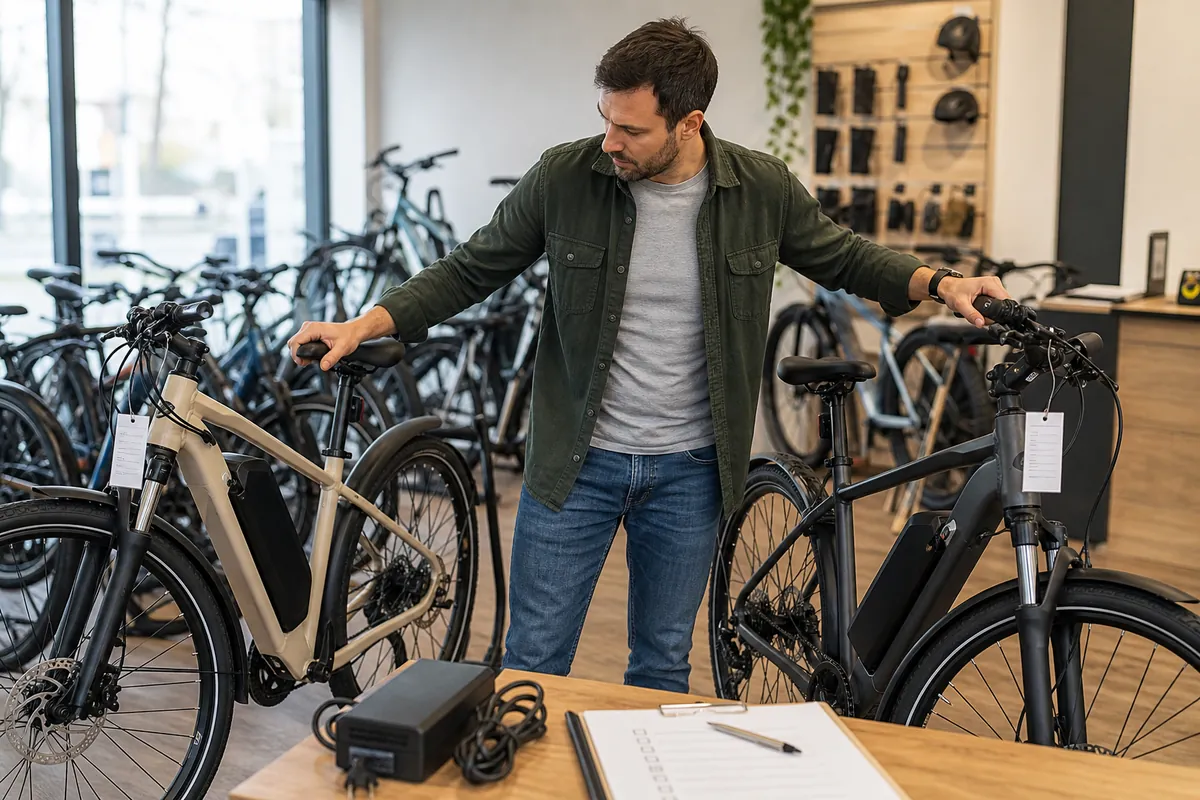
The first mistake is shopping backward. A lot of buyers start with motor watts, battery size, or a sale price, then try to make the bike fit their life afterward. That is how people end up with an ebike that is too heavy for their stairs, too weak for their hills, too twitchy for errands, or too awkward to service.
Start with use case. A short neighborhood rider, a daily commuter, a heavier cargo rider, and a hill-country weekend rider may all need different bikes. If you want a broader decision framework before you compare models, our e-bike buying tips guide is a good companion to this checklist.
A powerful motor can feel exciting on a test ride, but it does not fix weak brakes, poor handling, cheap tires, or an uncomfortable frame. In some cases, extra speed and weight make those weaknesses more obvious.
Motor power matters most when it matches the job. Hills, rider weight, cargo, and local class rules all affect what makes sense. A smooth, well-supported motor on a stable frame often beats a bargain bike with a bigger number on the spec sheet.
If motor specs are starting to blur together, read our guide to electric bike motors before you treat wattage as the deciding factor.
Range claims are best treated as optimistic estimates, not promises. Real-world range changes with rider weight, hills, wind, tire pressure, temperature, assist level, stop-and-go riding, and battery age.
A bike advertised for long range may still be a poor match if that number assumes a light rider, flat ground, low assist, and ideal weather. Instead of asking, “How far can it go?” ask, “How far can it go under my normal ride conditions?”
Reality check: A smaller honest range estimate is more useful than a huge marketing number. If your regular ride is 18 miles with hills, buy for that ride with margin, not for the best-case number printed on the product page.
The battery is one of the most expensive parts of an ebike. It also affects weight, range, charging habits, storage, and long-term ownership cost. A cheap bike can become expensive fast if the battery is hard to replace or comes from a brand with weak support.
Look for clear battery specs, realistic replacement availability, safe charging instructions, and a charger that matches the battery system. If you are comparing used bikes, battery condition becomes even more important. Our used e-bike buying checklist covers the red flags worth checking before money changes hands.
For new or used bikes, ask how much a replacement battery costs and whether it is available through the seller or manufacturer. A removable battery can also make charging, storage, and theft prevention easier, especially for apartment riders.
Some bad choices do not feel bad in the store. They show up when you carry the bike, lock it outside, fix a flat, ride in traffic, or need help with a warranty question.
An ebike that is too tall, too stretched out, or too cramped will not become comfortable just because the motor helps. Fit affects confidence at stops, steering control, back comfort, and how often you actually ride.
Check standover height, reach, handlebar position, saddle height range, and how easy it is to put a foot down. Step-through frames can be useful for riders who carry cargo, wear work clothes, or want easier mounting, but frame style still needs to match your riding posture.
Many ebikes are heavy enough that “just lift it” is not a plan. Weight matters if you have stairs, a wall hook, a tight hallway, a car rack, or a repair stand. It also matters when the battery is dead and you need to pedal home without assist.
Before buying, imagine the most annoying handling moment: carrying it up steps, loading it onto a rack, turning it around in a small garage, or pushing it with a flat tire. If that moment sounds miserable, the bike may be too heavy for your setup.
Ebike brakes work harder than regular bike brakes because the bike is heavier and often ridden at higher average speeds. Weak brakes can make a good motor feel unsafe.
Disc brakes are common on ebikes, but quality still varies. Look at rotor size, brake type, lever feel, pad availability, and how easy it will be to get service. Hydraulic disc brakes can feel stronger and smoother, while mechanical disc brakes may be easier for some owners to adjust at home.
The right tires depend on your roads. Smooth pavement, gravel paths, wet streets, broken shoulders, and dirt shortcuts all ask different things from a tire. A bargain tire can make the bike feel harsh, slippery, or flat-prone.
Ask whether the tires are easy to replace and whether the wheel size is common. Also check if the motor placement makes rear flat repairs harder. Hub-motor rear wheels can be more involved to remove than a standard wheel, which matters if you plan to do your own maintenance.
| Mistake | Why it matters | Better move |
|---|---|---|
| Buying for motor watts alone | Power does not fix poor brakes, fit, or frame quality. | Match the whole bike to your terrain and riding style. |
| Believing best-case range | Real range changes with hills, weight, assist level, and weather. | Buy with margin for your normal route. |
| Ignoring battery support | Battery replacement can be expensive or hard to source. | Check replacement cost and availability before purchase. |
| Skipping fit and weight checks | An awkward bike gets ridden less and handled poorly. | Test ride, lift, roll, park, and store it before committing. |
| Forgetting service access | Cheap parts are not cheap if nobody can repair them. | Confirm warranty terms, parts supply, and local shop support. |
A budget ebike can be a smart buy when the brand is honest about tradeoffs. The problem is buying the cheapest bike while assuming it will behave like a more expensive one.
Cheap bikes often save money somewhere: battery cells, brakes, drivetrain parts, tires, display quality, controller tuning, assembly, or customer support. That does not automatically make them bad, but it does mean you should inspect the tradeoffs instead of treating the discount as pure value.
The purchase price is only the start. Add the cost of a helmet, lock, lights, rack, fenders, spare tube, pump, maintenance, brake pads, tires, and possible battery replacement. A slightly more expensive bike with better parts and support may cost less over two or three years.
Battery care also affects long-term value. If you want to stretch battery life, our e-bike battery maintenance guide explains the habits that matter most.
Direct-to-consumer ebikes can be a good deal, but support quality varies. Before buying, check whether the company lists replacement parts, publishes clear manuals, answers support questions, and honors warranty claims in a practical way.
Local bike shops may not service every online ebike brand, especially if parts are proprietary or wiring is difficult to source. Ask before you buy, not after something breaks.
Ebike rules can vary by state, city, trail system, and path type. Class, throttle use, maximum assisted speed, and where you can ride may all matter. A bike that looks perfect online may be a poor choice if you cannot legally or comfortably use it where you planned.
This matters even more if you are comparing ebikes with mopeds, gas motorized bicycles, or high-speed electric models. Keep the bike matched to the places you actually ride.
Before you buy: Write down your normal ride distance, biggest hill, storage location, carry requirement, rider weight, cargo needs, preferred service option, and budget for accessories. If a bike fails one of those basics, a better sale price will not rescue it.
Use these questions before you compare final models:
The best answer is not always the most expensive bike. It is the bike with the fewest hidden compromises for your actual use.
If you are ready to compare current options, use the checklist above while you browse. Filter out bikes with unclear battery support, weak braking specs, poor fit information, or vague warranty terms before you get attached to a price.
The most expensive ebike mistake is buying the bike you wanted on paper instead of the one that fits your real rides. Specs matter, but they only matter after the basics are right: fit, range, battery support, braking, weight, service, and legal use.
Slow the decision down for one extra pass. If the bike still fits your route, storage, body, budget, and support needs after that check, you are much closer to a purchase you will actually enjoy.
* We may earn a commission when you buy through our links.