A motorized bicycle buying guide should make one thing clear fast: the right choice depends less on raw speed and more on where you plan to ride, how much wrenching you want to do, and whether your local rules treat the bike as a bicycle, moped, or something in between.
Quick answer: Buy a motorized bicycle setup only if you are comfortable checking local laws, maintaining a motor system, and accepting more noise, vibration, and mechanical complexity than a normal bicycle. If you want the simplest daily ride, an e-bike is usually easier to live with. If you want a project, a gas or electric motorized bicycle kit can make sense when the donor bike is strong, compatible, and legal for your intended use.
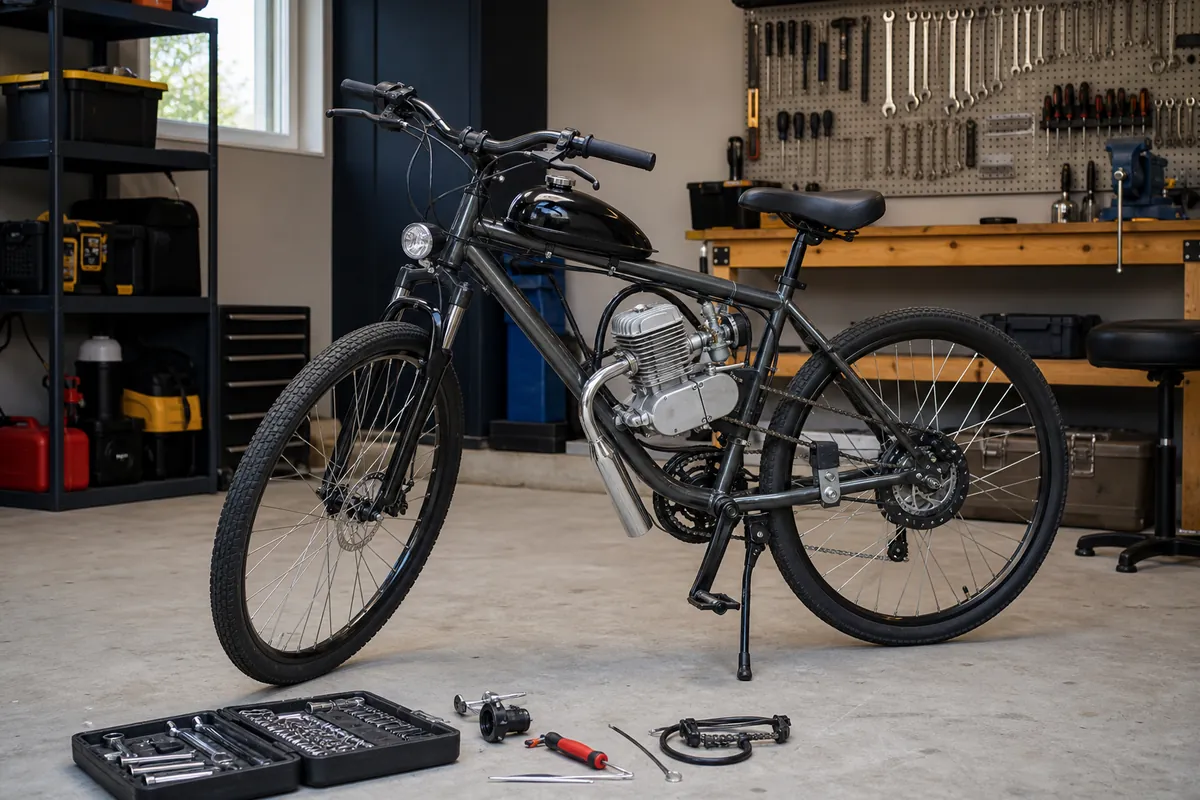
Motorized bicycles sit in a messy middle ground. Some are regular bicycles with small gas engines. Some are electric conversion projects. Some are sold as complete bikes that look closer to mopeds than bicycles. That overlap is why shoppers get stuck: the product listings often sound simple, but the ownership experience can vary a lot.
The best starting point is to decide what problem you are solving. Do you want a low-cost commuter, a weekend project, a hill-climbing helper, or a faster alternative to pedaling? Those answers change the bike, motor type, budget, safety gear, and legal homework you need before buying.
A motorized bicycle is usually a pedal bicycle with added power. That power may come from a small gas engine, an electric hub motor, or a mid-drive electric kit. Some complete bikes blur the line even further, especially when they have throttles, high top speeds, or moped-like frames.
Before you compare prices, separate the three common paths:
If you are mainly trying to replace short car trips, it is worth comparing this project against a ready-made e-bike. Our broader e-bike buying tips cover the questions that matter for complete electric bikes, including range, brakes, fit, and support.
Buyer reality check: A low purchase price can hide the real cost. Budget for brakes, tires, lights, tools, safety gear, mounting hardware, replacement parts, and the time needed to tune the setup after installation.
The right setup depends on your tolerance for maintenance. Gas kits tend to appeal to riders who enjoy tinkering. They can be fun, affordable projects, but they also bring fuel mixing, vibration, exhaust, chain alignment, and more frequent adjustment.
Electric kits are usually calmer to ride. They still require careful installation, especially around battery mounting, controller placement, brake cutoff sensors, and cable routing. The upside is smoother power, less noise, and easier storage for many riders.
A complete e-bike is the cleanest answer if you want transportation more than a project. You may pay more upfront, but you usually get an integrated frame, tested electrical layout, better documentation, and clearer support. If you are comparing motor systems, our guide to electric bike motors can help you understand hub motors, mid-drives, torque, and power delivery before you buy.
| Option | Best for | Main tradeoff |
|---|---|---|
| Gas motorized bicycle kit | Hands-on riders who want a budget project | More noise, vibration, tuning, and legal complexity |
| Electric conversion kit | Riders who want quiet assist and can handle installation | Battery safety, wiring, and donor-bike fit are critical |
| Complete e-bike | Commuters who want the simplest ownership path | Higher upfront cost and less DIY customization |
| Moped-style electric bike | Riders who want throttle-heavy riding and utility features | Weight, regulations, and transport can be limiting |
This is the part many buyers skip, and it can turn a good deal into a headache. Motorized bicycle rules vary by state and sometimes by city. Your setup may need registration, a license, insurance, specific equipment, or may be restricted from certain roads and paths.
Do this before you buy, not after the box arrives. Start with whether you can legally ride the bike where you plan to use it. Our guide on whether you can drive a motorized bike on the road explains the road-use question in more detail. If licensing is your biggest concern, read can you ride a motorized bicycle without a license before assuming the answer is yes.
Be especially careful with listings that promise high speeds or avoid clear classification. A product can be mechanically capable and still be a poor fit for your local rules. Legal fit is part of product fit.
If you are adding a kit to a bicycle, the donor bike matters as much as the motor. A weak frame, poor brakes, worn wheels, or awkward geometry can make the finished build frustrating or unsafe.
Look for a sturdy frame in good condition, enough room for the motor or battery, and brakes that match the extra speed and weight. Disc brakes are often preferable, but the exact setup depends on the bike, terrain, and rider weight. Avoid cracked frames, mystery carbon frames, badly rusted bikes, and cheap department-store bikes with questionable components.
Practical callout: If a kit requires you to force parts into place, drill structural frame areas, or ignore brake limitations, pause. A cheaper build is not a bargain if the bike becomes unreliable, hard to stop, or illegal for your route.
A kit price is only one line item. A realistic budget may include the donor bike, motor kit, battery or fuel accessories, upgraded brakes, tires, tubes, lights, lock, helmet, mirrors, tools, replacement chains, and small hardware. Shipping and returns can also matter, especially with heavy kits and batteries.
For a gas kit, plan for maintenance supplies and tuning time. For an electric setup, pay close attention to the battery and charger. A cheap battery from an unclear source can be the riskiest part of the whole purchase.
If you are comparing against a complete electric bike, remember that complete models may include integrated lights, racks, fenders, displays, warranty coverage, and cleaner cable routing. Those extras can narrow the real price gap.
Speed sells motorized bicycle kits, but stopping and control matter more. A bicycle frame was not always designed for sustained motor-assisted speed. Tires, brake pads, wheels, fork condition, and handlebar setup all become more important once the bike is heavier and faster.
Plan on a real helmet, bright lights, reflective details, and a locking setup that matches the value of the finished bike. If the bike will be used for commuting, comfort matters too. A harsh seat, awkward reach, or noisy motor can make a theoretically useful bike sit unused.
For riders deciding between powered bicycle categories, compare the practical tradeoff between bicycle-like convenience and moped-like speed or utility. The best answer is rarely just the fastest option; it is the one you can ride legally, maintain comfortably, and store without turning every trip into a project.
A motorized bicycle can make sense when you want a project, understand the rules, and have a route that fits the machine. Short local trips, flat-to-moderate terrain, and garage storage all make ownership easier. So does having basic mechanical skill or a local shop willing to help.
It makes less sense if you need silent operation, clean indoor storage, simple service, or a guaranteed commuter with minimal tinkering. In those cases, a complete e-bike is usually a better bet.
For most riders, the smartest buy is the one that matches daily use, not the one with the loudest spec sheet. If you want reliable transportation, start by comparing complete e-bikes and legal moped-style options. If you want a hands-on garage project, a motorized bicycle kit can be rewarding, but only when the bike, route, budget, and rules all line up.
Best overall advice: treat the motor as only one part of the purchase. The frame, brakes, battery or fuel system, legality, support, and your willingness to maintain the setup decide whether the bike is a clever buy or an expensive lesson.
If you are ready to compare available motorized bicycle options, use the listings as a research starting point. Check the exact kit type, compatibility notes, customer photos, return policy, and replacement-part availability before buying.
* We may earn a commission when you buy through our links.