If you are weighing the mid drive conversion kit pros and cons, the short version is simple: a mid drive kit can make a regular bike feel powerful, efficient, and hill-ready, but it also asks more from the bike, the drivetrain, and the person installing it.
Quick answer: A mid drive conversion kit is usually worth considering if you already own a compatible, sturdy bike and want strong climbing, natural pedal assist, and better use of the bike’s gears. It is not the easiest or lowest-maintenance conversion path. If you want the simplest install or the least drivetrain wear, a hub motor kit or complete e-bike may be the calmer choice.
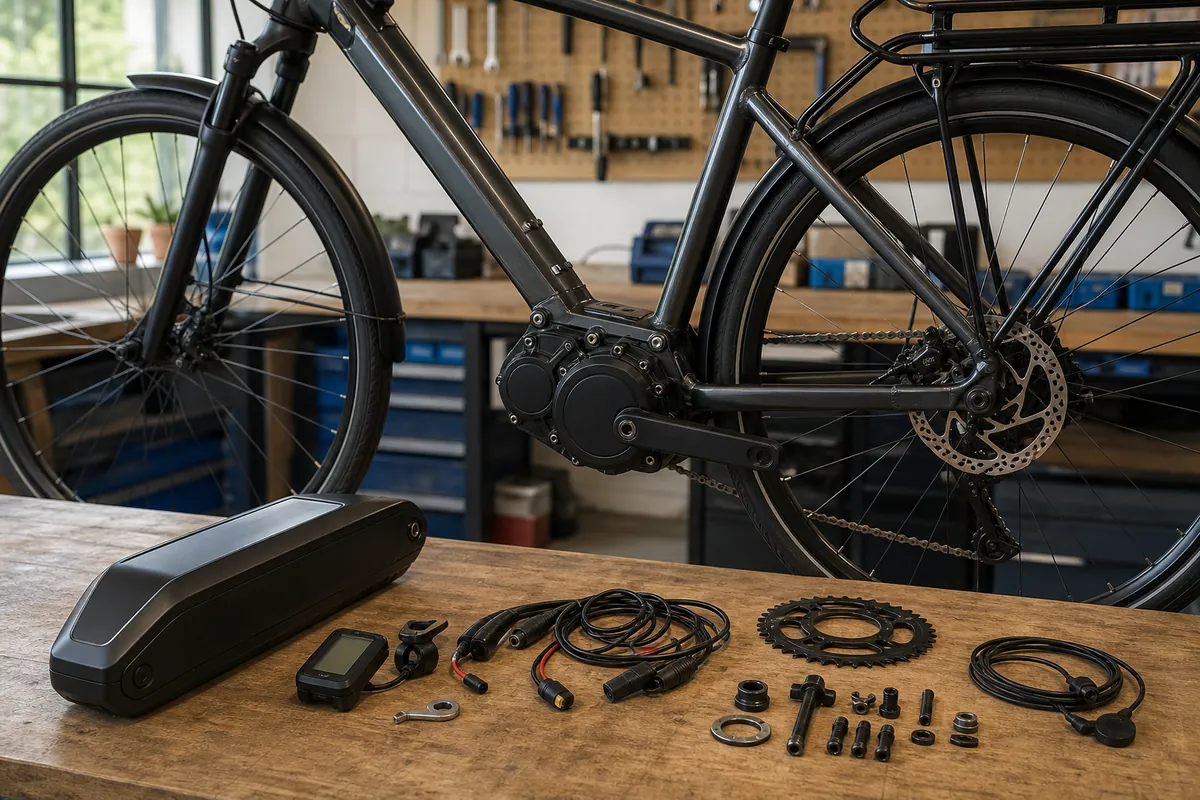
Mid drive kits sit at the bike’s crank area and send power through the chain, cassette, and rear wheel. That gives them a different personality from hub motor kits, which power the wheel directly. On climbs, rougher routes, and stop-and-go riding, that difference can be huge. On a cheap frame with tired components, it can also expose every weak point.
A mid drive kit is best understood as a performance-minded conversion, not just a cheap shortcut to electric assist. It can be excellent when the donor bike is right, but it is less forgiving than a basic rear hub setup.
| Factor | Mid drive conversion kit advantage | Tradeoff to consider |
|---|---|---|
| Hill climbing | Uses the bike’s gears, which can help on steep routes | Requires smart shifting and can strain the drivetrain |
| Ride feel | Often feels more balanced and bicycle-like | Install quality and tuning matter a lot |
| Weight balance | Motor weight stays low and centered | Battery placement still affects handling |
| Maintenance | Uses standard wheel positions, which can simplify flats | Chains, cassettes, and chainrings may wear faster |
| Installation | Can create a capable custom e-bike from a good donor bike | Bottom bracket compatibility, tools, and cable routing can complicate the job |
The biggest upside is mechanical leverage. Because a mid drive motor works through the bicycle’s existing gears, the motor can spin in a more useful range when you shift correctly. That is why mid drives are popular with riders who care about hills, cargo, trails, and efficient climbing rather than just flat-road cruising.
On a steep hill, a hub motor has to push the wheel directly. A mid drive can use a lower gear, much like your legs do. That does not make every kit magically effortless, and motor ratings still matter, but it gives the system a practical advantage when the road tilts upward.
This is especially relevant if you live somewhere with long grades, carry panniers, or want a converted bike that can handle more than neighborhood errands. If you are still comparing motor layouts, MBHQ’s guide to electric bike motors explained is a good companion read before you commit.
Mid drive systems keep the motor weight near the center of the bike. That can make the conversion feel less rear-heavy than some hub motor builds, especially when the battery is also mounted cleanly inside the main triangle.
The result is often a bike that still feels like a bicycle, just with stronger legs. That is the appeal: less “motor stuck on a wheel,” more “bike with serious assistance.” Riders who care about handling usually notice this quickly.
With a hub motor kit, the powered wheel is part of the system. Removing it for a flat tire can involve motor cables, axle hardware, torque arms, and extra care. A mid drive conversion leaves the wheels more conventional, which can make tire changes and wheel swaps less awkward.
That does not mean the whole bike is simple. It just shifts the complexity away from the wheel and toward the bottom bracket, drivetrain, wiring, and battery mount.
The downside of sending motor power through the drivetrain is that the drivetrain has to absorb it. A mid drive kit can be smooth and durable when installed well, but it is not gentle on neglected parts.
A mid drive motor adds force through the same chain and gears your legs use. If you shift under heavy load, run a dirty chain, or use worn components, the bike may start skipping, grinding, or wearing parts faster than expected.
This is one reason mid drive conversions reward maintenance-minded riders. If you already keep your bike clean, adjust your shifting, and replace wear items on time, the tradeoff is manageable. If you want a conversion you can ignore for months, this may not be the best lane.
Mid drive kits commonly depend on bottom bracket fit, frame clearance, chainline, brake sensor options, display mounting, battery placement, and cable routing. Some bikes are friendly donors. Others look promising until the install runs into a clearance problem or awkward battery mount.
Before buying, inspect the bike as a whole system. Frame strength, brake quality, tire condition, and cargo plans all matter. MBHQ’s used e-bike buying checklist is written for complete e-bikes, but the same risk mindset helps when evaluating a donor bike for conversion.
A clean mid drive install may require bottom bracket tools, careful torque, wiring patience, brake cutoff setup, speed sensor alignment, and controller/display configuration. Some mechanically confident riders can handle it at home. Others are better off budgeting for shop help, if a local shop is willing to work on conversion kits.
Reality check: A conversion kit is not just a motor purchase. Plan for the kit, battery, charger, drivetrain wear items, brake upgrades if needed, tools, and possible professional labor. The cheapest kit on the page may not be the cheapest finished bike.
A mid drive conversion kit makes the most sense for riders who already have a solid bike and a clear reason to favor climbing power, balanced handling, or gear-driven efficiency. It is a particularly strong fit for riders who want to keep a favorite frame instead of buying a complete e-bike.
It may fit you well if your bike has strong brakes, a healthy drivetrain, a suitable bottom bracket, and enough frame space for a secure battery. It also helps if you are willing to shift thoughtfully and maintain the chain more often than you might on a casual pedal bike.
If your real goal is a ready-to-ride commuter with warranty support and less tinkering, a complete e-bike may be easier to live with. MBHQ’s broader e-bike buying tips can help you compare the conversion route against buying new.
Skip the mid drive route if the donor bike is weak, damaged, poorly fitted, or already overdue for major repairs. Adding electric assist does not turn a questionable bike into a good one; it usually makes the weak points matter more.
You may also want to avoid a mid drive kit if you dislike maintenance, ride mostly flat streets, or want the simplest possible installation. In those cases, a hub motor kit or complete e-bike can be more practical. The “best” setup is the one that matches your route, skill level, and tolerance for tinkering.
Practical callout: Do not buy a mid drive kit until you have checked bottom bracket compatibility, brake condition, chain and cassette wear, battery mounting space, local e-bike rules, and whether your riding style really needs mid drive advantages.
The cleanest comparison is this: mid drives are better when gearing, balance, and climbing matter; hub motors are often better when simplicity, lower drivetrain stress, and easier installation matter.
A hub motor can be a smart choice for flat commutes and casual errands. It puts less motor force through the chain and cassette, and many kits are conceptually easier to understand. A mid drive is more compelling when the route includes hills, heavier loads, mixed surfaces, or riders who want the bike’s gears to work with the motor.
For legal and road-use questions, remember that the kit type is only part of the picture. Motor power, speed capability, throttle behavior, and local classifications can affect where and how you can ride. MBHQ’s guide on whether you can drive a motorized bike on the road is a useful next step if your conversion will be used in traffic.
Before you click buy, slow down and verify the basics. A mid drive conversion is easiest to justify when the bike is already worth upgrading.
The donor bike matters as much as the kit. A strong, well-fitting bike with good brakes can become a useful custom e-bike. A bargain frame with weak parts can turn the same kit into a frustrating project.
If a mid drive still makes sense after the compatibility checks, compare kits by fit first, then by battery option, included display, brake sensor support, warranty terms, and real replacement-part availability. Avoid choosing only by peak wattage or the lowest upfront price.
A mid drive conversion kit can be worth it when you want climbing power, balanced handling, and a custom build based on a bike you already trust. It is the enthusiast’s conversion path: capable, efficient, and rewarding when matched to the right frame.
It is also more demanding than it looks. Expect a more careful install, more drivetrain attention, and a higher need for compatibility checks before buying. If that sounds acceptable, a mid drive kit can turn a good bicycle into a very useful electric ride. If it sounds like a chore, buying a complete e-bike or choosing a simpler hub motor conversion may be the better decision.
* We may earn a commission when you buy through our links.