Knowing what to check when buying a used ebike can save you from the two most expensive surprises: a weak battery and neglected wear parts. Start with the battery, charger, frame, brakes, motor response, display, drivetrain, and proof of ownership, then take a real test ride before you talk price.
Quick answer: Before buying a used e-bike, check battery health, charger compatibility, frame condition, brake wear, tire condition, motor noise, display errors, drivetrain wear, service history, and whether the seller can prove ownership. If the battery is old, the charger is missing, the frame is cracked, or the seller avoids a test ride, walk away.
A used e-bike can be a smart buy, especially if you want better specs than a new budget model at the same price. The catch is that e-bikes hide more risk than regular bicycles. A bike can look clean in photos and still have a tired battery, water damage, sketchy wiring, or brakes that need immediate work.
Use this guide as a practical inspection checklist, not a lab test. You are looking for signs that the bike was cared for, stored well, and priced honestly for its condition.
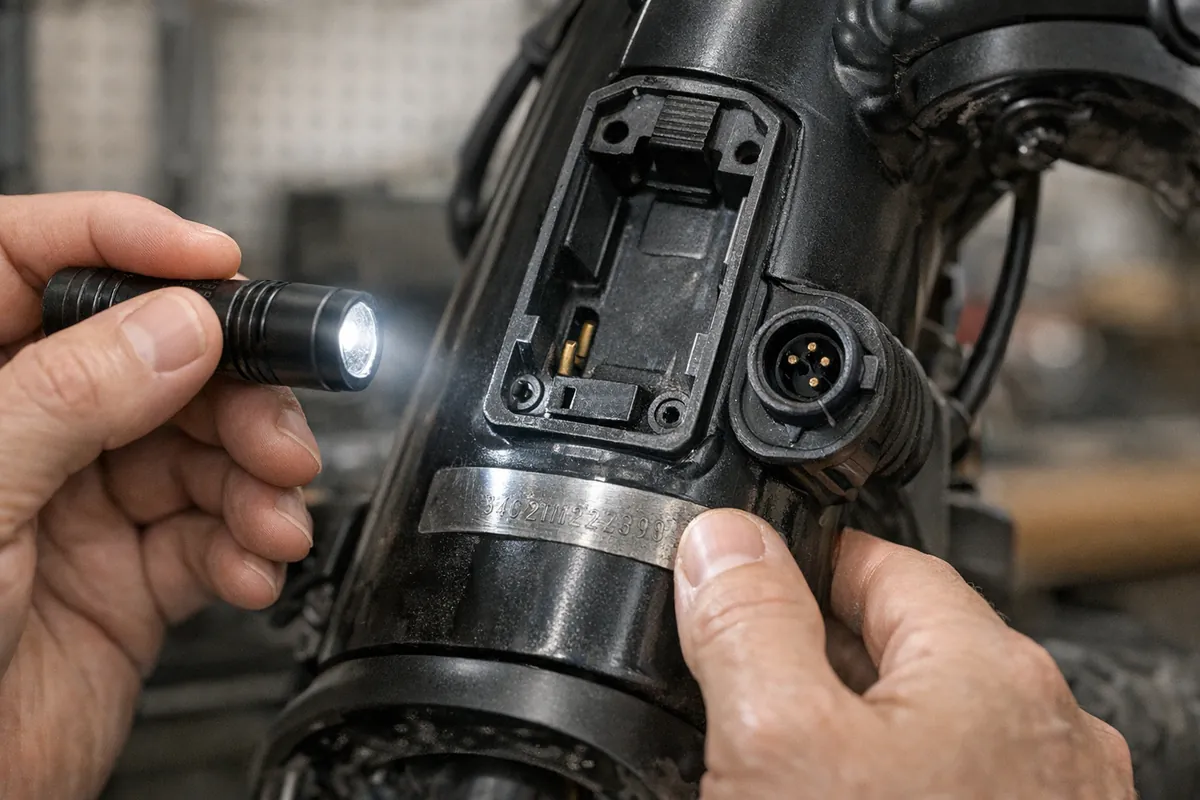
Start with the parts that can turn a bargain into a repair bill. On a used e-bike, the battery, charger, motor system, brakes, and frame matter more than accessories or cosmetic scuffs.
| Inspection area | What to check | Why it matters |
|---|---|---|
| Battery | Age, charge behavior, case damage, swelling, corrosion, and whether it locks securely | Battery replacement is often one of the biggest costs on a used e-bike |
| Charger | Correct brand/spec, clean connector, no heat damage, and reliable charging | A wrong or damaged charger can be unsafe and expensive to replace |
| Frame and fork | Cracks, dents, bent dropouts, rust, crash marks, and loose weld areas | Structural damage is a hard pass, not a negotiation point |
| Brakes | Pad life, rotor condition, lever feel, rubbing, pulsing, and stopping power | E-bikes are heavier and faster than standard bikes, so weak brakes matter |
| Motor and controls | Smooth assist, no grinding, no delay, no error codes, and all assist levels working | Electrical problems can be hard to diagnose after purchase |
| Ownership | Receipt, serial number, charger, keys, app access, and clear seller identity | Missing proof can point to theft, lockout issues, or warranty trouble |
The battery deserves the most attention because it is the part most likely to change the real cost of the bike. Ask when the bike was bought, whether the battery is original, how it was stored, and whether it has ever been replaced. If the seller says “it just needs a charger,” treat that as a serious warning sign.
Look closely at the battery case. Scratches are normal; cracks, swelling, melted plastic, rattling, corrosion, or a battery that does not lock firmly into the mount are not. Remove and reinstall the battery if the design allows it. It should slide in cleanly, lock without force, and power the bike without flickering or cutting out.
Bring the charger into the conversation early. It should match the battery system, plug in cleanly, and show normal indicator behavior. A missing charger is not a small detail. It may mean the seller cannot prove the bike charges, and it can make a good-looking bike impossible to verify before money changes hands.
If you want a deeper ownership-focused checklist after this inspection, MBHQ’s used e-bike buying checklist pairs well with this guide.
Good sign: The seller can show the charger, keys, battery removal, display startup, assist levels, and a cold-start test ride without excuses. A clean story is not proof by itself, but it lowers the risk.
After the battery, inspect the bike as a bicycle. A strong motor does not make up for a damaged frame or worn-out rolling parts. Stand several feet away and look at the bike from the front and rear. The wheels should sit straight in the frame and fork, and the handlebars should line up naturally with the front wheel.
Check the frame near welds, the head tube, the bottom bracket area, rear dropouts, and suspension pivots if the bike has them. Small paint chips are common on used bikes. Cracks, sharp dents, rippled metal, or fresh paint in one suspicious area are different. Do not buy a cracked e-bike frame just because the electronics work.
Spin both wheels. Watch for wobbles, hops, loose spokes, or scraping brakes. Tires should have usable tread, no sidewall cracks, and no obvious bulges. E-bikes put extra load on tires, especially commuter and cargo models, so worn tires should be priced into the deal.
Brakes are not the place to be optimistic. Squeeze both levers while standing beside the bike. They should feel firm and predictable, not mushy, gritty, or bottomed out against the grip. On the test ride, the bike should stop straight without pulsing, grinding, or a loud metallic scrape.
Disc brake pads are consumable parts, but a neglected brake system tells you something about the owner. If the pads are nearly gone, the rotors are grooved, or the bike shudders under braking, assume it needs service right away. MBHQ has a separate guide on how often to replace e-bike brake pads if you want a better sense of normal wear.
Shift through every gear. The chain should move cleanly without skipping under load. Look for a rusty chain, shark-fin cassette teeth, a bent derailleur, or loud drivetrain noise. A tune-up is normal on a used bike; a drivetrain that skips when you pedal hard can mean more parts are worn together.
A proper test ride should include more than a spin around a driveway. Start with the bike powered off and ride it like a normal bicycle for a minute. It should roll freely without heavy brake rub, grinding hubs, or strange resistance.
Then turn the system on and test every assist level. The motor should engage smoothly, respond consistently, and stop assisting when you stop pedaling or release the throttle, depending on the bike’s setup. Listen for grinding, clunking, clicking under load, or a motor that surges unpredictably.
Check the display for error codes, dim segments, buttons that stick, and settings that will not change. If the bike uses an app, ask the seller to show that it is not locked to someone else’s account. Also test lights, brake lights, walk mode, throttle, horn, and any electronic lock features if equipped.
Practical callout: If the seller refuses a meaningful test ride, will not show the bike charging, or says the battery is “probably fine” without demonstrating it, pause the deal. Used e-bike risk is manageable only when you can verify the basics in person.
Ask for the original receipt, order confirmation, manual, charger, keys, and any service records. Not every legitimate seller keeps every document, but the story should make sense. A high-value e-bike with no charger, no keys, no receipt, and a rushed cash-only meetup is not worth the headache.
Check the serial number on the frame and make sure it has not been scratched off or covered. If the bike has a removable battery, make sure the key works. For connected bikes, ask the seller to remove the bike from their app account before you pay.
Be cautious with unusually low prices. Sometimes people just want a bike gone, but a price far below market can signal theft, a dead battery, hidden crash damage, or an electrical issue the seller does not want to explain.
Do not compare the asking price only against the original retail price. Compare it against the cost of making the bike dependable. Add likely expenses for tires, brake pads, a tune-up, missing charger, battery replacement risk, accessories you actually need, and transport home.
A clean used e-bike from a known brand, with the right charger, working battery, proof of ownership, and a smooth test ride can be worth paying more for. A mystery bike with vague history should be cheap enough that you can absorb repairs, or skipped entirely.
If the inspection makes you reconsider buying used, MBHQ’s e-bike buying tips can help you compare used-bike risk against a new entry-level model.
The best used e-bike purchase feels boring in the right way: the battery charges, the charger matches, the brakes work, the motor assists smoothly, the frame is straight, and the seller can explain the bike’s history without dancing around basic questions. Cosmetic wear is negotiable. Battery uncertainty, structural damage, missing ownership proof, and unsafe brakes are reasons to slow down or walk away.
Buy the bike that passes the inspection, not the one that only looks like a deal in photos.