If you are comparing an ebike conversion kit vs new ebike, the practical answer is simple: a conversion kit can be the better value if you already own a strong, compatible bike and enjoy DIY work, while a new ebike is usually the better choice if you want clean integration, warranty support, and fewer setup risks.
Quick answer: Choose an ebike conversion kit when your current bicycle is worth upgrading, has the right fit and structure, and you are comfortable installing electrical and mechanical parts. Choose a new ebike when you want a purpose-built system where the frame, motor, battery, brakes, controller, display, and wiring are designed to work together from day one.
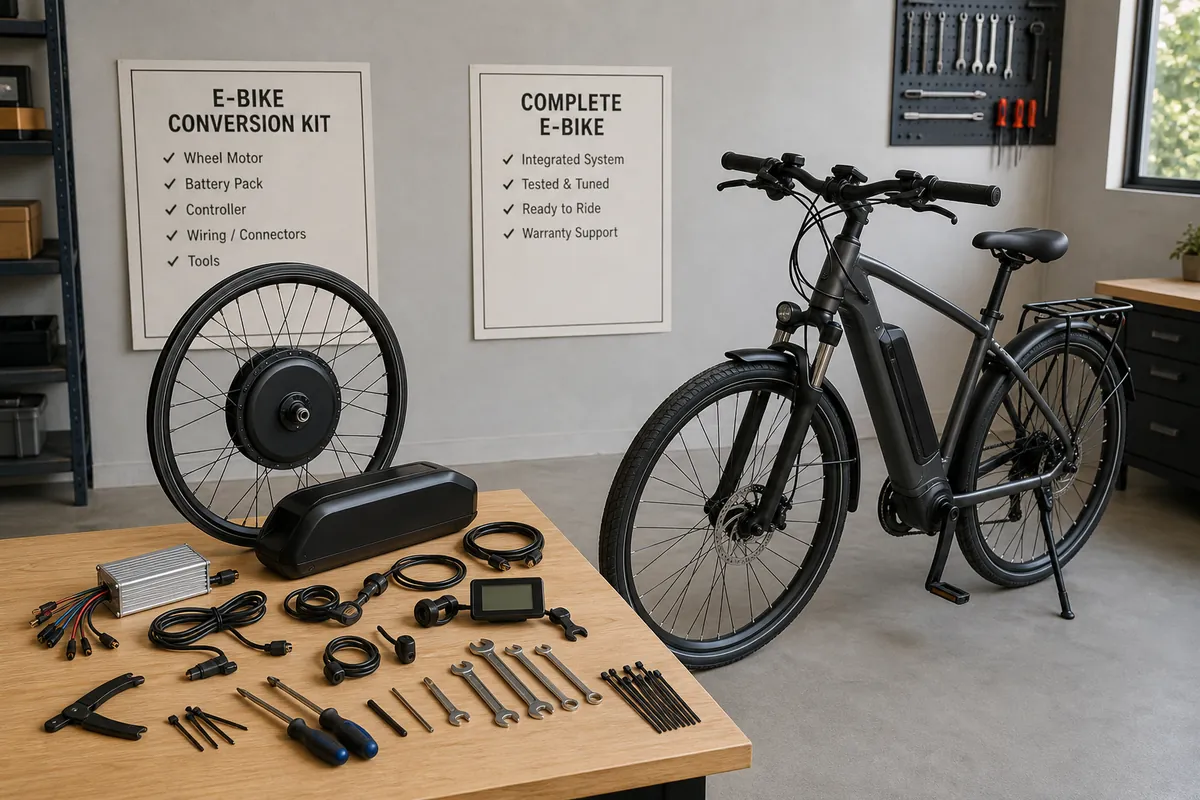
The core tradeoff is not just price. It is project flexibility versus finished-system confidence. A conversion kit lets you add electric assist to a bike you already own, but the final result depends on the bike, the kit, the battery, the installation, and your willingness to troubleshoot.
A new ebike costs more upfront in many cases, but it arrives as a complete package. The motor, battery, controller, frame, brakes, display, and wiring are selected to work together. That matters if you are commuting, riding often, carrying cargo, or simply trying to avoid turning your first ebike purchase into a weekend wiring project.
If you are still learning what specs matter, start with a broader look at e-bike buying tips. It helps to understand motor type, battery size, brake quality, frame fit, and service support before deciding whether to build or buy.
Buyer reality check: A kit is not automatically the cheap path, and a new ebike is not automatically the premium path. The smart choice depends on your current bike, your budget, your mechanical confidence, and how much risk you want to own after purchase.
An ebike conversion kit can save real money when the donor bike is already in excellent condition. The best candidate is comfortable, correctly sized, structurally sound, and equipped with brakes and wheels that can handle the extra weight and speed of electric assist.
That advantage shrinks quickly if the bike needs repairs first. New tires, brake upgrades, a stronger wheel, drivetrain service, battery mounting hardware, tools, and shop labor can push a “cheap” conversion closer to the price of a complete budget ebike. Time matters too; even a well-chosen kit still needs installation, adjustment, and careful testing.
A new ebike makes the cost easier to judge because you are comparing complete packages. You can weigh motor power, battery capacity, frame style, warranty, accessories, and delivered price in one decision. If you want a realistic price benchmark, comparing complete options in a guide to the best electric bikes under $2000 can help you decide whether the kit route still makes financial sense.
| Decision Point | Ebike Conversion Kit | New Ebike |
|---|---|---|
| Upfront cost | Often lower if you already own a compatible bike | Usually higher, but includes the full bike and electric system |
| Setup effort | Requires installation, adjustment, and troubleshooting | Usually ready after normal assembly and safety checks |
| Compatibility risk | Higher, especially around wheel size, dropouts, brakes, and battery mounting | Lower because the system is designed as a package |
| Warranty support | Often split between kit parts, battery, and original bicycle | Usually simpler because the bike is sold as one product |
| Best fit | DIY riders with a good donor bike | Riders who want convenience, support, and predictable performance |
A conversion kit makes the most sense when you already love the bicycle you own. Maybe it fits well, handles comfortably, and has proven reliable over years of riding. In that case, adding electric assist can be more appealing than replacing a familiar bike with a completely different frame.
Kits also fit riders who enjoy control. You may want a specific hub motor, a larger battery, a certain display, or a throttle setup that is not available on the complete ebikes in your price range. If you like building and maintaining your own gear, that flexibility is part of the appeal.
The key is honesty about the base bike. A sturdy hybrid, commuter, cargo-capable frame, or mountain-style bike in good condition may be a reasonable starting point. A worn-out bike with weak brakes, poor fit, tired wheels, or questionable frame condition is a poor foundation. Electrifying a bad bicycle usually just creates a heavier, faster bad bicycle.
Motor choice deserves special attention. Front hub, rear hub, and mid-drive kits all change how the bike feels and how difficult the installation becomes. Before buying a kit, review the basics in electric bike motors explained so you are not choosing only by wattage or price.
Practical callout: Before buying a kit, confirm wheel size, dropout or axle compatibility, brake condition, battery mounting space, cable routing, controller placement, and whether a local shop is willing to service the finished bike. A low kit price is not a win if the build is awkward, unsafe, or unsupported.
A new ebike is usually the better choice for riders who want transportation, not a project. That includes commuters, casual riders, parents, delivery riders, and anyone who needs the bike to work reliably without weeks of tinkering.
With a complete ebike, the battery mount has a planned location, the controller fits the frame, the wiring is routed cleanly, and the brakes are selected for the bike’s weight and intended speed. The result is often quieter, neater, and easier to live with. It also gives you one product to evaluate instead of a homemade mix of bicycle, motor, battery, controller, display, and accessories.
A new ebike also makes more sense if your current bicycle is old, uncomfortable, too small, too large, or not worth upgrading. Electric assist will not fix poor fit or worn components. It may only make those problems more expensive.
Battery support is one of the biggest long-term ownership questions. Whether you build or buy, check how replacement works, what the pack might cost, and whether the seller provides clear information. This ebike battery replacement guide can help you think through that part before you commit.
A conversion adds weight, speed, torque, and braking demand. That does not make conversions unsafe by default, but it raises the standard for the bicycle underneath the kit. Wheels, tires, brakes, fork condition, headset, frame integrity, and cable routing all deserve a careful look.
A new ebike is not automatically perfect either. Cheap brakes, vague battery specs, poor assembly, and weak customer support can still create headaches. The difference is that a complete ebike gives you a designed package to judge, while a conversion is partly the kit and partly the quality of the installation.
This is where many buyers get the decision backwards. They compare the kit price to the ebike price, then forget to compare the final bike to the final bike. The fair comparison is the completed conversion, fully sorted and safe, against the complete new ebike you could buy for similar money.
Choose an ebike conversion kit if you already own a compatible bike in excellent condition, want to keep it, enjoy DIY work, and accept that setup quality will shape the final result. This path rewards patience, mechanical confidence, and careful parts selection.
Choose a new ebike if you want a cleaner ownership experience, easier support, and a system that was designed as an ebike from the beginning. This path is usually better for daily transportation, first-time buyers, and riders who would rather spend their time riding than troubleshooting.
For many shoppers, the donor bike is the tipping point. If the bike is genuinely worth converting, a kit can be smart. If the bike is average, neglected, uncomfortable, or marginal for the extra speed and weight, a new ebike is usually the more sensible buy.
If you are still on the fence, compare conversion kits and new ebikes in the same shopping session. Look at battery capacity, motor type, brake setup, warranty language, total delivered price, and what accessories are included. The goal is not to grab the cheapest listing; it is to see whether the kit route still saves enough money after your current bike’s needed parts, labor, and time are included.
The best answer in the ebike conversion kit vs new ebike debate depends on what you are starting with. A conversion kit is the smarter buy when your current bike is strong, comfortable, compatible, and worth upgrading. A new ebike is the smarter buy when you want an integrated system, cleaner support, and fewer variables between purchase and your first real ride.
If your donor bike needs major work, the math often leans toward buying new. If your bike is already dialed in and you enjoy the build, a kit can be a practical way to get electric assist without replacing a bicycle you already trust.
* We may earn a commission when you buy through our links.