An ebike rebate guide should start with the practical truth: most electric bike savings come from state, city, county, utility, transit, or employer programs, not from one simple nationwide coupon. The smartest move is to check your local rebate rules before choosing a bike, because many programs require an application, voucher approval, participating retailer, income eligibility, or a specific e-bike class.
Quick answer: To find an e-bike rebate, search your state energy office, city sustainability office, local utility, transit agency, and employer benefits portal. Confirm the program is open, check income and residency rules, make sure your chosen e-bike qualifies, and get approval before buying if the program uses a voucher.
If you are trying to lower the purchase price, treat rebates as part of your buying plan, not as a refund you can chase later. Some incentives discount the bike at checkout. Others reimburse you after purchase. A few work through tax credits, which may not help until you file and may have extra eligibility rules.
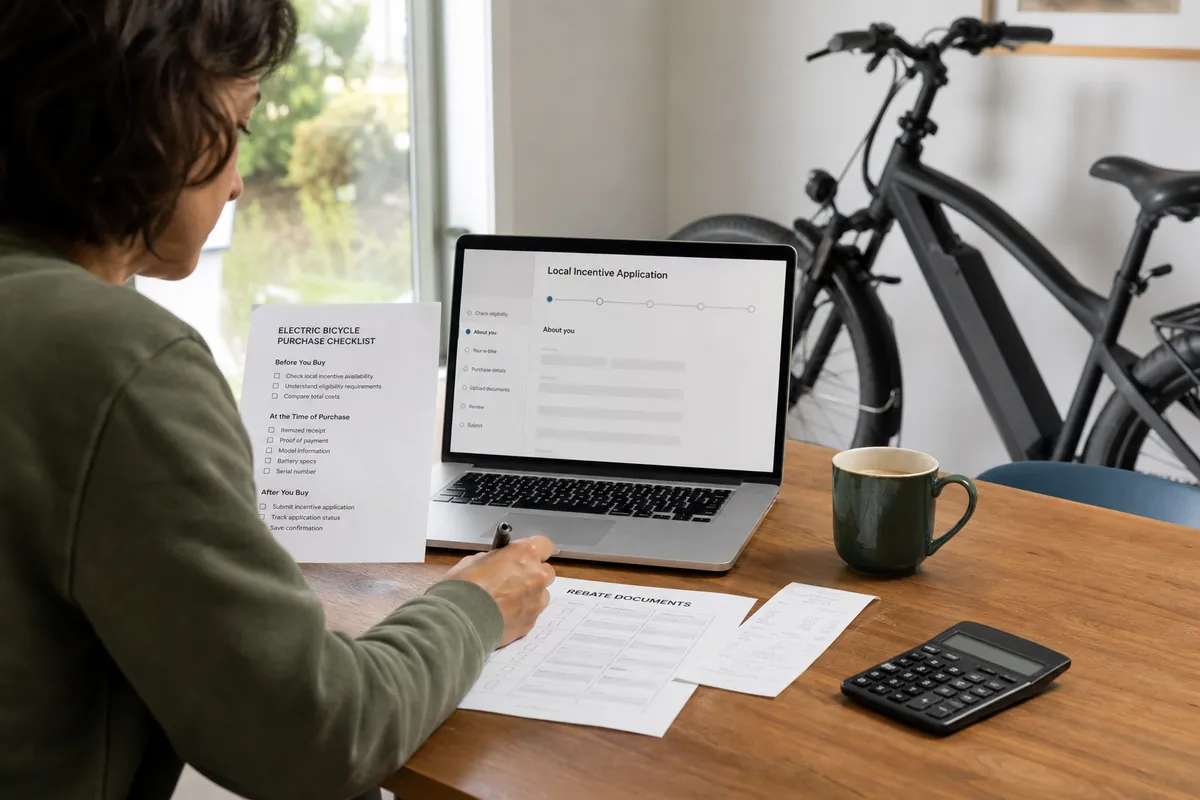
People use “rebate” loosely, but e-bike incentives usually fall into a few different buckets. The label matters because it changes when you get the money and what paperwork you need.
| Incentive type | How it usually works | What to watch for |
|---|---|---|
| Point-of-sale rebate or voucher | You apply first, receive approval, then the discount is applied by a participating shop. | Do not buy early unless the rules clearly allow it. |
| Post-purchase rebate | You buy an eligible e-bike, submit proof, and wait for reimbursement. | Funds can run out, and missing receipts may sink the claim. |
| Tax credit | You claim the credit later through a tax return or state tax process. | A credit is not the same as cash at checkout. |
| Utility or employer benefit | A local utility, workplace, or commuter program helps pay part of the cost. | Rules may be hidden in benefits portals or seasonal promotions. |
For a normal bicycle-style e-bike, do not assume a federal clean vehicle credit applies. Vehicle credits have specific definitions, forms, and eligibility rules, and they are not a universal e-bike rebate. Most shoppers should start with local and regional programs first.
Before you pick a model, use our e-bike buying tips to narrow down the type of bike you actually need. A rebate on the wrong bike is still an expensive mistake.
The strongest e-bike rebate programs are often local. That can be annoying, but it is also where the best savings tend to show up. City climate offices, state energy departments, air-quality agencies, utilities, and transit groups may all use e-bike incentives to reduce car trips and transportation costs.
Start with these searches:
Official pages are the safest source. A local roundup can help you discover a program, but the program page should be the source of truth for application dates, funding status, eligible bikes, required documents, and participating retailers.
Trust check: Rebate pages go stale fast. Before buying, confirm the application window, funding status, eligible bike classes, retailer list, and receipt rules on the official program page, not from a social post or old article.
Most rebate denials are boring: wrong location, wrong income bracket, wrong retailer, wrong bike class, or purchase made too early. That is why the eligibility check belongs before the test ride.
Look for these details on the official page:
Class rules matter. Some programs cover standard pedal-assist e-bikes, some include throttle bikes, and some exclude vehicles that behave more like mopeds or motor-driven cycles. If the line feels blurry, read the program’s own definitions and compare them with local riding rules. Our guide to motorized bike road legality can help you think through the difference between bicycle-style e-bikes and higher-powered machines.
The safest process is simple: verify, apply, wait, buy, document. Skipping one step can cost more than the rebate was worth.
Some programs open for a short window and close when funds are claimed. Others use a lottery, monthly release, or waitlist. If the page says applications open at a specific time, assume demand may be high and have your documents ready before the window opens.
This is the big one. A voucher program may require approval before purchase. A post-purchase rebate may allow a receipt from a certain date range. A tax credit may depend on when the bike was placed in service. Do not buy first and hope the paperwork catches up unless the program clearly says that is allowed.
Make sure the bike matches the program’s class, motor, battery, price, and retailer rules. If you are shopping on a tight budget, compare the final out-of-pocket cost against models in our best electric bikes under $2,000 guide. A lower sticker price plus no rebate can sometimes beat a pricier bike with a modest incentive.
Save the application confirmation, approval email, receipt, serial number, retailer invoice, and any screenshots showing the program terms at the time you applied. If the program asks for proof later, you want one clean folder, not a scavenger hunt through email.
Practical callout: Ask the shop to confirm rebate eligibility in writing before checkout. A good dealer should be able to tell you whether the bike, battery, accessories, and final invoice format match the local program rules.
Rebate amounts vary widely. Some local programs offer a modest discount, while stronger income-qualified or cargo-bike programs can be worth much more. The exact amount depends on where you live, whether funding is still available, whether you meet income rules, and whether your chosen bike fits the program definition.
That range is why the right question is not “What is the biggest rebate anywhere?” It is “What can I actually use where I live, on the bike I would buy anyway?”
Run the numbers like this:
Also check whether accessories count. Some incentive programs include safety gear or practical add-ons, while others only discount the e-bike itself. If a program covers a lock, helmet, fenders, lights, or rack, that can change the real value of the incentive.
Most public e-bike rebate programs focus on new bikes from participating retailers. Used e-bikes are harder to verify, and programs often want dealer invoices, warranty support, and eligible battery documentation.
That does not mean used is a bad path. It means you should compare the savings honestly. A used e-bike with a healthy battery can still be cheaper than a new bike after rebate, especially if the new-bike program is small or hard to qualify for. If you are considering that route, use our used e-bike buying checklist before you hand over money.
Battery condition is the swing factor. A bargain used e-bike can become expensive fast if the battery needs replacement. That is especially true when the brand is out of business or the battery format is hard to source.
The easiest way to lose a rebate is to treat it like a coupon code. It is usually closer to a small grant with rules attached.
Wait if a strong local program is opening soon, you qualify, and your current transportation situation is flexible. A few weeks of patience can be worth real money when the incentive is clear and the bike you want is likely to qualify.
Buy now if the program is closed, you do not qualify, or the rebate would push you toward a worse bike. A reliable, well-fitted e-bike that you will actually ride beats a discounted bike that is too heavy, too large, or poorly supported.
The cleanest compromise is to build a shortlist first. Pick two or three bikes that fit your commute, storage, terrain, and budget. Then check which of those bikes qualify for local incentives. That keeps the rebate in its proper place: a savings tool, not the whole decision.
A good e-bike rebate can make everyday transportation cheaper, but the real win is buying the right bike at the right final price. Start local, verify the rules, and keep your paperwork tight. If the incentive works, great. If it does not, you will still have a smarter buying plan.