The typical ebike cost per mile is about $0.25 to $0.40 when you include the bike, battery wear, maintenance, and electricity. The electricity alone is usually less than one cent per mile, so the real cost is not charging. It is the purchase price, battery replacement, tires, brake pads, and how many miles you actually ride.
For most riders, an ebike costs roughly 25 to 40 cents per mile over several years of ownership. A careful budget rider on a reliable bike can land closer to 15 to 25 cents per mile, while a premium bike ridden lightly can cost much more because the purchase price is spread over fewer miles.
Charging is the cheap part: a common 500 to 750Wh battery often costs only about 10 to 20 cents to fully charge, depending on your local electricity rate.
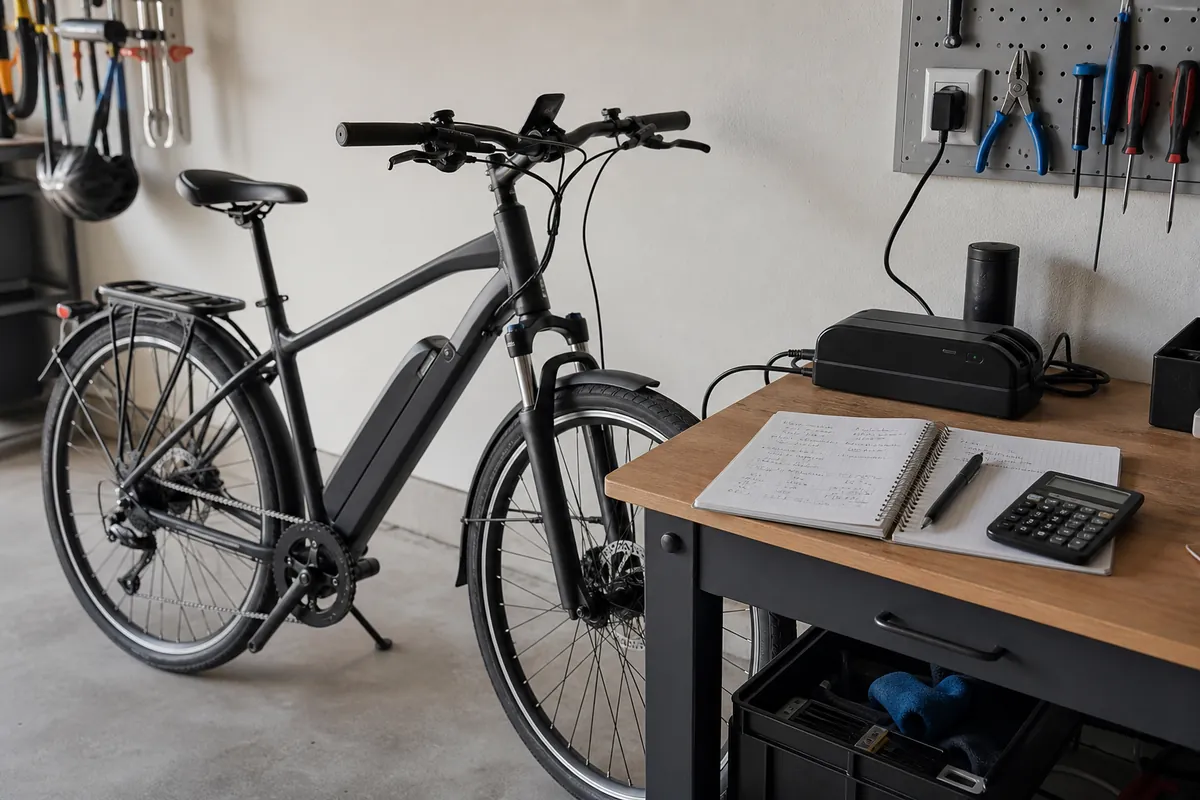
If you are comparing an ebike with a car, scooter, bus pass, or a regular bike, the fair way to do the math is simple: divide every ownership cost by the miles you expect to ride. That includes the bike, expected battery life, routine wear parts, and charging. Once you do that, an ebike usually looks inexpensive for short trips, errands, and commuting, but not free.
An ebike is cheapest when you ride it often, maintain the battery well, and buy a bike that fits your actual routes instead of overbuying power, range, or cargo capacity you rarely use.
Here is a realistic ownership-cost model for a commuter-style ebike. Your numbers will move up or down, but the categories stay the same.
| Cost category | Example assumption | Estimated cost per mile |
|---|---|---|
| Electricity | 500 to 750Wh battery, partial real-world efficiency loss | Under $0.01 |
| Bike purchase | $1,500 bike used for 6,000 to 10,000 miles | $0.15 to $0.25 |
| Battery replacement allowance | $400 to $800 replacement spread over years of riding | $0.04 to $0.10 |
| Tires, tubes, brake pads, chain, adjustments | Routine wear for a heavier, faster bicycle | $0.03 to $0.08 |
| Total practical estimate | Normal ownership, not counting insurance or financing | $0.25 to $0.40 |
The biggest swing factor is mileage. A $1,500 ebike ridden 8,000 miles has a purchase-cost component of about 19 cents per mile. The same bike ridden only 1,500 miles costs $1 per mile before you add a single brake pad or battery cell. The bike gets cheaper every time it replaces a real trip.
Charging cost is the easiest part to calculate. Use this formula:
Battery watt-hours ÷ 1,000 × electricity rate ÷ real-world miles per charge = charging cost per mile.
For example, a 672Wh battery is 0.672 kWh. At $0.17 per kWh, a full charge costs about $0.11 before charging losses. If that charge gives you 35 miles of real riding, the electricity cost is roughly three-tenths of a cent per mile. Even if your electricity is expensive or your range is lower, charging usually remains a tiny part of the total.
Battery care matters more than the power bill. If you want the pack to last, follow sane charging habits, avoid unnecessary heat, and read up on e-bike battery maintenance before you treat the battery like a disposable accessory.
The clean spreadsheet answer is useful, but riding conditions decide the final number. Hills, heavy cargo, cold weather, rough pavement, and high assist levels all reduce range and wear parts faster. A light rider cruising flat bike paths on eco mode pays less per mile than a heavy rider climbing hills with full assist every day.
A budget ebike can be cheap per mile if it is reliable and repairable. A bargain bike that needs hard-to-find parts can become expensive quickly. If your goal is saving money, shop for a sensible battery size, standard components, and local serviceability before chasing the lowest sticker price. MBHQ's guide to the best electric bikes under $2,000 is a useful starting point for that kind of value-focused comparison.
An ebike battery is a long-term wear item, not a lifetime part. Replacement cost varies by brand, voltage, capacity, case style, and whether the pack is proprietary. If you are buying used, battery age can matter more than odometer mileage. A cheap used bike with a tired pack may need a major spend almost immediately, which is why a used e-bike buying checklist should always include battery condition, charger condition, and replacement availability.
Ebike maintenance is still bicycle maintenance, just with more weight and often higher average speed. Expect brake pads, tires, tubes, chains, cassettes, and periodic adjustments. Heavy cargo bikes, fast commuter models, and daily rain riding can all push maintenance higher. Brake pads are especially worth budgeting for because stopping a heavier bike safely is not the place to save a few dollars.
If you want a fast personal estimate, use three buckets: purchase price divided by expected miles, battery replacement divided by expected miles, and $0.05 per mile for maintenance. Then add electricity as a rounding error unless your local power rate is unusually high.
Here are three simple scenarios to show why mileage matters so much.
Say you buy a $1,800 ebike and ride 500 miles per year for four years. That is 2,000 miles. The bike purchase alone is $0.90 per mile. Add maintenance and battery aging, and the real cost can climb above $1 per mile. That may still be worth it for fun, health, or mobility, but it is not the cheapest version of ebike ownership.
A rider who buys a $1,500 ebike and rides 2,000 miles per year for four years spreads the purchase over 8,000 miles. That is about $0.19 per mile for the bike. Add battery allowance, maintenance, and charging, and the total often lands around $0.30 to $0.40 per mile. If those miles replace car trips, parking, fuel, or ride-hailing, the savings can be meaningful.
A reliable ebike used for commuting, groceries, errands, and weekend rides can get very cheap per useful trip. If the bike is ridden 12,000 miles over its ownership life, even a $2,400 purchase price is only $0.20 per mile before maintenance and battery allowance. This is where an ebike shines: not because charging is cheap, but because one vehicle can replace a surprising number of short car trips.
An ebike is usually far cheaper than a car on short local trips, especially when parking, fuel, depreciation, registration, insurance, and repairs are part of the comparison. The exact car number depends heavily on the vehicle, but the direction is clear: cars are expensive because they carry a lot of fixed costs even when the trip is only two miles.
That does not mean an ebike replaces every car. Weather, passengers, cargo, distance, safety, and local roads all matter. But if you can replace even a portion of local errands or commuting miles, the savings stack up. Riders who choose the right electric bike for their route are more likely to keep using it, which is the part that actually lowers cost per mile.
The best way to lower your number is not complicated: ride more useful miles on a bike that does not constantly need specialty parts. Choose enough battery for your real route, not the biggest battery on the spec sheet. Buy from a brand or shop with parts support. Keep tires inflated, brakes adjusted, drivetrain clean, and battery storage sane.
Also be honest about the trips you will actually take. A commuter who rides three days a week may save more than a weekend rider with a more expensive bike. A cargo-capable model can make sense if it replaces shopping trips, but it may be overkill if you mostly ride solo on flat paths. Cost per mile rewards fit, consistency, and repairability.
A good ebike cost per mile is usually under $0.40 for regular riders and can be lower if you buy carefully, ride often, and avoid premature battery replacement. Electricity is almost never the dealbreaker. The real money is in the bike you choose, how long the battery lasts, and whether the ebike replaces trips you would otherwise make by car, rideshare, or transit.
If you are buying mainly to save money, treat the purchase like a transportation tool: estimate your yearly miles, price the battery, check repair support, and choose the simplest bike that can handle your routes. That is how an ebike moves from a fun gadget to a genuinely low-cost way to get around.