Do motorized bicycles need a license? In the United States, the practical answer is: sometimes, and it depends heavily on what your state means by “motorized bicycle.” A low-speed electric bike that fits your state’s e-bike class rules often does not need a driver’s license, while a gas-powered motorized bicycle, moped-style bike, or faster modified bike may require a license, registration, plate, insurance, or all of the above.
Most riders should treat the license question as a classification problem, not a bike-name problem. If your bike is legally an e-bike, licensing is often lighter. If it is legally a moped, motor-driven cycle, motorcycle, or state-defined motorized bicycle, a regular driver’s license, moped permit, motorcycle endorsement, registration, or license plate may be required.
The safest move is to check your state DMV or motor vehicle agency before riding on public roads, especially if the bike has a gas engine, can move without pedaling, exceeds normal e-bike speed limits, or has been modified.
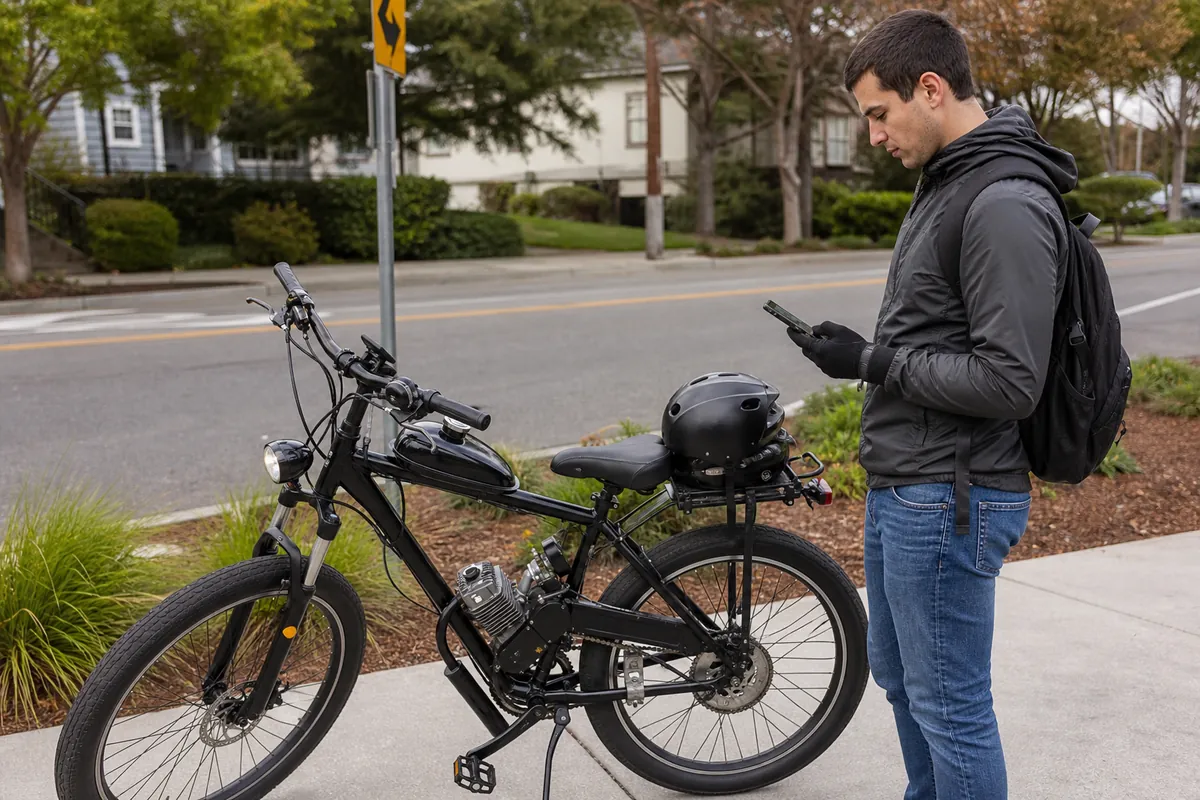
No, there is no single nationwide rule that answers the question for every motorized bicycle. Federal rules may define certain low-speed electric bicycles for product-safety purposes, but road use, licensing, registration, age limits, helmet rules, and where you can ride are usually handled by state and local law.
That means two bikes that look similar can land in very different legal buckets. One may be treated like a bicycle because it fits a three-class e-bike system. Another may be treated like a moped because it has a combustion engine, higher assisted speed, no functional pedals, or a throttle setup that falls outside the local e-bike definition.
For a deeper rider-focused companion piece, see can you ride a motorized bicycle without a license. If your main concern is road access rather than paperwork, can you drive a motorized bike on the road is the next question to answer.
“Motorized bicycle” is not a universal legal label. In one state it may mean a moped-like vehicle with a license plate. In another, riders may casually use the phrase for an e-bike, a gas kit bike, or a bicycle with an add-on motor. The legal category matters more than the everyday name.
States draw their lines around details such as motor type, engine size, motor wattage, maximum speed, throttle operation, pedal function, and whether the vehicle meets equipment requirements for public roads. Local governments may add another layer for bike paths, parks, trails, sidewalks, and downtown zones.
For example, California DMV materials treat mopeds and motorized bicycles as vehicles that can require DMV paperwork and a special plate, while Ohio law includes specific motorized bicycle license rules for some riders. Those examples are useful because they show the pattern: the label is local, and the requirements follow the label.
If you are comparing an e-bike to a moped-style vehicle, read e-bike vs moped before assuming the rules are interchangeable. An electric bicycle that fits a state e-bike class is often regulated differently from a moped, even when both have motors and pedals.
| Vehicle type | License usually needed? | What to check |
|---|---|---|
| Class 1 or Class 2 e-bike | Often no driver’s license, if it fits state e-bike rules | Motor wattage, assisted speed, throttle rules, rider age, helmet rules, and path access |
| Class 3 e-bike | Often no motorcycle license, but some states add age, helmet, or road-use limits | Top assisted speed, speedometer rules, helmet requirements, and where Class 3 bikes are allowed |
| Gas motorized bicycle | More likely to require a license, permit, registration, plate, or insurance | Engine displacement, maximum speed, pedals, lights, mirrors, registration, and moped classification |
| Modified e-bike or high-speed build | May lose e-bike status and trigger moped or motorcycle rules | Unlocked speed, motor output, throttle-only speed, equipment compliance, and local enforcement |
Start with the actual machine, not the seller’s headline. Product listings often use broad words like “motorized,” “moped-style,” “street legal,” or “electric bike” in ways that do not match your state code. A clean legal check starts with the bike’s measurable specs.
Write down whether the bike is electric or gas-powered, the motor wattage or engine size, the maximum assisted speed, and whether it can move under motor power without pedaling. These details usually decide whether the bike is treated as an e-bike, moped, motorized bicycle, motor-driven cycle, or motorcycle.
Functional pedals can help a vehicle qualify as an e-bike or motorized bicycle in some places, but pedals alone are not enough. A bike with pedals can still be regulated like a moped if the motor, speed, or equipment pushes it into that category.
If your state requires a license plate, registration card, insurance card, or moped permit, the license question is usually already leaning toward motor-vehicle treatment. Some states also require a regular driver’s license, while others offer a specific moped or motorized bicycle license.
State pages are the most useful when they match your exact location. For example, MBHQ’s Nevada motorized bicycle laws guide is a better starting point for a Reno rider than a generic national summary.
Before using a motorized bicycle on public roads, check three things: your state DMV classification, your city or county road/path rules, and your bike’s actual specs. If any of those are unclear, assume the rules may be stricter until you verify them.
A license requirement becomes more likely when the bike looks less like a conventional bicycle under the law and more like a moped or small motorcycle. Gas engines are a common trigger, but they are not the only one.
You should be especially cautious if the bike:
The phrase “street legal” deserves special caution. It may mean the bike has lights and mirrors, or it may simply be marketing language. Street legal in one state does not automatically mean license-free in another.
You usually have the strongest license-free argument when the bike is a standard, unmodified e-bike that fits your state’s e-bike definition. Many states use Class 1, Class 2, and Class 3 categories, with rules based on pedal assist, throttle operation, and assisted speed.
Even then, “no license” does not mean “no rules.” A state may still set age limits, helmet requirements, equipment requirements, trail restrictions, passenger rules, or local access limits. Class 3 e-bikes can face tighter rules than Class 1 or Class 2 bikes because they assist at higher speeds.
Motorized bicycle kits are where riders get into trouble quickly. A regular bicycle with an add-on gas kit may no longer be treated like a bicycle once the motor is installed. Depending on the kit and the state, it may become a motorized bicycle, moped, motor-driven cycle, or an unregistered motor vehicle that is not legal for road use.
Electric conversion kits can be cleaner legally when they stay within e-bike class limits, but the same warning applies: a powerful kit, unlocked controller, or throttle setup can push the finished bike outside ordinary e-bike treatment. The finished build is what matters, not the box the kit arrived in.
If your state classifies the bike as an e-bike, insurance and registration are often not required. If the state classifies it as a moped or motorized bicycle, registration, a plate, and insurance may come into play. Some states require the rider to carry proof of insurance or registration while operating the vehicle on public roads.
This is why the license question should not be checked alone. A rider may have a valid driver’s license but still be illegal because the bike is unregistered, uninsured, missing required equipment, or not allowed on the road at all.
Use this sequence before riding a motorized bicycle in traffic:
If the answer is still unclear after that, contact the DMV, local police non-emergency line, or a qualified traffic attorney in your state. That is not overkill; it is cheaper than buying the wrong vehicle or getting cited after the fact.
Motorized bicycles do not all follow one license rule. A normal, state-compliant e-bike often does not require a driver’s license, but gas-powered bikes, faster builds, moped-style vehicles, and modified e-bikes may. The right answer comes from your state’s vehicle classification, your bike’s real specs, and the roads or paths where you plan to ride.
Before you ride, verify the category first. Once you know whether your machine is legally an e-bike, motorized bicycle, moped, or motorcycle, the license, registration, insurance, and road-access rules become much easier to sort out.