Fat tire eBike vs regular eBike is mostly a question of terrain, comfort, weight, efficiency, and storage. A fat tire eBike can feel stable and forgiving on rough surfaces, while a regular eBike is usually lighter, more efficient, easier to store, and better for everyday pavement riding.
Quick answer: Choose a fat tire eBike if you ride sand, snow, gravel, rough paths, loose shoulders, or want a very planted feel. Choose a regular eBike if you mostly ride pavement, commute, lift the bike often, need better range efficiency, or want easier storage and transport.
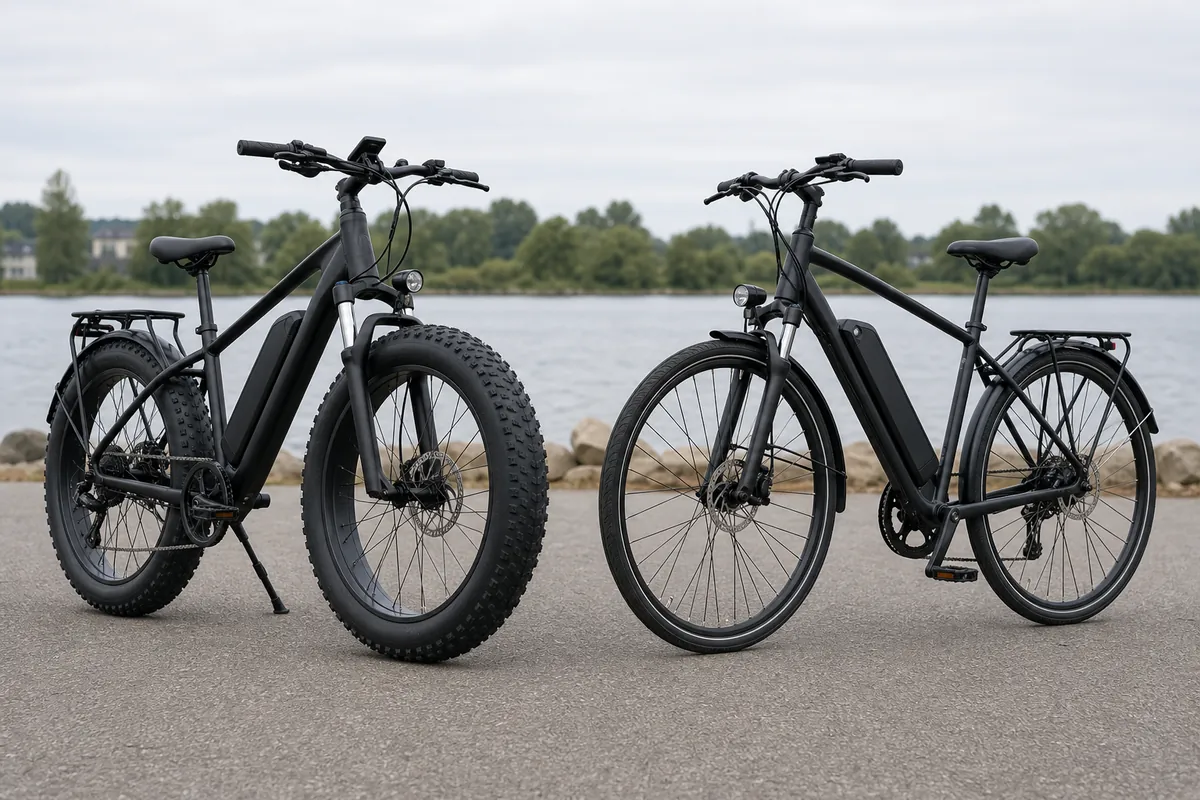
The better bike is the one that matches your normal rides. Fat tires look capable, but regular tires often make more sense if most of your miles are on roads, bike paths, and errands.
A fat tire eBike uses extra-wide tires, often built for more float, grip, and comfort on loose or uneven surfaces. A regular eBike uses narrower tires that roll more efficiently on pavement and usually make the bike easier to handle, carry, and store.
Neither style is automatically better. Fat tires can make rough paths feel less harsh, but they add weight and rolling resistance. Regular eBikes can feel quicker and more practical for daily use, but they may feel less forgiving on sand, snow, gravel, or broken pavement. If you are still comparing broad electric bike categories, our guide to the best electric bikes can help frame the bigger picture.
| Category | Fat tire eBike | Regular eBike |
|---|---|---|
| Best terrain | Loose gravel, dirt, sand, snow, rough paths | Pavement, bike lanes, paths, commuting, errands |
| Ride feel | Stable, cushioned, planted | Lighter, quicker, more efficient |
| Weight | Usually heavier | Usually lighter |
| Range efficiency | Can use more battery from tire drag and weight | Often more efficient on pavement |
| Storage and transport | Bulkier and harder to lift | Easier to store, rack, and maneuver |
| Best buyer | Rough-terrain rider or comfort-first cruiser | Commuter, city rider, path rider, or practical errand rider |
A fat tire eBike makes sense when traction, stability, and comfort matter more than low weight or maximum efficiency. The wide tires can help the bike feel more confident on surfaces that might make a narrower tire twitchy.
That can be useful if your rides include gravel roads, sandy shoulders, packed dirt, snow, rough campground paths, or uneven rural routes. Fat tires can also feel reassuring for riders who prefer a planted ride instead of a sharper, more road-bike-like feel.
A regular eBike is often the better fit for commuting, city riding, bike paths, fitness rides, and errands. Narrower tires usually roll easier, which can help range and make the bike feel more responsive.
Regular eBikes also tend to be more practical if you need to carry the bike up steps, lift it onto a rack, fit it in a tight garage, or maneuver through apartment storage. If you plan to transport your bike often, check whether your car rack can carry an e-bike before choosing a heavy fat tire model.
Practical test: picture your actual riding week. If 80% of your miles are pavement, errands, and bike lanes, a regular eBike is probably the cleaner choice. If rough surfaces show up often, fat tires start to earn their weight.
Fat tire eBikes often need more energy to keep rolling, especially on pavement. The tires are wider, the bike is often heavier, and the riding style may invite more throttle or higher assist use. That does not make them bad; it just means range estimates deserve extra caution.
A regular eBike may go farther on the same battery when the route is mostly smooth pavement. Motor type also matters. A stronger motor can help a heavy fat tire bike feel lively, but power alone does not fix weight, tire drag, or poor fit. For more context, read electric bike motors explained.
Fat tires can feel comfortable because they hold more air volume. They can absorb chatter from rough pavement, dirt roads, and small bumps. Some riders also like the stable feel when starting, stopping, or cruising at lower speeds.
Regular eBikes can feel more precise. They often steer quicker and feel less sluggish on pavement. For daily riding, that lighter feel can matter more than extra cushion. Comfort is not only about softness; it is also about control, fit, and confidence.
For commuting, a regular eBike usually has the edge unless your route is unusually rough. It is easier to lock, easier to store, and often more efficient over repeat miles. Fenders, lights, rack mounts, and a comfortable riding position matter more than tire width for many commuters.
Fat tire eBikes can still work for commuting, especially if your roads are broken, snowy, sandy, or mixed with dirt shortcuts. Just be honest about weight and storage. A bike that feels fun on a test ride can become annoying if you lift it every morning.
Fat tire eBikes are not always more expensive, but the full ownership cost can be different. Larger tires, tubes, fenders, racks, and transport solutions may cost more or be harder to source. The added weight can also increase brake and tire wear depending on how and where you ride.
Regular eBikes often have more common tire sizes and simpler accessory fitment. That can make maintenance easier. Before buying either style, use a practical checklist like our e-bike buying tips guide so you compare brakes, battery support, frame fit, warranty, and service access—not just tire width.
Choose a fat tire eBike if you want extra stability, ride rough or loose surfaces often, value comfort over efficiency, and have enough storage space for a larger bike. It is the better choice when terrain is the problem you are trying to solve.
Choose a regular eBike if you want a practical everyday ride for pavement, commuting, errands, and easier storage. It is usually the smarter choice when efficiency, weight, handling, and daily convenience matter most.
If you are shopping, compare both styles with the same questions: Where will you ride most often? How much will you lift the bike? How important is range? Can you store it securely? Are replacement tires and service easy to find?
In a fat tire eBike vs regular eBike comparison, the fat tire model wins on rough-surface confidence, cushion, and planted feel. The regular eBike wins on pavement efficiency, easier storage, lighter handling, and everyday practicality.
The best choice is not the most rugged-looking bike. It is the one that fits your terrain, storage, commute, range needs, and comfort expectations. Match the tire to your real rides, and the decision gets much easier.
* We may earn a commission when you buy through our links.