E-bike cargo capacity is not just one number. In practice, you need to separate the bike’s total payload limit from the rear-rack limit and from any passenger-kit limit that applies to your specific model. If you only look at the biggest number in the marketing copy, it is easy to overload the wrong part of the bike even when the total setup still sounds reasonable.
If you are still deciding which features matter most before purchase, start with our e-bike buying tips guide. Cargo use changes what counts as a good fit.
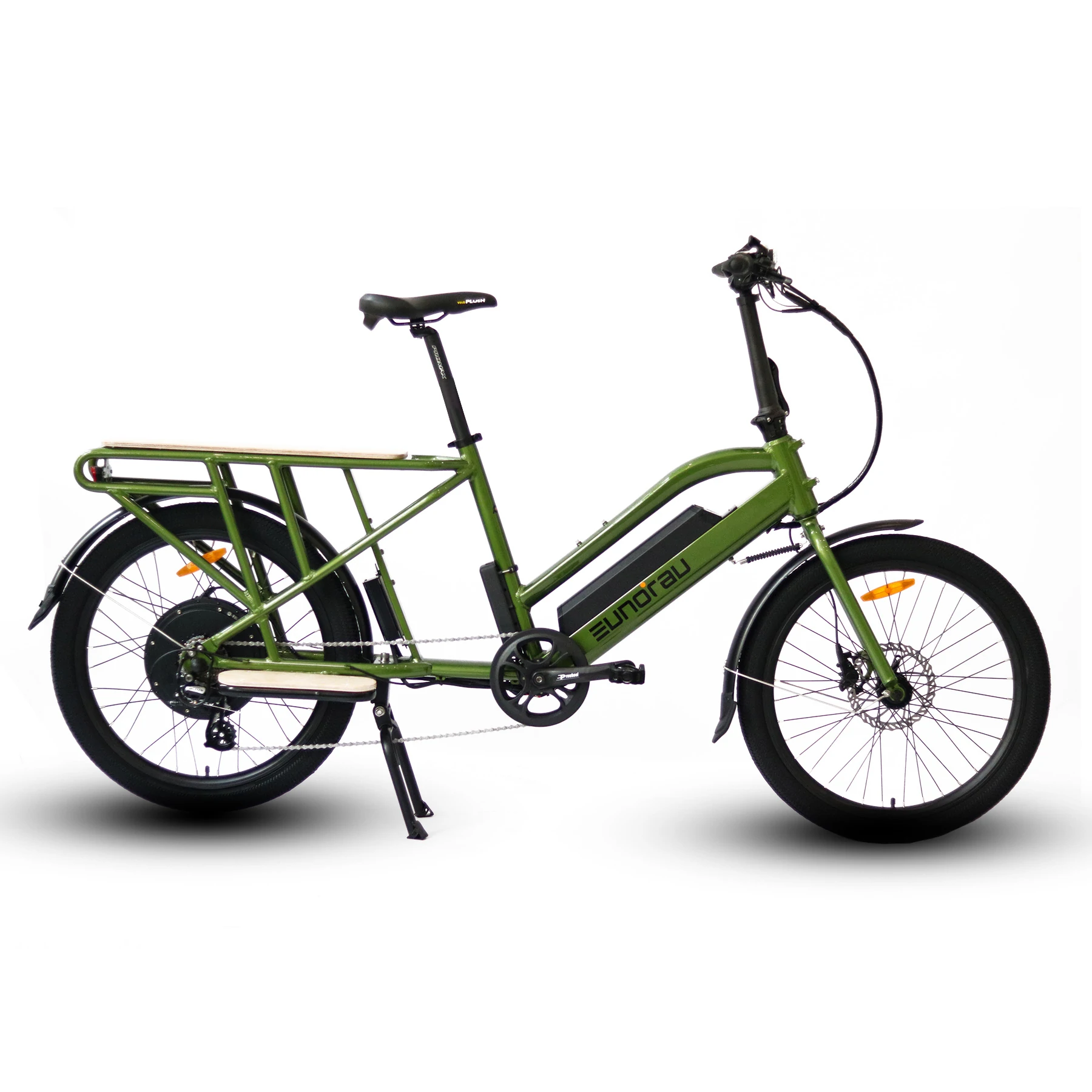
Many riders see one payload number and assume it covers every use case on the bike. That is where trouble starts. A bike can have a published total payload limit, but the rear rack, front rack, or passenger hardware may each carry lower limits. That means a setup can be fine overall and still overload the exact place where the cargo is mounted.
That distinction matters most on utility bikes, long-tail family bikes, and commuter bikes that carry groceries, work gear, or child seats. The safe question is not only “How much weight can this e-bike carry?” It is also “Where is that weight going?”
| Term | What it usually means | Why it matters |
|---|---|---|
| Total payload capacity | Combined rider, cargo, and accessories the bike is designed to support. | This is the broad top-level ceiling, not a green light to load one attachment however you want. |
| Rear-rack limit | Maximum load intended for the rack itself. | Rack capacity can be lower than total payload, so rack-mounted cargo may hit its limit first. |
| Passenger-kit or child-carrying limit | Model-specific limit for carrying another person or approved child setup. | Passenger use is not just “cargo with a seat.” It usually has its own hardware and rules. |
Ride1Up’s support documentation is a good example of why these numbers should be separated. It lists total bike weight capacities by model and also publishes separate rack and passenger-related limits for certain accessories and platforms. That is the pattern to look for: model-specific documentation, not a vague assumption that every part of the bike shares the same capacity.
The safest cargo checklist is simple:
This is especially important when buying used. A bike might look like a cargo-ready model because it has a rack and accessories attached, but that does not prove the setup is still within the original design intent. If you are shopping secondhand, our used e-bike buying checklist can help you inspect the parts that matter before you trust the bike for heavier loads.
Some riders are trying to turn a standard commuter e-bike into a grocery hauler, school-dropoff bike, or workhorse. Sometimes that works. Sometimes it is the wrong tool. If the job involves regular heavy bags, a child seat, or frequent rear-rack use, a purpose-built cargo or utility bike is usually easier to live with than a standard commuter with a few add-ons.
The point is not that every rider needs a cargo e-bike. The point is that cargo use should be treated as a primary buying requirement, not a small bonus. If carrying load is part of the bike’s core job, capacity and rack design belong near the top of your decision list.
E-bike cargo capacity means more than one published number. The safe way to read it is to separate total payload from rack-specific and passenger-specific limits, then verify the exact limits for your model before you load the bike. That approach is slower than guessing, but it is also how you avoid turning a useful utility setup into an expensive mistake.