Cold weather can reduce e-bike range because lithium-ion batteries deliver less usable performance in low temperatures. That does not automatically mean your battery is failing. In many cases, the practical fix is to start with a warmer battery, plan a shorter margin than you would on a mild day, and avoid leaving the battery in freezing conditions before the ride.
If you are already building a battery-care routine, our E-Bike Battery Maintenance Guide is the best place to start before you chase winter-specific fixes.
Bosch says cold weather reduces battery performance and recommends bringing the battery into a heated area before winter rides when temperatures fall below 32 °F (0 °C). That guidance matters because lower temperatures can make the battery feel weaker even when the bike and battery are otherwise healthy. The result is usually shorter practical range, not instant battery damage.
Cold weather range also depends on everything else that already affects range: support level, hills, rider weight, air resistance, and tire pressure. Bosch notes there is no single fixed answer for range because real-world conditions change from ride to ride. In winter, those variables stack on top of the temperature effect, which is why the same route can feel very different from one season to another.
| Checkpoint | What to do |
|---|---|
| Before leaving | Start with the battery indoors if possible instead of leaving it outside overnight. |
| Route margin | Plan a shorter effective range than you use in mild weather. |
| Assist strategy | Use higher assist only where it solves a real need, not as the default for the whole ride. |
| Mid-ride expectations | Expect the battery gauge to feel less forgiving in freezing conditions. |
| After the ride | Let the battery return to indoor temperature before charging. |
The easiest mistake is planning around your best summer ride and assuming winter will be close enough. A better approach is to treat cold days as lower-confidence range days. Shorter buffers, more hills, stronger headwinds, and higher assist can all pile onto the temperature penalty.
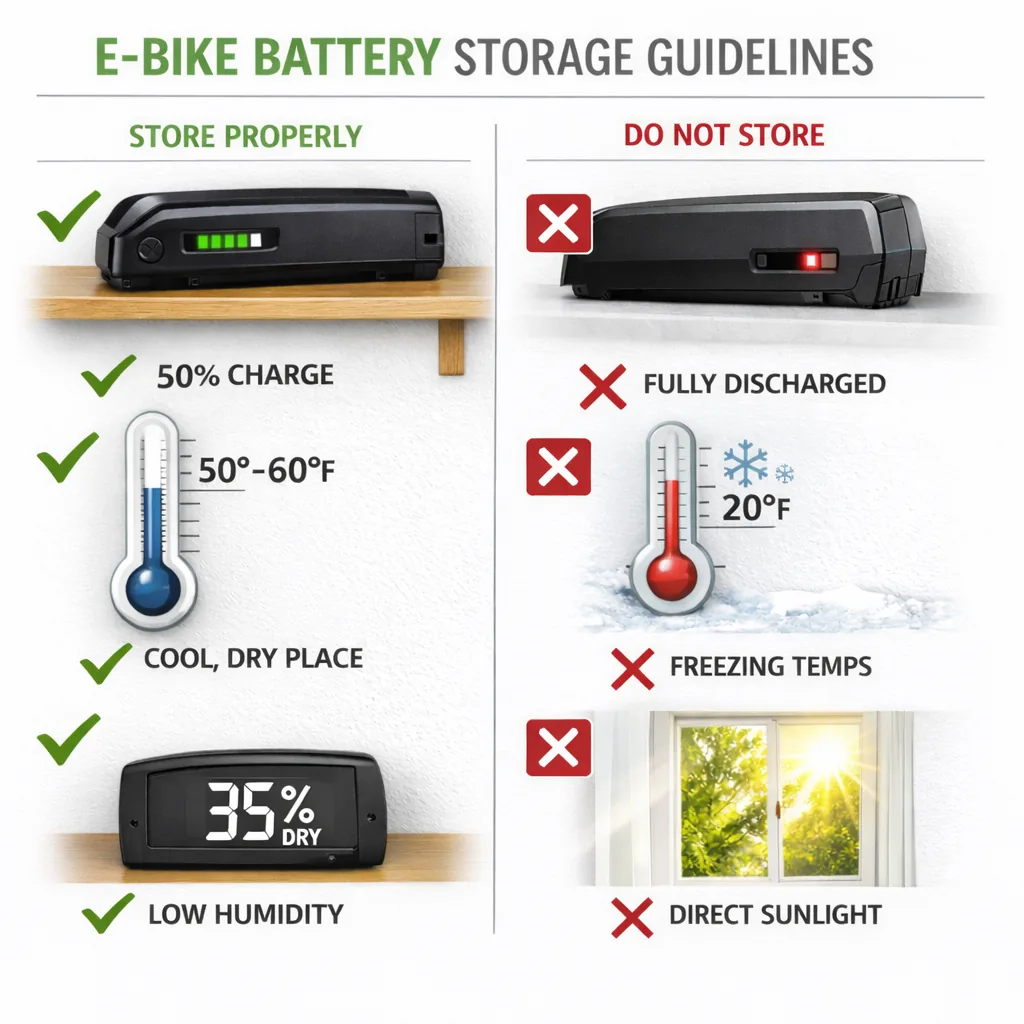
Winter range improves when the battery routine is boring and consistent. Bring the battery inside when the bike is parked, avoid direct heat, and wait until the battery has returned to a normal room temperature before charging. Bosch also recommends storing a battery at roughly 30 to 60 percent charge for longer periods and, for dry conditions, between 32 °F (0 °C) and 68 °F (20 °C).
That does not mean you need to obsess over every degree. It means winter storage and charging habits should be intentional instead of casual. Riders who leave the battery in a freezing garage, then expect normal range on the next ride, usually create the problem they are trying to solve.
If you also store the bike outdoors between rides, pair this with our guide on how to store an e-bike outside so cold-weather battery care and weather exposure do not work against each other.
Not every winter range complaint is caused by cold alone. If the battery is warm, the route is familiar, and the range is still much worse than expected, check the rest of the system. Low tire pressure, steep terrain, aggressive assist use, and an aging battery can all make winter range feel worse than it should.
That is also where rider expectations matter. Bosch notes that range can vary widely because it depends on several ride variables at once. Winter simply exposes those variables faster. If your winter range dropped a little, that is normal. If it collapsed in a way that does not fit the conditions, then it is time to inspect the setup instead of blaming the season by default.
E-bike range in cold weather usually drops because the battery cannot deliver the same practical performance it does in mild temperatures. The safest response is not panic and not guesswork. Start with a warmer battery, give yourself more ride margin, and use normal winter battery habits so range changes stay predictable instead of disruptive.