If you need to store an e-bike outside, the safest setup is simple: keep the bike under a fitted weather cover, lock the frame and wheels to something solid, bring the battery indoors, and check the bike after storms or long idle periods. Outside storage can work, but only if you treat weather, moisture, and theft as part of the storage plan instead of an afterthought.
Quick answer
For riders who are still deciding whether an outdoor routine will fit their ownership style, start with our e-bike buying tips guide so you can plan for removable batteries, rack mounts, and commuter-friendly accessories before you buy.
Outside storage makes the most sense when indoor space is limited but you still have a predictable storage spot, such as a covered patio, carport, fenced side yard, or apartment bike cage. The goal is not to make the bike weatherproof. The goal is to reduce repeated exposure to rain, sun, road grime, and opportunistic theft.
If your only option is an open, unsheltered corner of a yard with no anchor point and no way to remove the battery, that is a red flag. In that setup, the bike is exposed to the exact risks that shorten service life and create headaches later.
| What to check | What good looks like |
|---|---|
| Battery plan | Battery comes inside for storage and charging. |
| Weather cover | Cover fits the bike, sheds rain, and is secured against wind. |
| Locking point | Frame is locked to a fixed rack, post, or anchor that cannot be lifted over. |
| Ground moisture | Bike is not sitting in standing water or direct sprinkler spray. |
| Follow-up checks | You inspect brakes, chain, and connectors after storms or long idle stretches. |
The battery is usually the first thing to protect when an e-bike stays outside. Manufacturer guidance is broadly consistent on two points: batteries are happier indoors than in uncontrolled outdoor temperatures, and charging should happen after the battery has come back to normal room conditions. Bosch's winter eBike guidance also advises storing the battery indoors and charging lithium-ion cells at room temperature. That lines up with the practical advice in our e-bike battery maintenance guide, which is the best next read if your storage setup changes with the seasons.
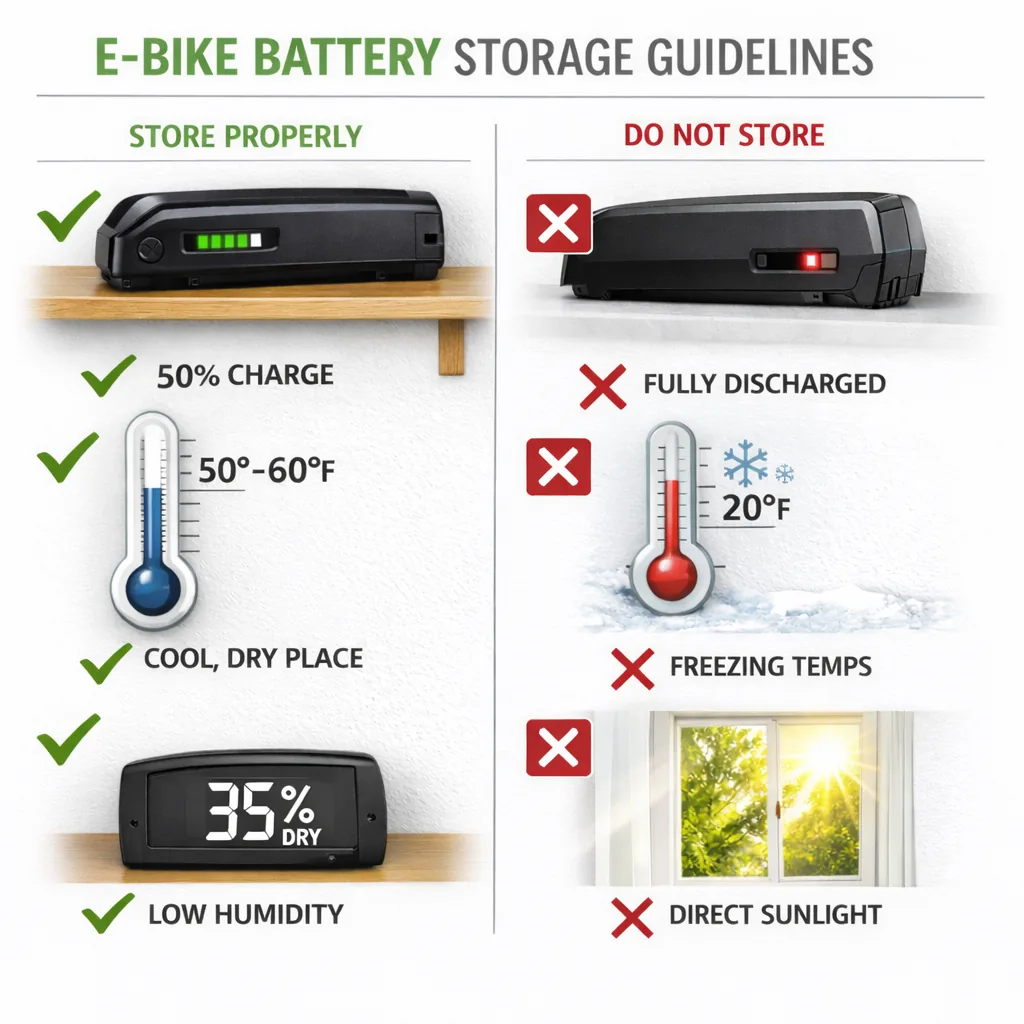
If you have to leave the bike outside overnight, removing the battery lowers both weather risk and theft risk. It also gives you a cleaner charging routine indoors instead of asking cold or damp equipment to do more than it should.
A fitted bike cover is better than a loose tarp because it stays put, sheds water more cleanly, and does not flap around every windy night. A cover should help with rain, dust, bird mess, and sun exposure, but it is not a license to ignore airflow. If moisture gets trapped for days, metal parts, fasteners, and connectors still lose.
The easiest win is to cover the bike only after it is reasonably dry and to uncover it long enough for a quick visual check whenever you ride. Outdoor storage works best when the cover is part of a routine, not a set-and-forget excuse.
Outside storage is also a security problem. The frame matters, but so do wheels, the saddle, removable accessories, and of course the battery. If your storage point is shared or visible from the street, build your routine around a sturdy anchor and a lock setup that slows a thief down instead of merely checking a box.
Our older guide on how to securely lock your bike is still useful here: lock the frame first, add wheel protection when practical, and avoid weak objects that can be cut, bent, or lifted over.
Even if the electrical system is designed for normal riding weather, long-term outdoor storage is rougher than a wet commute. Water that sits on chains, brake hardware, bolts, and charging contacts creates slow problems: rust, grime buildup, noisy drivetrains, and connectors that need attention right when you want to ride.
If the bike lives outside for days at a time, wipe down visible moisture after storms, keep the chain lubricated, and pay attention to how the cover is shedding water. A bike that stays clean enough to inspect is usually easier to keep reliable.
Outdoor storage is not a one-time decision. It is an ongoing maintenance loop. After heavy wind, rain, snow, or a week without riding, do a quick scan before the next trip: tire pressure, brake feel, chain condition, and whether the cover shifted or pooled water. Those checks are fast, and they catch the kinds of small problems that turn into expensive ones later.
You can store an e-bike outside, but the workable version is more controlled than casual. Bring the battery indoors, use a fitted cover, lock to something real, and inspect the bike often enough that moisture and theft risk do not compound quietly in the background. If your setup cannot support those basics, outdoor storage is possible in theory but weak in practice.