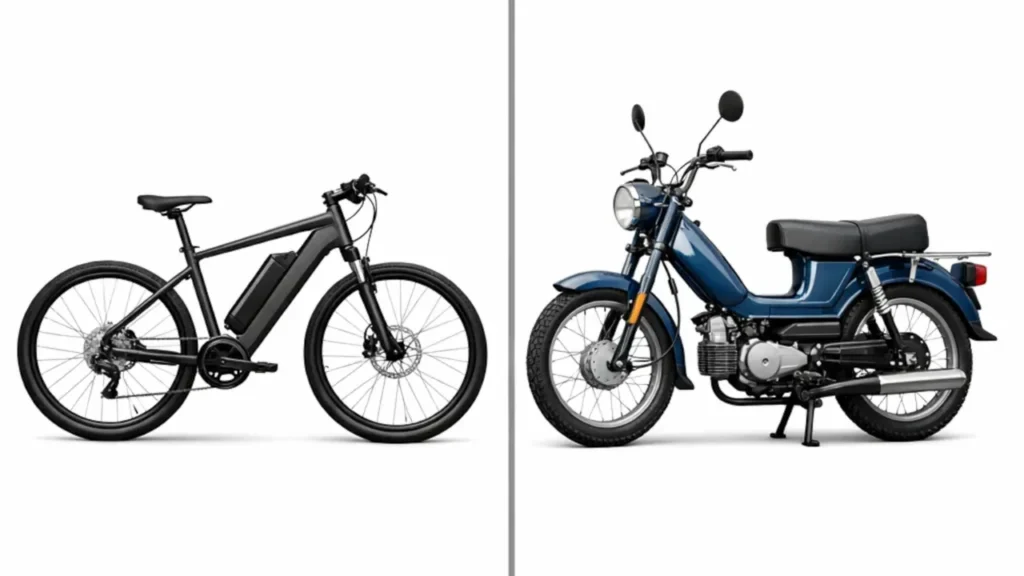
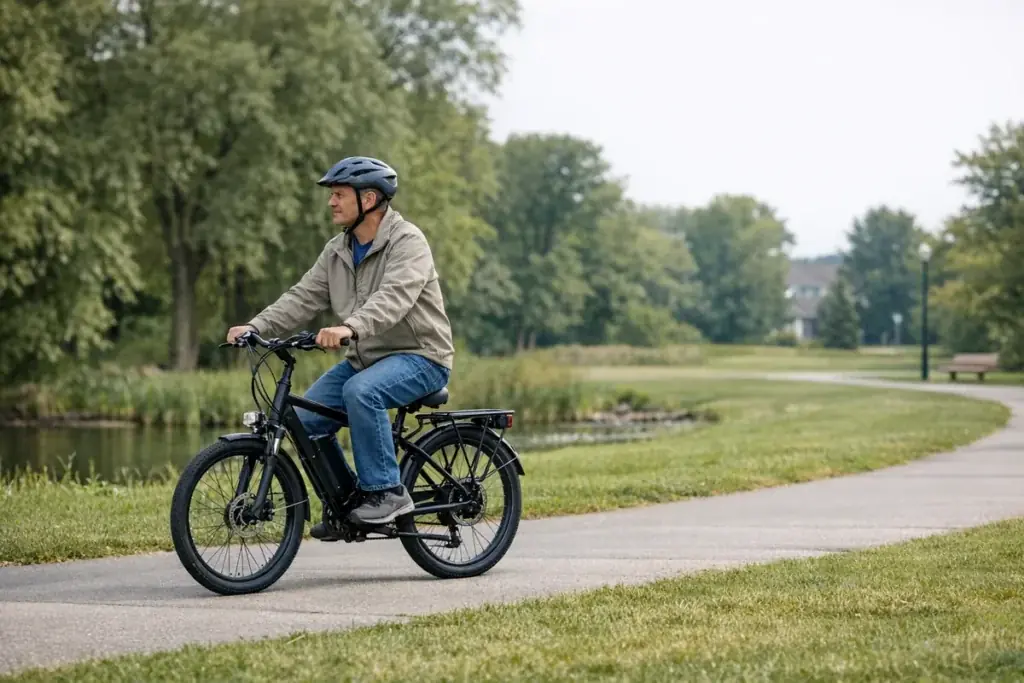
Motorized Bicycle Laws in New York split into two very different lanes. If your ride is a gas or scooter-style limited-use motorcycle (what most riders call a moped), New York classifies it by top speed into Class A, B, or C and requires DMV registration before it goes on public streets. If your ride is a true bicycle with electric assist, New York says it does not qualify for registration as a motorcycle, limited-use motorcycle, moped, or ATV, and the street/path rules become a separate e-bike question instead.
Note: This New York guide is based on current New York DMV, NYC DOT, and NYSDEC guidance linked below. It is informational only and not legal advice.
Last reviewed / source-checked: 2026-03-16
Local caveat: New York City, local municipalities, park systems, and DEC-managed lands can impose narrower operating rules than the statewide baseline.
Motorized Bicycle Laws in New York: quick answer
Mopeds / limited-use motorcycles: New York DMV treats these as Class A, B, or C limited-use motorcycles based on top speed.
License rule: Class A needs an M or MJ motorcycle license; Class B and Class C can be operated with any license class.
Registration rule: All three limited-use motorcycle classes must be registered before street or highway use.
Insurance rule: Required for Class A and Class B; only recommended for Class C except certain rental use.
Helmet / eye protection: Required for Class A and Class B; recommended rather than mandatory in DMV guidance for Class C.
E-bikes: A bicycle with electric assist cannot be registered as a motorcycle, limited-use motorcycle, moped, or ATV in New York.
Where e-bikes can ride: Statewide DMV guidance allows e-bikes on some streets and highways with posted speed limits of 30 mph or less, bars sidewalk riding unless local law allows it, and lets municipalities regulate time, place, and manner.
NYC caveat: NYC DOT publishes extra city-specific rules, including a 15 mph city-street speed cap for e-bikes and local bridge/bike-lane guidance.
Motorized Bicycle Laws in New York for mopeds and limited-use motorcycles
New York does not use one loose "motorized bike" category for gas scooters, mopeds, and faster small motorcycles. The DMV groups them as limited-use motorcycles and sorts them by certified top speed.
New York's three-class moped system is built around top speed
Class A: over 30 mph and up to 40 mph.
Class B: over 20 mph and up to 30 mph.
Class C: 20 mph or less.
That speed-based system is the core of Motorized Bicycle Laws in New York for non-e-bike riders. Before you assume two bikes share the same rules, confirm which limited-use class the manufacturer certified.
License, registration, and insurance change by limited-use class
Class A: requires an M or MJ motorcycle license, DMV registration, insurance, headlight use while operating, and helmet plus eye protection.
Class B: requires DMV registration, allows any license class, requires insurance, headlight use while operating, and helmet plus eye protection.
Class C: requires DMV registration, allows any license class, requires a headlight while operating, and treats helmet, eye protection, insurance, and inspection as recommended rather than fully mandatory in the DMV chart.
DMV also says only a certified model of limited-use motorcycle can be registered in New York, which matters if you are looking at an imported scooter, modified bike, or online marketplace build.
In New York, the first legal split is whether your ride is a DMV-registerable limited-use motorcycle or a non-registerable bicycle with electric assist.
Lane use also changes by class
Class A limited-use motorcycles can use any traffic lane. Class B and Class C are more restricted: DMV says they belong in the right-hand lane or on the shoulder, except when making a left turn. None of the limited-use motorcycle classes can be ridden on a sidewalk.
New York added a point-of-sale registration rule for dealer moped sales
DMV states that, as of January 7, 2025, all mopeds sold by a New York dealer must be registered at the time of sale. If you buy from outside New York, you still need to complete registration before riding on streets or highways.
Motorized Bicycle Laws in New York for e-bikes
New York separates e-bikes from the moped system. DMV says a bicycle with electric assist does not qualify for registration as a motorcycle, limited-use motorcycle, moped, or ATV, and it does not have the same equipment rules.
New York recognizes multiple e-bike classes, but the details matter
Class 1: pedal-assist only, assistance cuts out at 20 mph.
Class 2: throttle-capable, assistance cuts out at 20 mph.
Class 3: in a city with a population of one million or more, a higher-speed electric-assist category that DMV describes separately from classes 1 and 2.
That means the cleanest statewide answer is this: most New York e-bike questions start with class 1 or class 2, while the class 3 conversation is heavily tied to the New York City rule set.
E-bikes are not registered vehicles in New York
This is one of the clearest statewide distinctions. If your machine fits New York's bicycle-with-electric-assist definition, DMV says it cannot be registered as a motorcycle, limited-use motorcycle, moped, or ATV. That is a major legal difference from the Class A/B/C limited-use motorcycle lane.
Statewide street access is narrower than "ride anywhere"
New York DMV guidance says e-bikes and e-scooters can be operated on some streets and highways with posted speed limits of 30 mph or less. The same page says you cannot ride on sidewalks except where local law or ordinance authorizes it, and municipalities can regulate the time, place, and manner of operation.
What is different in New York?
New York still relies on a formal Class A / B / C limited-use motorcycle system instead of treating every moped-style machine the same.
All three limited-use motorcycle classes require DMV registration, even though the license and insurance rules differ by class.
New York is unusually explicit that a true e-bike cannot be registered as a moped or motorcycle.
The state draws a real line between Class A lane freedom and the right-lane-or-shoulder limits for Class B and Class C.
New York dealer moped sales now face a point-of-sale registration rule.
Local governments keep meaningful control over e-bike operating rules, especially in New York City and on managed public lands.
Common rider situations under Motorized Bicycle Laws in New York
Scenario 1: You bought a 49cc scooter that tops out around 20 mph
That likely points toward a Class C limited-use motorcycle. You still need DMV registration and a valid driver's license, but DMV treats insurance, inspection, and helmet use more lightly than it does for Class A or Class B.
Scenario 2: Your scooter does more than 20 mph but not more than 30 mph
That likely moves you into Class B. In New York, that means registration, insurance, helmet, and eye protection requirements become more serious, and you stay in the right-hand lane or shoulder except for a left turn.
Scenario 3: You own a 750-watt e-bike with pedals and a 20 mph cap
That points toward a class 1 or class 2 e-bike, not a DMV-registerable moped. Your questions shift away from moped registration and toward street-speed limits, sidewalk bans, and local operating rules.
Scenario 4: You commute in New York City on a faster electric-assist bike
Now the local layer matters. NYC DOT publishes separate city guidance for e-bike classes, says e-bike riders must be at least 16, requires a helmet for class 3 riders, and caps e-bike speeds on city streets at 15 mph.
New York City, park, and trail caveats
New York City is the clearest place where statewide and local rules visibly diverge. NYC DOT says e-bikes can use bike lanes and certain vehicle lanes, but city rules add their own speed, bridge, and operating restrictions. That means a lawful statewide setup can still face narrower city-operation rules once you enter NYC streets or bridges.
Managed lands are another caution zone. NYSDEC says e-bikes are generally allowed on public roads it manages unless posted otherwise, but off-road use on DEC-managed lands is generally prohibited. DEC also highlights a narrow exception on the Remsen-Lake Placid Travel Corridor, where only class 1 e-bikes are allowed.
In New York, trail and public-land access can tighten quickly once you move off ordinary streets and onto DEC-managed roads, paths, or natural-surface routes.
This page is for general informational purposes only and is not legal advice. New York DMV rules, municipal rules, and managed-land access policies can change. Verify the current rules before riding on public streets, bridges, paths, or trails.
Warranty Protection
Have a problem? Bike repairs and replacement parts are covered through our manufacturer warranty for up to two years after purchase.
Verified Secure Checkout
Your information is kept 100% protected and private. Payments are handled through trusted third-party providers and never stored on our servers.
To provide the best experiences, we use technologies like cookies to store and/or access device information. Consenting to these technologies will allow us to process data such as browsing behavior or unique IDs on this site. Not consenting or withdrawing consent, may adversely affect certain features and functions.
Functional
Always active
The technical storage or access is strictly necessary for the legitimate purpose of enabling the use of a specific service explicitly requested by the subscriber or user, or for the sole purpose of carrying out the transmission of a communication over an electronic communications network.
Preferences
The technical storage or access is necessary for the legitimate purpose of storing preferences that are not requested by the subscriber or user.
Statistics
The technical storage or access that is used exclusively for statistical purposes.The technical storage or access that is used exclusively for anonymous statistical purposes. Without a subpoena, voluntary compliance on the part of your Internet Service Provider, or additional records from a third party, information stored or retrieved for this purpose alone cannot usually be used to identify you.
Marketing
The technical storage or access is required to create user profiles to send advertising, or to track the user on a website or across several websites for similar marketing purposes.