Motorized Bicycle Laws in Nevada depend on whether your ride is a true electric bicycle or a Nevada moped. Nevada gives compliant e-bikes much lighter treatment, but a moped still needs a driver’s license, helmet, registration, and a plate before you take it onto public streets.
Note: This page is for general information only and is not legal advice. Nevada rules can change, and local trail, park, or facility rules can be narrower than the statewide basics summarized here. Last checked: 2026-03-15.
| Topic | Quick answer |
|---|---|
| Electric bicycle definition | Two or three wheels, fully operable pedals, a seat or saddle, a motor of no more than 750 watts, and class 1, 2, or 3 performance under NRS 484B.017. |
| Moped definition | Up to 2 gross brake horsepower, up to 50cc or up to 1500 watts final output, and no more than 30 mph on level ground under NRS 486.038. |
| Driver license | E-bikes: Nevada DMV says no driver’s license required. Mopeds: any class of driver’s license is required, but a Class M motorcycle license is not. |
| Registration / plate | E-bikes: no registration or plate. Mopeds: registration and a distinctive Nevada plate are required, and registration is one-time while you keep the vehicle. |
| Insurance | E-bikes: Nevada DMV says no insurance required. Mopeds: DMV says liability insurance is not required. |
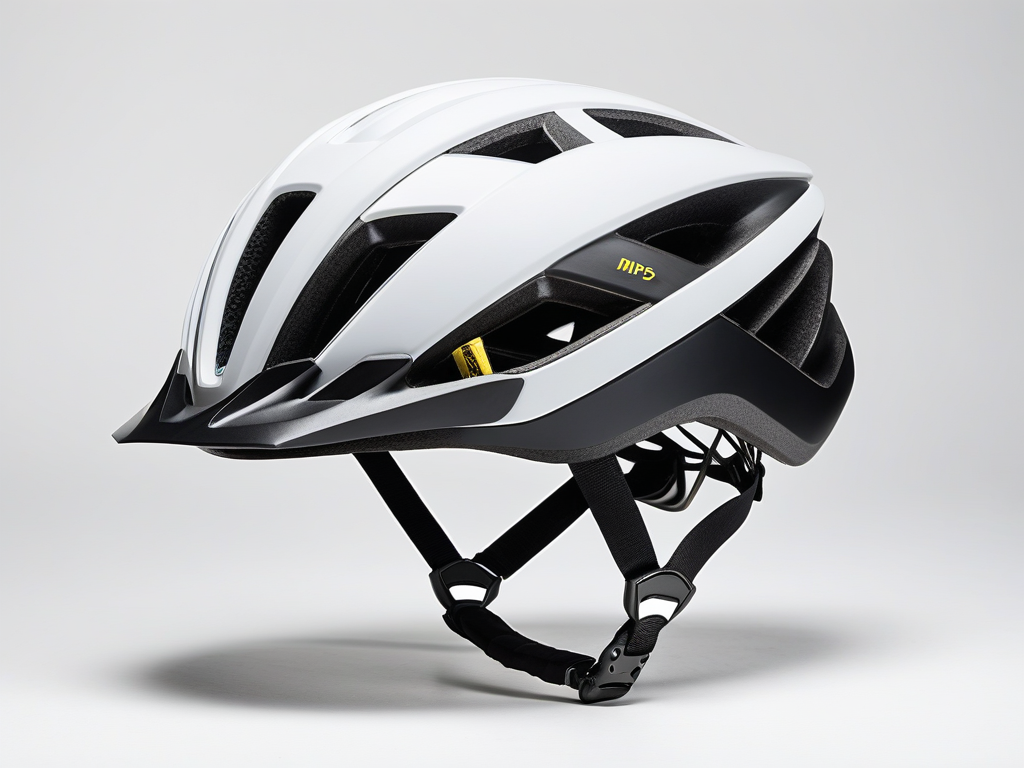
| Helmet | E-bikes: Nevada DMV says no helmet requirement. Mopeds: helmet use is required on public highways. |
| Lane position | Mopeds must generally ride in the extreme right-hand lane of a multi-lane road unless an exception applies. E-bikes are not placed in that same DMV moped lane rule. |
| Local caveat | Local path, trail, park, and campus rules can be stricter than the statewide road-use basics, so check posted local rules before relying on off-street access. |

Nevada uses two different categories that look similar in listings but work very differently in practice:
That split matters because a compliant e-bike can stay out of the license, registration, and helmet system, while a moped cannot. Riders get into trouble when they assume every small electric or gas bike is legally just an e-bike.
Nevada defines an electric bicycle as a device with two or three wheels, fully operable pedals, a seat or saddle, and an electric motor that produces no more than 750 watts. The bike also has to fit one of Nevada’s three classes:
That definition is narrower than some marketplace labels. If the machine lacks usable pedals or goes beyond Nevada’s e-bike limits, do not assume it still qualifies as an electric bicycle just because the seller called it one.
Nevada DMV’s public guidance says electric bicycles do not require helmet use, a driver’s license, registration, or insurance. That is the simplest legal lane in Nevada, and it is one reason many riders are better off staying inside the true e-bike definition instead of buying a borderline moped-style machine.
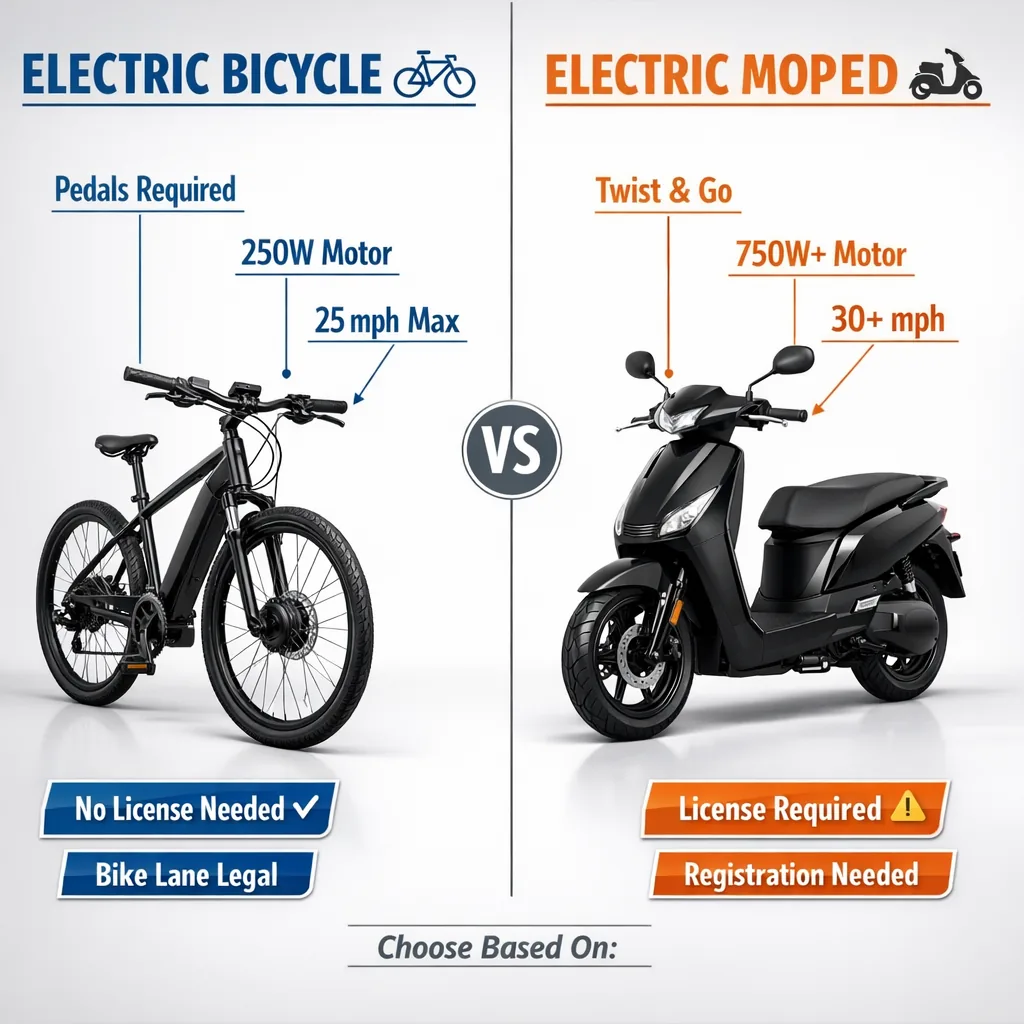
Nevada’s moped definition is broader than many riders expect. Under NRS 486.038, a moped can be a motor-driven scooter, motor-driven cycle, or similar vehicle with:
The definition also expressly says a moped does not include an electric bicycle. That matters for small electric vehicles with no real pedals: a no-pedal machine under 1500 watts may still land in Nevada’s moped bucket rather than the e-bike bucket.
Nevada DMV’s moped guidance creates a middle ground between bicycles and full motorcycles:
This is one of Nevada’s biggest practical differentiators. A small machine can avoid motorcycle-insurance treatment and a Class M license, but it still does not get the ultra-light e-bike treatment once it becomes a moped.
If you are riding a moped on a multi-lane road, Nevada DMV says you generally must remain in the extreme right-hand lane unless you are preparing to turn left, it would be unsafe to stay there, there is only one lane moving your direction, or a police officer directs otherwise. Nevada law also says a moped is entitled to full use of the lane it occupies, so drivers should not crowd it out of the lane.
The off-street side is less simple. The Nevada sources reviewed for this draft clearly explain road-use classification, but they do not create a blanket statewide promise that every local path, trail, campus, or park facility is open to every e-bike or moped. Treat local posted rules and land-manager policies as the deciding factor before you ride off-street.
If the bike really has fully operable pedals and stays inside Nevada’s e-bike definition, the lighter rules apply. Nevada DMV says you do not need a driver’s license, registration, insurance, or a helmet just because it is an electric bicycle.
This is where many Nevada buyers drift into the moped category. Once that happens, you need a driver’s license, a plate, registration, and a helmet, even though you still do not need a Class M or liability insurance under DMV guidance.
Do not assume Nevada will still treat it like a moped. If it exceeds the moped definition, the machine can move into motorcycle territory, which is where Class M licensing, registration, and insurance rules become much more important.
Use caution before assuming access. Nevada’s reviewed sources are much clearer on classification and road-use basics than on universal off-street access. Check the posted rules from the city, county, campus, trail operator, or park authority before riding there.
Nevada’s split is especially obvious on helmets. Nevada DMV says electric bicycles do not require helmet use, while NRS 486.231 requires helmets for drivers and passengers on mopeds driven on a highway. That means two small two-wheelers can look similar from a distance but trigger totally different helmet rules once the legal classification changes.
Even where Nevada does not require a helmet for a true e-bike, many riders will still want one for city traffic, mixed-use routes, and higher-speed class 3 riding. That is a safety choice, not a claim that Nevada imposes the same rule across every category.