Motorized Bicycle Laws in Kansas depend on whether your ride qualifies as an electric-assisted bicycle or a separate motorized bicycle. Kansas gives compliant class 1, 2, and 3 e-bikes bicycle-style treatment, but a titled motorized bicycle follows a different licensing and registration path.
Note: This page is for general information only and is not legal advice. Kansas rules can change, and city, county, park, or trail authorities may add local restrictions. Last checked: 2026-03-15.
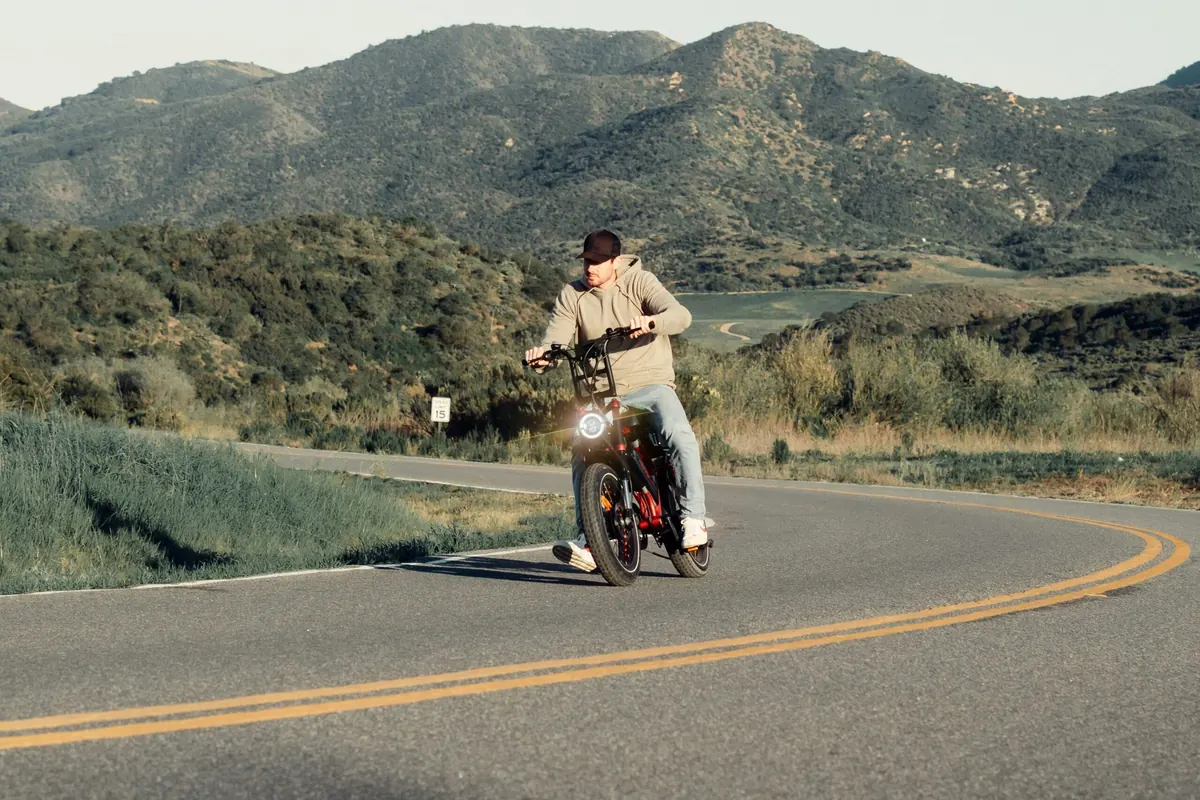
Kansas keeps two different legal lanes that many listings blur together:
That matters because Kansas is unusually clear about giving e-bikes broad bicycle-style treatment, while still keeping a separate motorized-bicycle category for slower helper-motor machines that do not qualify as electric-assisted bicycles.
Kansas defines an electric-assisted bicycle as a bicycle with two or three wheels, a saddle, fully operative pedals, and an electric motor of less than 750 watts that fits one of three classes:
Kansas also requires a permanent label showing the classification number, top assisted speed, and motor wattage. If you modify the bike in a way that changes its speed capability or how the motor engages, the label must be replaced.
If your bike stays inside the electric-assisted-bicycle definition, Kansas treats it much more like a bicycle than a motor vehicle. That means no driver's license, no title, no license plate, no vehicle registration, and no vehicle liability insurance requirement. Kansas also says e-bikes may be ridden where bicycles are allowed, including streets, highways, bike lanes, multi-use paths, and trail networks, unless a city or the agency controlling the path or trail restricts them.
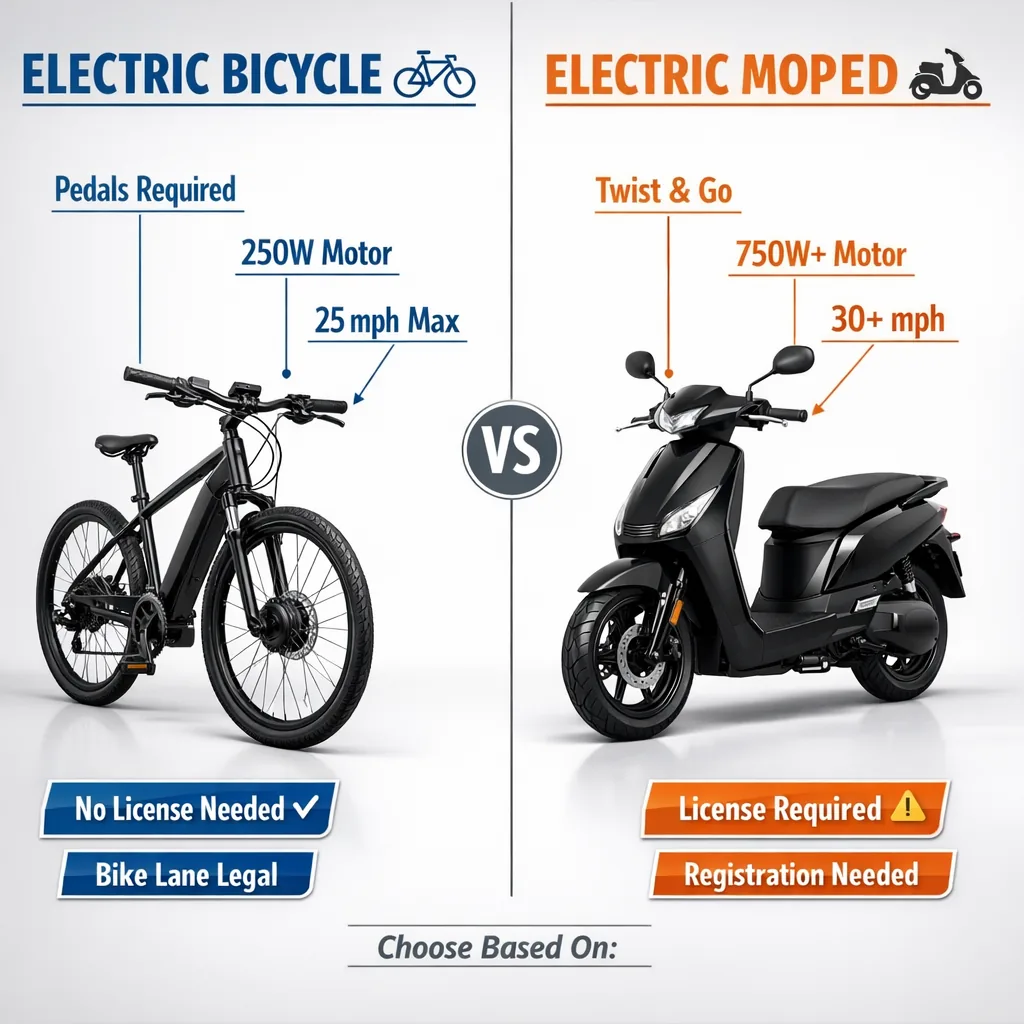
Kansas defines a motorized bicycle as a device, other than an electric-assisted bicycle, with two tandem wheels or three wheels that can be propelled by human power, a helper motor, or both, and that has all of these features:
If a machine exceeds those limits or uses a manual transmission, Kansas Department of Revenue says it will not be titled or registered as a motorized bicycle in Kansas. At that point, you should expect motorcycle-style treatment instead.
Kansas keeps a more formal road-use path for motorized bicycles than for e-bikes.
This is one of the biggest Kansas-specific splits: a compliant e-bike avoids the registration-and-license system, while a titled motorized bicycle does not.
For electric-assisted bicycles, Kansas is relatively friendly at the state level. The e-bike statute says they may be ridden where bicycles are allowed, including streets, highways, bike lanes, bicycle or multi-use paths, trails, and trail networks. But Kansas also lets cities, counties, and agencies controlling paths or trails restrict or prohibit e-bikes or specific e-bike classes, and the statewide access rule does not automatically override natural-surface trails specifically designated as nonmotorized.
For motorized bicycles, Kansas applies the bicycle-operation sections in K.S.A. 8-1586 through 8-1592, which is why lane-position and bicycle-equipment rules still matter. Because the most explicit statewide trail-access language is written for electric-assisted bicycles, riders should check local signs or the controlling authority before assuming a motorized bicycle belongs on a bike path or trail.
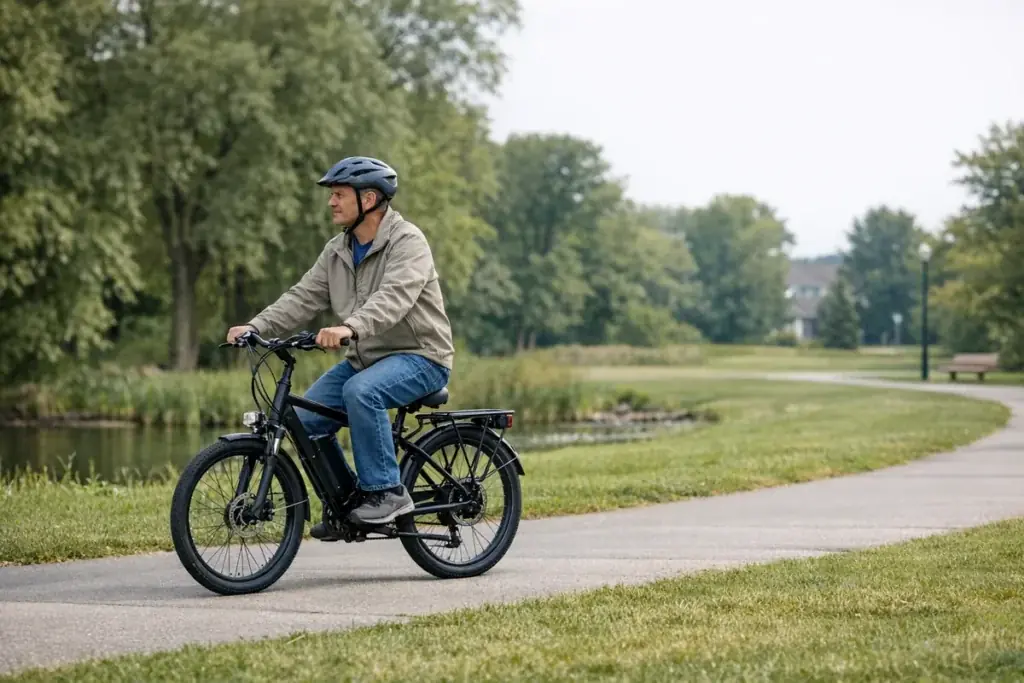
That usually points to a class 2 electric-assisted bicycle. In Kansas, that means no driver's license, no title, no registration, no plate, and no vehicle liability insurance requirement as long as the bike really stays inside the state e-bike definition.
That points toward a class 3 electric-assisted bicycle. Kansas still treats it as an e-bike, not a motor vehicle, but the rider must be at least 16 and local trail or path authorities may be more restrictive.
That usually lands in Kansas's motorized bicycle category. This is where title, registration, and licensing matter. If you are 15, Kansas offers a limited class C license path just for motorized bicycles.
Do not assume Kansas will still treat it as a motorized bicycle. Kansas Department of Revenue says a machine outside those limits will not be titled or registered as a motorized bicycle, which usually means you need to evaluate it under motorcycle rules instead.