Enjoy FREE shipping anywhere within the US!

Motorized Bicycle Laws in Kansas

Motorized Bicycle Laws in Kansas depend on whether your ride qualifies as an electric-assisted bicycle or a separate motorized bicycle. Kansas gives compliant class 1, 2, and 3 e-bikes bicycle-style treatment, but a titled motorized bicycle follows a different licensing and registration path.

Note: This page is for general information only and is not legal advice. Kansas rules can change, and city, county, park, or trail authorities may add local restrictions. Last checked: 2026-03-15.
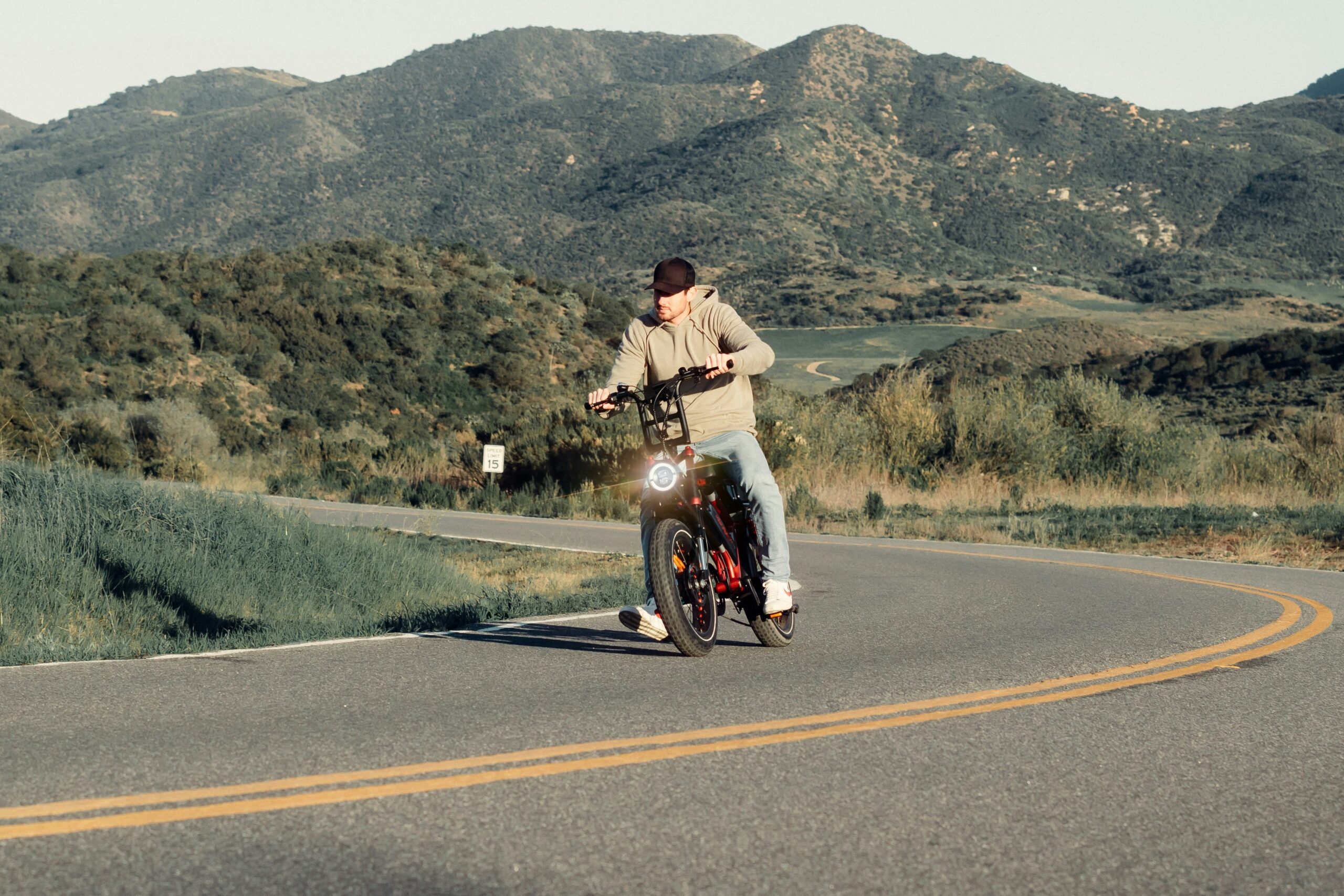
Motorized Bicycle Laws in Kansas road riding overview

Motorized Bicycle Laws in Kansas: quick answer

  • Electric-assisted bicycles in Kansas must have fully operable pedals, a saddle, two or three wheels, and an electric motor of less than 750 watts, then fit class 1, 2, or 3 speed rules.
  • Kansas does not require an e-bike rider to carry a driver's license, registration, a title, a license plate, or vehicle liability insurance when the bike stays inside the electric-assisted-bicycle definition.
  • Class 3 e-bike riders must be at least 16, although a person under 16 may ride as a passenger on a class 3 e-bike built for passengers.
  • A Kansas motorized bicycle is different from an e-bike. It must be a non-e-bike machine with no more than 3.5 brake horsepower, no more than 130cc, an automatic transmission, and a maximum design speed of 30 mph.
  • Motorized bicycle riders need either a valid driver's license or a limited Kansas class C motorized-bicycle license, and qualifying bikes are titled and registered through the county treasurer.

Why Kansas confuses so many riders

Kansas keeps two different legal lanes that many listings blur together:

  • Electric-assisted bicycles under the newer three-class e-bike statute.
  • Motorized bicycles under the older titled-and-registered moped-style definition.

That matters because Kansas is unusually clear about giving e-bikes broad bicycle-style treatment, while still keeping a separate motorized-bicycle category for slower helper-motor machines that do not qualify as electric-assisted bicycles.

What counts as an electric-assisted bicycle in Kansas

Kansas defines an electric-assisted bicycle as a bicycle with two or three wheels, a saddle, fully operative pedals, and an electric motor of less than 750 watts that fits one of three classes:

  • Class 1: pedal-assist only, with assistance stopping at 20 mph.
  • Class 2: throttle-capable, with assistance stopping at 20 mph.
  • Class 3: pedal-assist only, with assistance stopping at 28 mph.

Kansas also requires a permanent label showing the classification number, top assisted speed, and motor wattage. If you modify the bike in a way that changes its speed capability or how the motor engages, the label must be replaced.

What Motorized Bicycle Laws in Kansas mean for e-bike riders

If your bike stays inside the electric-assisted-bicycle definition, Kansas treats it much more like a bicycle than a motor vehicle. That means no driver's license, no title, no license plate, no vehicle registration, and no vehicle liability insurance requirement. Kansas also says e-bikes may be ridden where bicycles are allowed, including streets, highways, bike lanes, multi-use paths, and trail networks, unless a city or the agency controlling the path or trail restricts them.
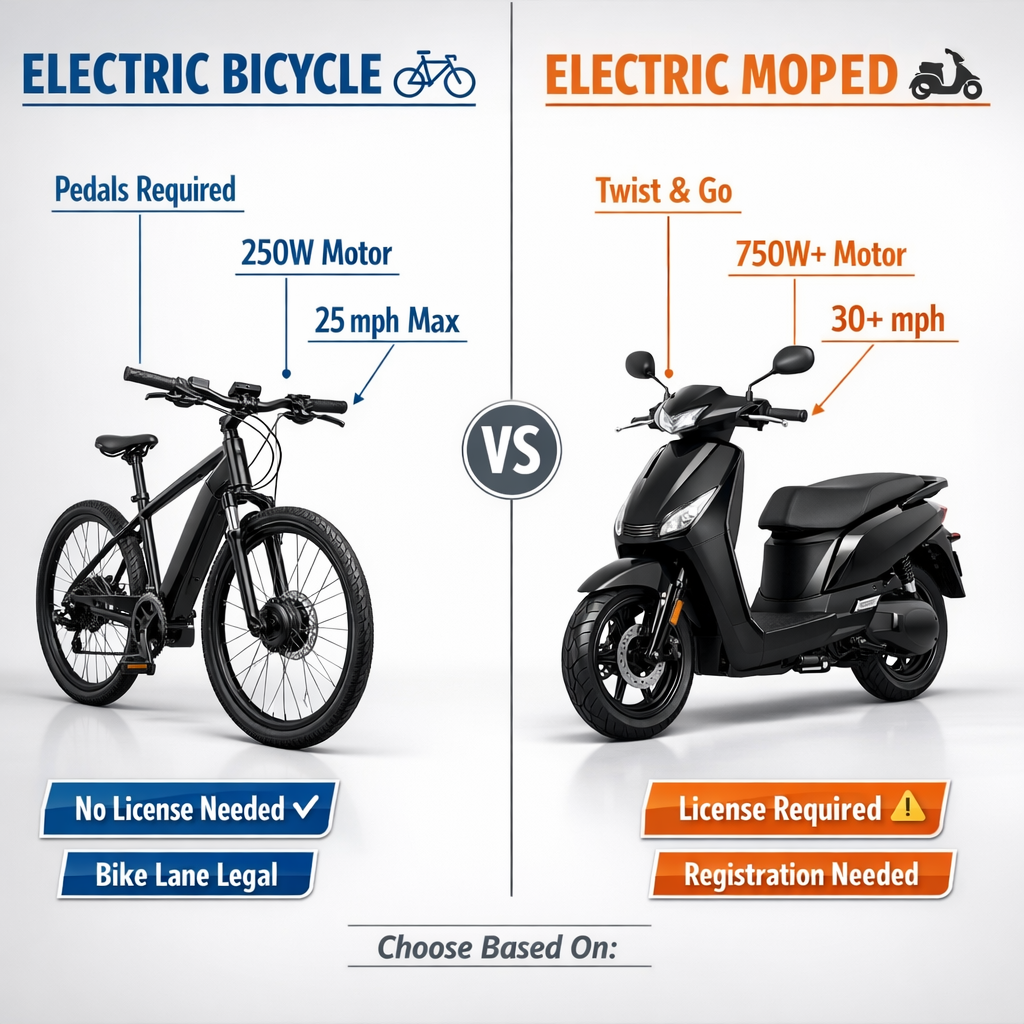
Motorized Bicycle Laws in Kansas e-bike vs motorized bicycle comparison

What counts as a motorized bicycle in Kansas

Kansas defines a motorized bicycle as a device, other than an electric-assisted bicycle, with two tandem wheels or three wheels that can be propelled by human power, a helper motor, or both, and that has all of these features:

  • no more than 3.5 brake horsepower,
  • no more than 130cc,
  • an automatic transmission,
  • a maximum design speed of no more than 30 mph.

If a machine exceeds those limits or uses a manual transmission, Kansas Department of Revenue says it will not be titled or registered as a motorized bicycle in Kansas. At that point, you should expect motorcycle-style treatment instead.

License, registration, and safety rules for Kansas motorized bicycles

Kansas keeps a more formal road-use path for motorized bicycles than for e-bikes.

  • License: You need either a valid driver's license that lets you drive a motor vehicle, or a Kansas class C license marked for motorized-bicycle operation only.
  • Minimum age for the limited license: Kansas lets a person age 15 or older qualify for the limited motorized-bicycle license after passing the written and vision tests required for a class C license.
  • Title and registration: Kansas Department of Revenue says a qualifying motorized bicycle can be titled and registered, and the county treasurer uses the TR-MB2014 Motorized Bicycle Operation Verification form for that process.
  • Registration fee: Kansas law includes an $11 annual registration fee line for motorized bicycles.
  • Helmet rule: Riders and passengers under 18 on a motorized bicycle must wear a compliant helmet.

This is one of the biggest Kansas-specific splits: a compliant e-bike avoids the registration-and-license system, while a titled motorized bicycle does not.

Where can you ride under Motorized Bicycle Laws in Kansas?

For electric-assisted bicycles, Kansas is relatively friendly at the state level. The e-bike statute says they may be ridden where bicycles are allowed, including streets, highways, bike lanes, bicycle or multi-use paths, trails, and trail networks. But Kansas also lets cities, counties, and agencies controlling paths or trails restrict or prohibit e-bikes or specific e-bike classes, and the statewide access rule does not automatically override natural-surface trails specifically designated as nonmotorized.

For motorized bicycles, Kansas applies the bicycle-operation sections in K.S.A. 8-1586 through 8-1592, which is why lane-position and bicycle-equipment rules still matter. Because the most explicit statewide trail-access language is written for electric-assisted bicycles, riders should check local signs or the controlling authority before assuming a motorized bicycle belongs on a bike path or trail.
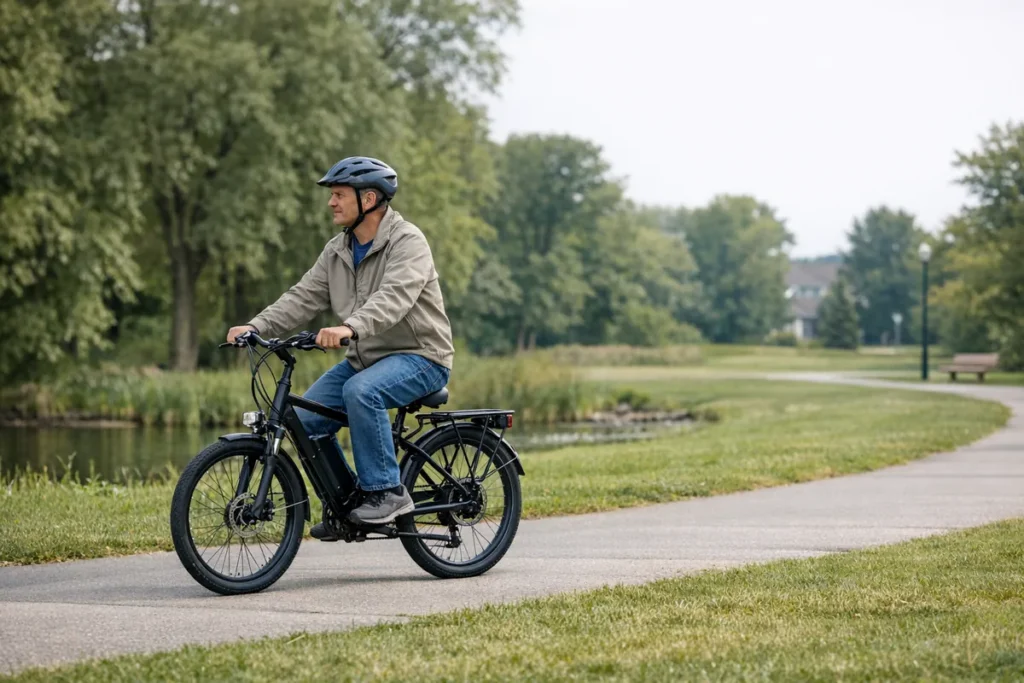
Adult riding an electric bicycle on a shared-use path in West Virginia

Common rider scenarios in Kansas

Scenario 1: Your bike has pedals, a throttle, a motor under 750W, and motor assistance cuts off at 20 mph

That usually points to a class 2 electric-assisted bicycle. In Kansas, that means no driver's license, no title, no registration, no plate, and no vehicle liability insurance requirement as long as the bike really stays inside the state e-bike definition.

Scenario 2: Your bike is pedal-assist only and supports you up to 28 mph

That points toward a class 3 electric-assisted bicycle. Kansas still treats it as an e-bike, not a motor vehicle, but the rider must be at least 16 and local trail or path authorities may be more restrictive.

Scenario 3: Your machine is not an e-bike, has an automatic transmission, stays under 130cc, and tops out at 30 mph

That usually lands in Kansas's motorized bicycle category. This is where title, registration, and licensing matter. If you are 15, Kansas offers a limited class C license path just for motorized bicycles.

Scenario 4: Your build exceeds 30 mph, exceeds 130cc, exceeds 3.5 brake horsepower, or has a manual transmission

Do not assume Kansas will still treat it as a motorized bicycle. Kansas Department of Revenue says a machine outside those limits will not be titled or registered as a motorized bicycle, which usually means you need to evaluate it under motorcycle rules instead.

Big Kansas-specific takeaways

  • Kansas has a modern class 1 / 2 / 3 e-bike system with a clear under-750W definition.
  • Kansas expressly waives driver's license, registration, title, license plate, and vehicle liability insurance requirements for electric-assisted bicycles.
  • Kansas still maintains a separate titled and registered motorized-bicycle category for qualifying non-e-bike helper-motor machines.
  • Kansas lets riders as young as 15 qualify for a limited motorized-bicycle license.
  • Kansas sets a specific $11 annual registration fee for motorized bicycles.
  • Trail and path access is broader for e-bikes than many riders expect, but local restrictions still matter, especially on natural-surface or nonmotorized trails.

Official Kansas sources

Related reading

Warranty Protection

Have a problem? Bike repairs and replacement parts are covered through our manufacturer warranty for up to two years after purchase.

Verified Secure Checkout

Your information is kept 100% protected and private. Payments are handled through trusted third-party providers and never stored on our servers.
Copyright © 2026 Motorized Bicycle HQ. All rights reserved.
linkedin facebook pinterest youtube rss twitter instagram facebook-blank rss-blank linkedin-blank pinterest youtube twitter instagram