Motorized Bicycle Laws in West Virginia turn on one first question: is your machine a moped or an electric bicycle? West Virginia now defines those as separate categories. A true moped can use a small gas or electric power source, but it must stay within the state’s foot-pedal, horsepower, engine-size, automatic-drive, and 30 mph limits. A true electric bicycle must have fully operable pedals, use a motor under 750 watts, and fit the state’s class 1, class 2, or class 3 e-bike definitions. That split is the center of Motorized Bicycle Laws in West Virginia, because registration, licensing, helmet rules, and path access all change depending on which category fits your ride.
Note: This West Virginia guide is based on current West Virginia Code sections and current West Virginia DMV title and registration guidance. It is informational only and not legal advice.
Last reviewed / source-checked: 2026-03-16
West Virginia-specific caution: a machine can look like a bicycle and still be a moped under West Virginia law if it uses pedals plus a qualifying motor. But once it no longer fits the moped definition or the electric bicycle definition, it moves out of the simple motorized-bike lane.
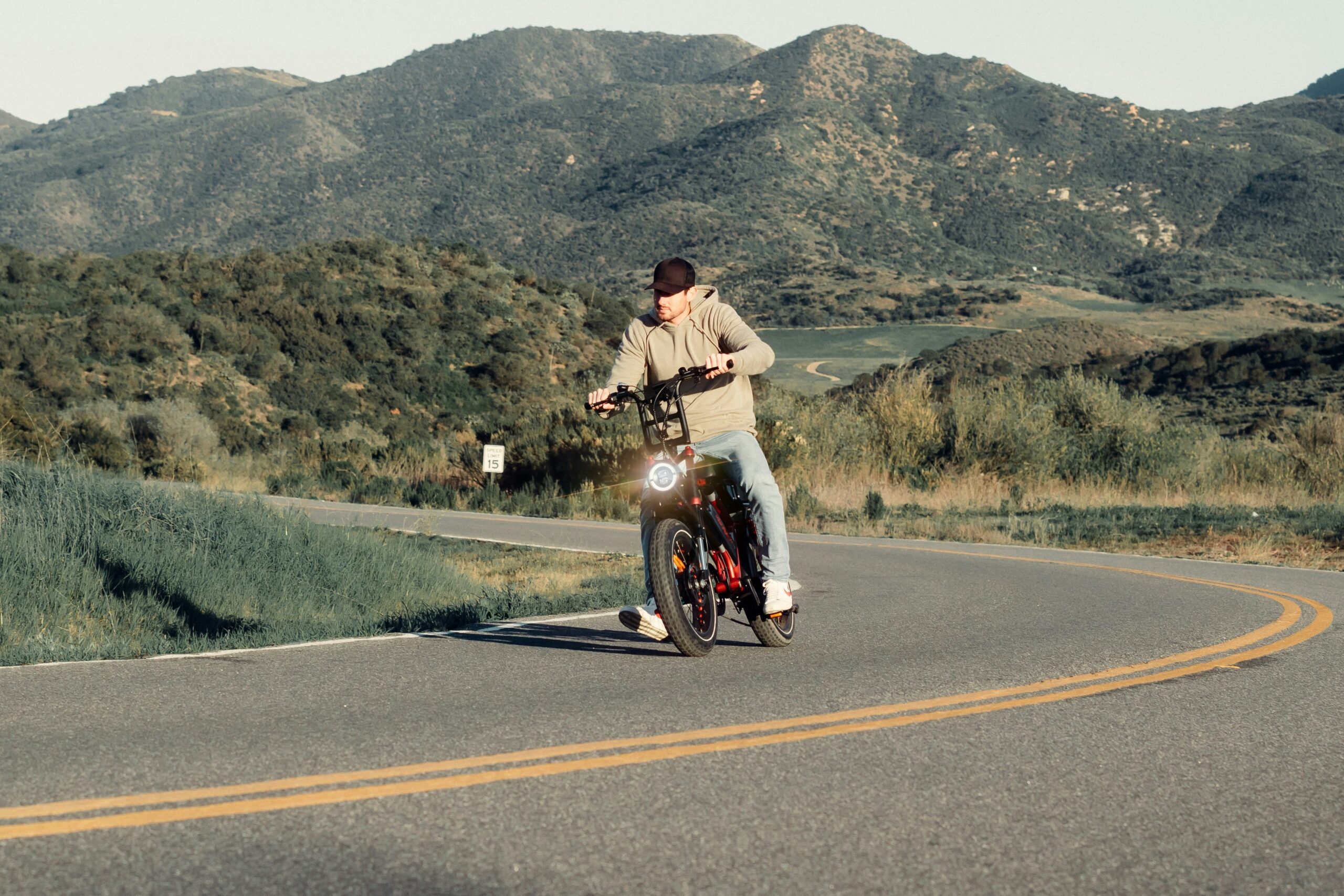
West Virginia does not leave this issue undefined anymore.
That legal separation matters throughout Motorized Bicycle Laws in West Virginia. The moped lane uses motor-vehicle style paperwork and safety obligations. The electric-bicycle lane gets broader exemptions and bicycle-style path access, but only if the machine stays inside the 750-watt class system.
To stay in the moped category, the vehicle must have two or three wheels, foot pedals to permit muscular propulsion, an independent power source of no more than two brake horsepower, and if it uses a combustion engine it may be no larger than 50cc. It also must be unable to go faster than 30 mph on level ground and must use a direct or automatic drive system that does not require clutching or shifting after engagement.
West Virginia DMV’s title and registration guidance says every motor vehicle driven or moved on a highway must be titled and registered. West Virginia’s licensing statute separately says no person may drive a motor vehicle on a public street or highway unless the person has a valid driver’s license for the type or class of vehicle being driven, unless an express exemption applies. Because the reviewed statutes define mopeds separately from electric bicycles but do not create a stand-alone no-license moped exemption, the safer West Virginia answer is to treat a road-going moped as a licensed and registered motor vehicle.
West Virginia’s motorcycle and motor-driven-cycle equipment statute requires operators and passengers on motorcycles or motor-driven cycles to wear protective helmets and safety eyewear. The same section also imposes equipment and operating requirements on mopeds, including rearview-mirror requirements, handlebar-height limits, passenger-seat restrictions, and a requirement that the rider face forward and sit or stand astride the vehicle properly. In practical West Virginia use, a moped rider should plan on full motorcycle-style protective gear rather than assuming bicycle equipment is enough.
West Virginia does not treat every small motorized bike as a one-person-only machine. A passenger may ride only if the vehicle is designed to carry more than one person, such as with a proper passenger seat, footrests, or sidecar setup. If the moped is not built for a passenger, do not carry one.
The electric-bicycle statute gives class-based path rules for e-bikes. It does not give mopeds those same bicycle-facility rights. This draft therefore keeps West Virginia moped guidance narrower and road-focused instead of inventing broad bike-path permission for mopeds.
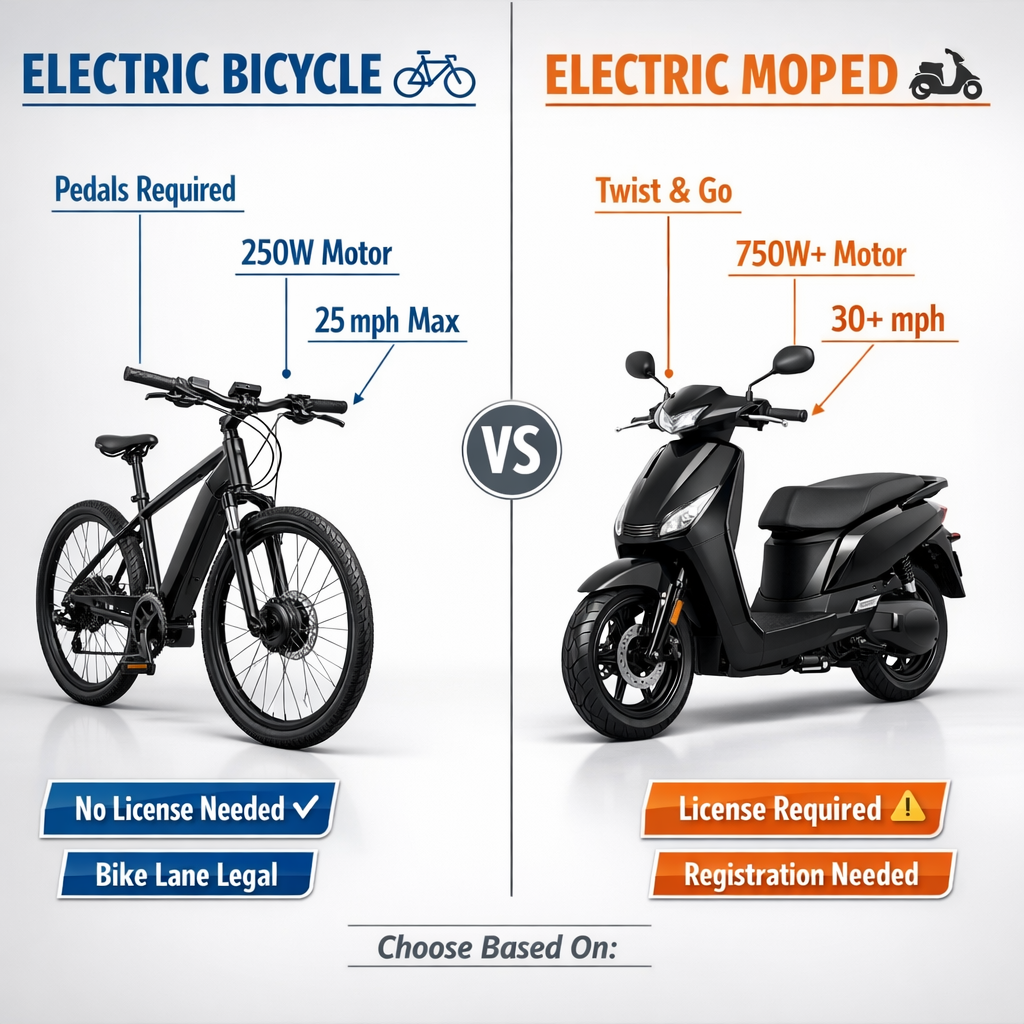
West Virginia defines an electric bicycle as a two- or three-wheeled vehicle with fully operable pedals and an electric motor of fewer than 750 watts. The state then applies a three-class system: class 1 is pedal-assist only up to 20 mph, class 2 can use a throttle up to 20 mph, and class 3 is pedal-assist up to 28 mph.
West Virginia Code § 17C-11-8 says electric bicycles are not subject to the state’s vehicle registration, title, driver’s-license, or financial-responsibility chapters. That is one of the biggest legal differences between a bicycle-class e-bike and a West Virginia moped.
West Virginia says class 1 and class 2 electric bicycles used on roads and trails where traditional bicycles are allowed get the same rights and privileges as traditional bicycles and the same duties that apply to traditional bicycles. But the law also says e-bikes do not get special access beyond what ordinary bicycles are allowed.
A class 3 electric bicycle may not operate on a bicycle path, multiuse trail, or single-use trail unless it is within a highway or roadway, unless the municipality, local authority, or state agency with jurisdiction expressly permits that use. That makes class 3 the category that most often needs a local check before riding on separated facilities.
West Virginia says a person under 15 years of age who operates or rides as a passenger on an electric bicycle must wear a properly fitted and fastened bicycle helmet under the Child Bicycle Safety Act. Older riders should still check local safety expectations, but the statewide under-15 rule is the clear floor in the reviewed statute.
You are likely trying to fit the West Virginia moped definition. That means title, registration, valid licensing, and moped equipment rules are the right place to start.
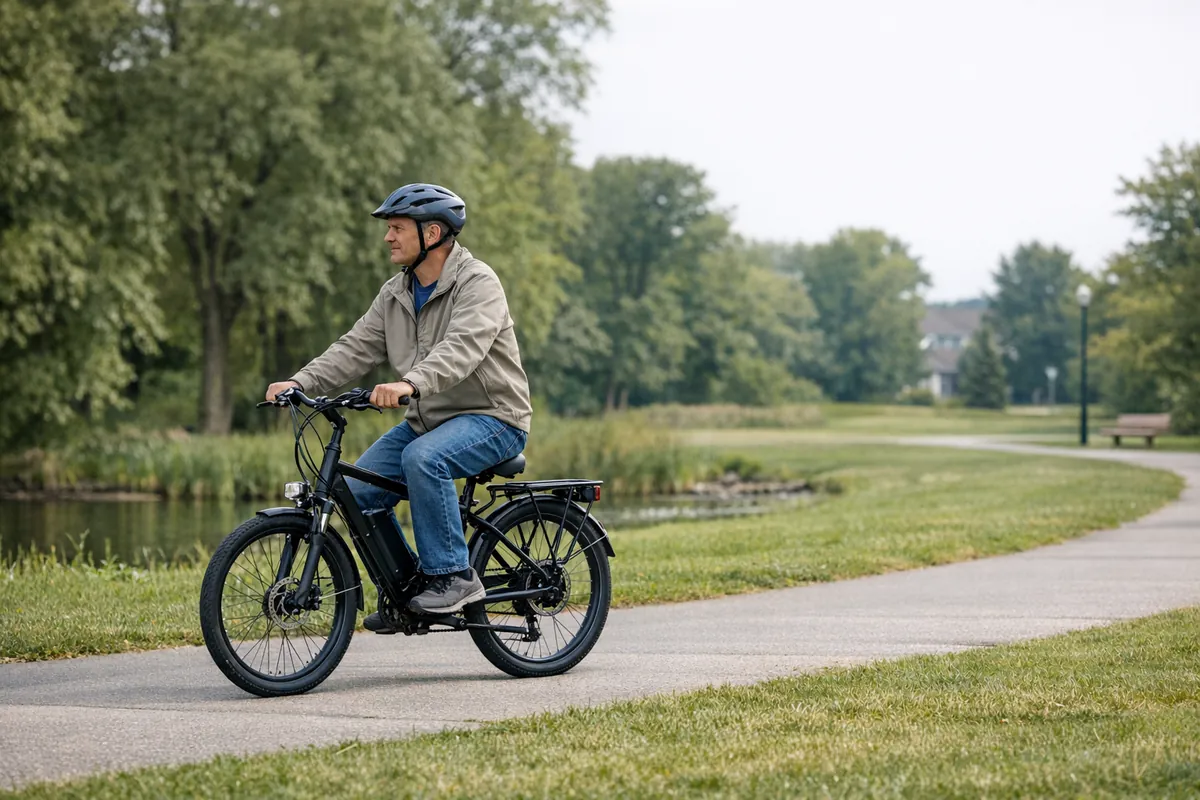
You are usually in West Virginia’s electric-bicycle lane instead. That means no registration, title, driver’s-license, or financial-responsibility requirement so long as the bike stays inside the state’s e-bike definition.
Check the e-bike class first. Class 1 and class 2 usually follow bicycle access where bicycles are allowed. Class 3 often needs express local or agency permission. A moped should not borrow e-bike path assumptions without a separate rule saying it can.
That is when riders get into trouble by guessing. If the machine exceeds the moped limits or no longer qualifies as an electric bicycle, re-check West Virginia’s broader motor-vehicle and licensing rules before riding on public roads.
This page is for general informational purposes only and is not legal advice. West Virginia statutes, DMV procedures, local rules, and trail-access rules can change. Verify the current rules before riding on public roads, bicycle paths, shared-use paths, or trails.


