Motorized Bicycle Laws in Washington make the most sense when you separate three legal buckets: a true moped, an electric-assisted bicycle, and a faster motor-driven cycle. Washington gives each category a different answer on licensing, registration, path access, helmet rules, and where you can legally ride. If your machine stays inside Washington's moped limits, the rules are lighter than for a motor-driven cycle. If it fits Washington's electric-assisted bicycle definition, the rules shift much closer to bicycle law instead.
Note: This Washington guide is based on current RCW definitions, operating statutes, safety rules, registration statutes, insurance statutes, and Washington Department of Licensing guidance. It is informational only and not legal advice.
Last reviewed / source-checked: 2026-03-16
Washington-specific caution: A small scooter-style bike can move out of the moped lane quickly. Once it goes over 30 mph or over 50cc, Washington can treat it as a motor-driven cycle that needs motorcycle-endorsement treatment instead.
Washington does not treat every powered bike the same.
That category split is the key to Motorized Bicycle Laws in Washington. A 49cc scooter under 30 mph stays in the moped lane. A similar-looking scooter that is larger than 50cc or faster than 30 mph moves into the motor-driven-cycle lane instead. A compliant 750-watt pedal e-bike does not belong in either of those motor-vehicle buckets.
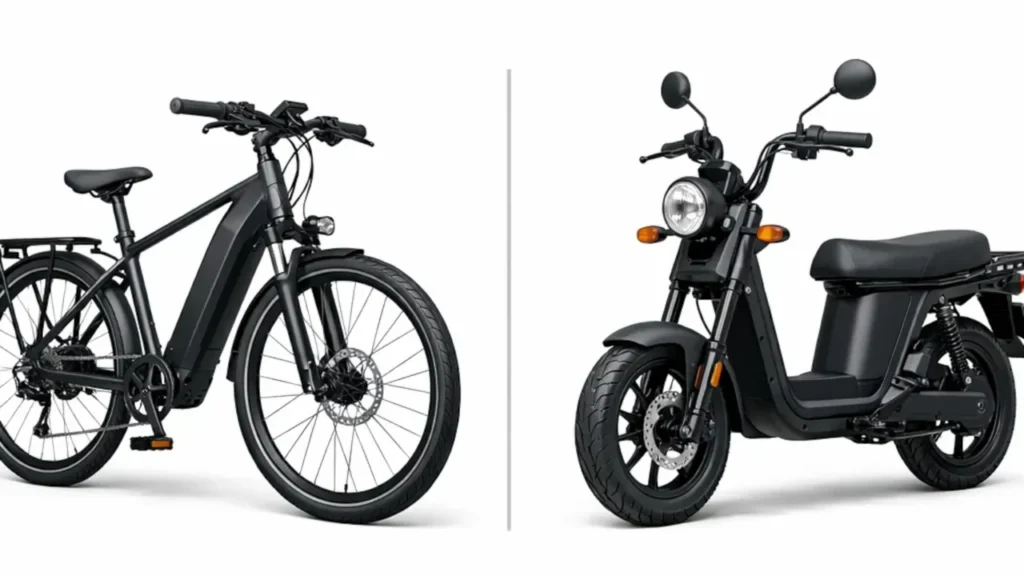
Washington's statutory moped definition is narrower than many riders expect. To stay in the moped category, the machine must stay at or below 50cc, produce no more than 2 gross brake horsepower, and be unable to go faster than 30 mph on level ground. If it exceeds those limits, it is no longer a moped under Washington law.
Washington lets a rider age 16 or older operate a moped with a valid driver license of any class and without a special motorcycle examination. That makes the moped lane lighter than the motor-driven-cycle lane, but it is not license-free.
Washington says a moped may not be operated on the highways of the state unless it has been assigned a moped registration number and displays a moped permit. The registration statutes also treat mopeds as vehicles for registration and plate-display purposes, and Washington's registration system ties that lane to title processing as well.
This is one of the biggest state-specific differentiators. Washington's mandatory liability insurance chapter expressly says it does not govern mopeds or motor-driven cycles. That means this draft does not tell riders that Washington's standard chapter 46.30 RCW insurance rule automatically applies to a moped the same way it applies to many registered cars and trucks.
Washington is strict about where a moped can go. A moped may not use a bicycle path or trail, bikeway, equestrian trail, hiking trail, recreational trail, sidewalk, or a fully controlled limited access highway. That alone makes a Washington moped very different from a bicycle-class e-bike in daily use.
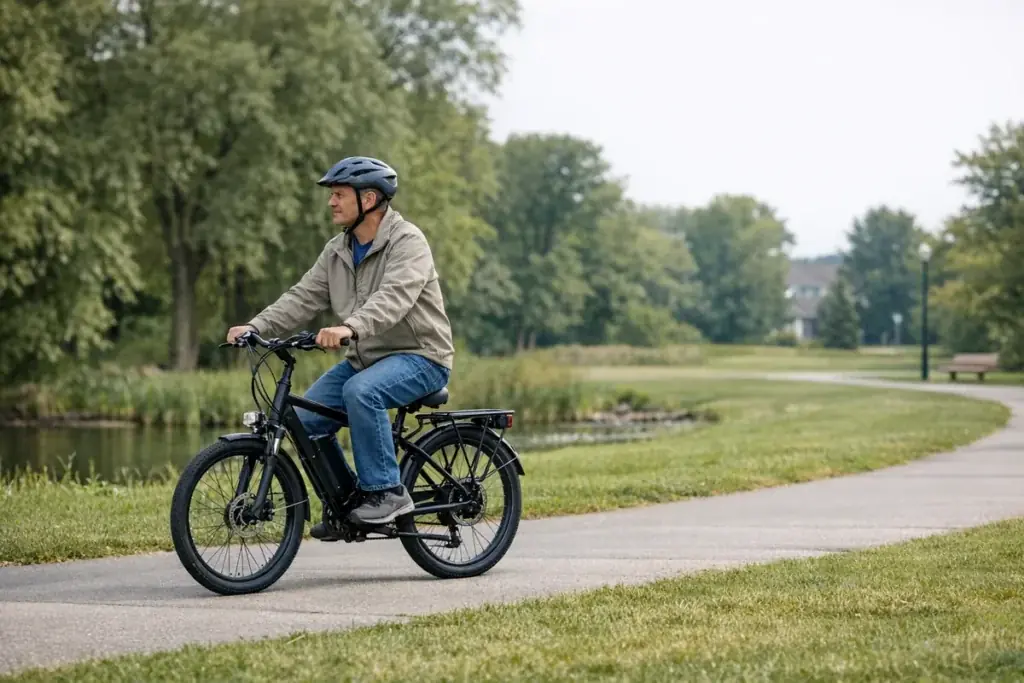
Washington defines an electric-assisted bicycle as a pedal-equipped bicycle with a motor of no more than 750 watts. It then splits the category into class 1, class 2, and class 3. Class 1 and class 2 top out at 20 mph of assistance, while class 3 provides pedal-assist up to 28 mph and must have a speedometer.
Washington's licensing statute says no driver license is required to operate an electric-assisted bicycle. But Washington also says riders under 16 years of age may not operate a class 3 electric-assisted bicycle, so age still matters for the faster class.
Washington allows class 1 and class 2 electric-assisted bicycles on shared-use paths and on parts of highways designated for bicycle use, but local jurisdictions and state agencies can still restrict or regulate that access. Class 3 electric-assisted bicycles are more limited: they may be operated on facilities within or adjacent to a highway, but they may not operate on a shared-use path unless a local jurisdiction allows them.
Washington does not give e-bikes automatic access to every trail. Unless another statutory exception applies, an electric-assisted bicycle may not operate on a trail specifically designated as nonmotorized and built with a natural-surface tread unless the local authority or state agency in charge allows it.
Washington's motorcycle-helmet law applies directly to mopeds and motor-driven cycles. For electric-assisted bicycles, the statute instead says riders must comply with bicycle helmet laws and regulations. Washington also makes class 3 sidewalk use unlawful except where there is no alternative as part of a bicycle or pedestrian path or where a local ordinance authorizes it.
You are likely in Washington's moped lane. That means no motorcycle endorsement, but you still need a valid driver license, registration, and a displayed moped permit before riding on public highways.
You should stop assuming the moped rules apply. Washington DOL says a two-wheel scooter larger than 50cc or capable of more than 30 mph needs a two-wheel motorcycle endorsement, and the statutory motor-driven-cycle rules become the safer place to start.
Washington is generally friendly to that use, but local jurisdictions and state agencies can still restrict class 1 and class 2 e-bikes on facilities under their control. The statewide answer is helpful, but the posted local rule still wins where a valid restriction exists.
That is where Washington gets tighter. Class 3 e-bikes may not use a shared-use path unless the local jurisdiction allows it, and sidewalk use is generally unlawful unless the narrow statutory exception or a local ordinance applies.
Do not assume Washington's regular e-bike path rules carry over. Natural-surface nonmotorized trails usually require a separate allowance from the local authority or state agency with jurisdiction.
This page is for general informational purposes only and is not legal advice. Washington statutes, DOL procedures, local ordinances, trail rules, and enforcement practices can change. Verify the current rules before riding on roads, bike facilities, sidewalks, or trails.