Motorized Bicycle Laws in Pennsylvania make the most sense once you split the state into three different lanes: pedalcycles with electric assist, motorized pedalcycles / mopeds, and the separate motor-driven cycle or motorcycle lane. Pennsylvania gives low-speed e-bikes a bicycle-style rule set, but a true moped still carries registration, plate, and license requirements.
Trust strip: This Pennsylvania guide is based on current Pennsylvania Vehicle Code sections and current PennDOT / Commonwealth guidance linked below. It is informational only and not legal advice.
Last reviewed / source-checked: 2026-03-16
Pennsylvania caution: Riders often blur e-bikes, mopeds, scooters, and motor-driven cycles together. Pennsylvania does not treat them the same, and the title, registration, insurance, helmet, and license answer changes when the machine falls into a different category.
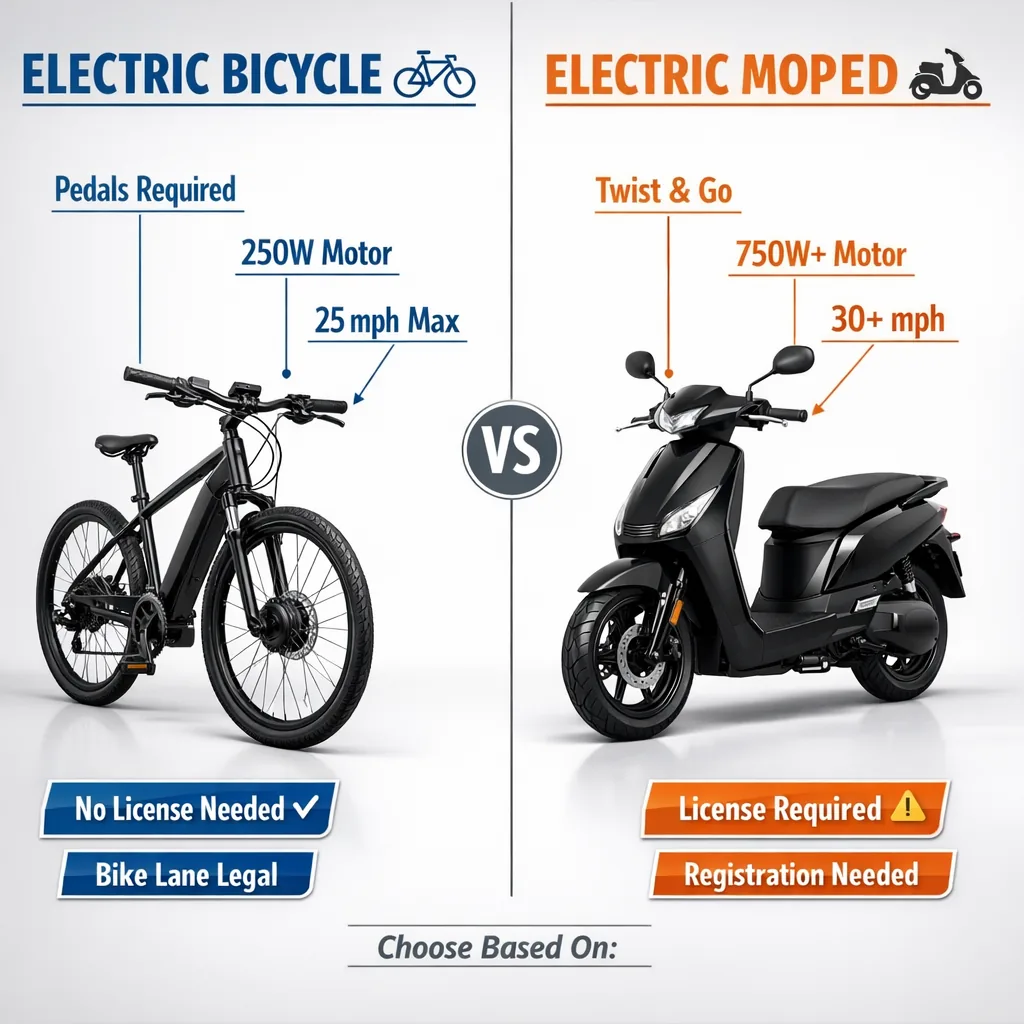
The most important step is classification. Pennsylvania uses separate definitions for a pedalcycle with electric assist, a motorized pedalcycle, and a motor-driven cycle. If you guess wrong here, the paperwork and road-use answer will be wrong too.
That split is the center of Motorized Bicycle Laws in Pennsylvania. Pennsylvania is not a state where every small powered bike gets treated like a bicycle.
Pennsylvania’s definition for a pedalcycle with electric assist is specific. The bike must weigh no more than 100 pounds, have two or three wheels more than 11 inches in diameter, use a motor system rated at not more than 750 watts, keep operable pedals, and stay at no more than 20 mph on level ground when powered by the motor alone.
PennDOT’s current fact sheet then makes the practical consequence clear: a compliant pedalcycle with electric assist is considered a bicycle. That means no title, no registration, no insurance, and no driver’s license requirement.
Pennsylvania also has a direct statutory age rule. Section 3514 says no person under 16 years of age shall operate a pedalcycle with electric assist. That is a hard state-law line, not just a trail policy suggestion.
Being in the bicycle lane does not mean you can ride anywhere without limits. Pennsylvania’s bicycle rules still matter:
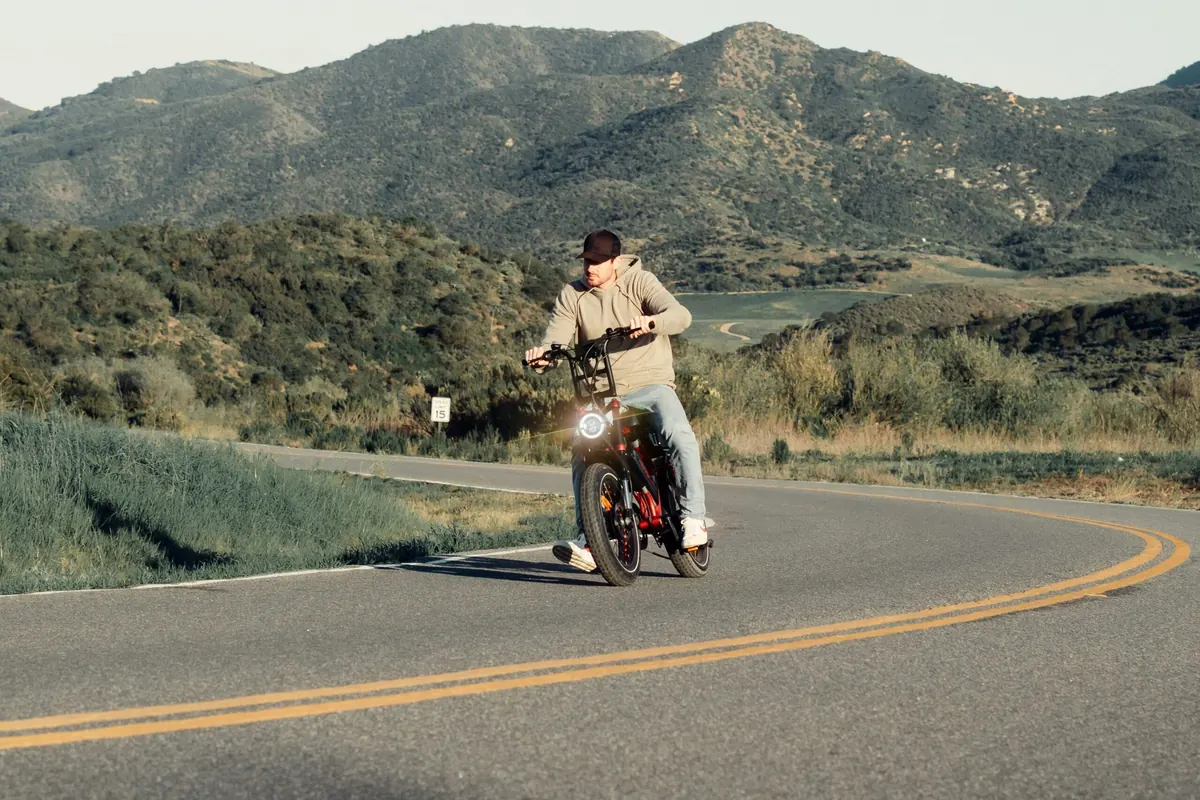
Pennsylvania’s DCNR guidance for state parks and forests is a good example of the local-conditions caveat. DCNR says e-bikes are allowed on trails where regular bikes are allowed if they meet the state-style limits, but riders on non-motorized trails must pedal to move the bike and may not use the throttle alone. Other public lands, local parks, preserves, campuses, and municipalities can set narrower rules, so riders should check the specific property before assuming statewide bicycle treatment answers every trail question.
PennDOT’s current moped fact sheet defines the lane using the statutory motorized pedalcycle definition. The machine must have:
That is tighter than the common “small engine equals moped” shorthand that shows up in older blog posts.
PennDOT’s February 2025 fact sheet says a moped receives a registration plate and requires a Class C, non-commercial driver’s license. The same fact sheet says the vehicle does not require inspection. For practical Pennsylvania riding, that is one of the biggest differences between a moped and a bicycle-style e-bike.
PennDOT’s current fact sheet says no helmet or eye protection is required for the driver of a moped. That is different from the stricter motorcycle and motor-driven-cycle rules. Riders may still want the safety gear, but the current PennDOT moped summary does not frame it as a rider requirement.
Pennsylvania’s materials create an important edge-case warning. PennDOT says a pedalcycle with electric assist is a bicycle only when it stays within the 100-pound, 750-watt, and 20 mph motor-only limits. If a build drifts past that low-speed e-bike definition, riders should not automatically assume it still belongs in the bicycle lane just because it has pedals.
Pennsylvania also uses a motor-driven cycle lane for motorcycles, including motor scooters, with a motor that does not exceed 5 brake horsepower. This lane is materially different from the moped lane.
PennDOT also notes that a holder of a Class C driver’s license may drive a motor-driven cycle with an automatic transmission and a cylinder capacity not exceeding 50 cubic centimeters. That is useful, but riders should not stretch that note beyond the specific machine PennDOT is describing.
The Commonwealth’s motor-scooter registration page adds another practical warning: public-road motor scooters must be titled, registered, and insured and meet equipment and inspection rules, and many scooter-style devices sold casually online do not qualify for highway use in Pennsylvania.
If it stays within Pennsylvania’s weight, wheel, wattage, pedal, and 20 mph motor-only limits, PennDOT treats it as a bicycle. That usually means no title, registration, insurance, or driver’s license, but the rider still must be at least 16.
You are probably in the motorized pedalcycle / moped lane, not the bicycle lane. That means Pennsylvania registration-plate and Class C license rules matter, even though inspection does not.
Do not assume the bicycle label gives full sidewalk freedom. Pennsylvania says a person may not ride a pedalcycle on a sidewalk in a business district unless official traffic-control devices permit it.
Check the trail rule, not just the Vehicle Code definition. DCNR allows qualifying e-bikes on trails where regular bikes are allowed, but on non-motorized trails riders must pedal and cannot rely on throttle-only operation.
That can shift the answer quickly. Pennsylvania’s motor-driven-cycle and motor-scooter guidance brings in inspection, plate, insurance, and motorcycle-style equipment questions that do not apply to a bicycle-style e-bike.
2026-03-16: Pennsylvania page updated to reflect current Pennsylvania Vehicle Code definitions, current PennDOT moped and motor-driven-cycle guidance, current motor-scooter registration guidance, and current DCNR e-bike policy.
This page is for general informational purposes only and is not legal advice. Pennsylvania statutes, PennDOT procedures, trail rules, and local rules can change. Verify the current classification and operating requirements before riding on public roads, sidewalks, shared paths, parks, or trails.